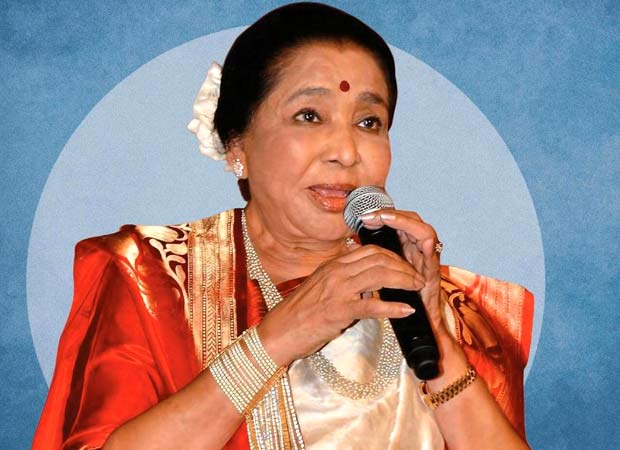
Lucknow: The passing of Asha Bhosle, marks not just the end of an extraordinary life, but the closing of a golden chapter in Indian music history. At 92, the voice that had, for over eight decades, danced effortlessly across genres, languages, and emotions, finally fell silent in Mumbai—the very city where her melodies had become immortal. Known affectionately as “Asha Tai,” she was not merely a singer but an institution, a phenomenon, and a cultural bridge connecting generations of listeners through the timeless magic of song.
A Childhood Steeped in Music and Resilience
Born Ashalata Dinanath Mangeshkar on September 8, 1933, in a modest town near Sangli in what was then British India, Asha inherited music as both a gift and a responsibility. She was the daughter of Dinanath Mangeshkar, a revered classical vocalist and theatre stalwart. His sudden demise left the family in financial distress, forcing young Asha and her siblings to shoulder responsibilities far beyond their years.
Growing up alongside her legendary elder sister Lata Mangeshkar, Asha was immersed in an environment where ragas, rehearsals, and recordings formed the rhythm of daily life. Yet, even within this musically gifted family, her journey would be uniquely her own—marked by bold choices, reinvention, and a refusal to be confined by convention.
Her debut came early, at the age of 10, with a Marathi film song, and by her teens, she was navigating the demanding world of playback singing. Unlike many contemporaries who followed defined paths, Asha carved hers through experimentation, resilience, and an instinctive understanding of musical storytelling.
Finding Her Voice in a Competitive Era
The Hindi film industry of the 1950s was fiercely competitive, dominated by established voices. Yet Asha’s breakthrough came with “Nanhe Munne Bachche” from Boot Polish, a song that captured innocence while hinting at the versatility she would later master.
Her collaboration with composer O. P. Nayyar proved transformative. Together, they created a soundscape that was vibrant, playful, and unapologetically modern. Songs like “Aaiye Meherbaan” and “Jaaiye Aap Kahan Jaayenge” redefined the tonal possibilities for female playback singers, introducing a sensuous, lively dimension that was rare at the time.
Asha’s ability to infuse personality into every note made her indispensable. Whether it was the romantic longing of “Abhi Na Jao Chhod Kar” from Hum Dono or the mysterious allure of “Raat Akeli Hai” from Jewel Thief, she demonstrated an emotional range that few could rival.
In 1968, she etched her name into history by winning her first Filmfare Award for “Garibo Ki Suno,” becoming one of the earliest artists to be recognized for excellence in playback singing—a validation of her growing stature in the industry.
The Queen of Versatility
If one word defined Asha Bhosle, it was versatility. At a time when singers often specialized in specific genres, she defied categorization. From classical compositions to cabaret numbers, from folk melodies to Western-influenced tracks, her voice adapted with astonishing ease.
Her partnership with Rahul Dev Burman—fondly known as Pancham—was one of the most iconic collaborations in Indian music history. Their creative synergy reshaped Bollywood’s sonic landscape in the 1970s and beyond.
In Hare Rama Hare Krishna, her rendition of “Dum Maaro Dum” became an anthem of youthful rebellion, capturing the spirit of an era in transition. In Yaadon Ki Baaraat, “Chura Liya Hai Tumne” emerged as one of the most beloved romantic songs of all time.
Asha’s voice could be playful, seductive, melancholic, or exuberant—often within the same composition. Tracks like “Piya Tu Ab To Aaja” from Caravan and “Mehbooba Mehbooba” from Sholay pushed the boundaries of expression, redefining how female voices were perceived in cinema.
Artistic Peak and Classical Brilliance
While she was widely celebrated for her modern and experimental songs, the 1980s revealed another dimension of her artistry. In Umrao Jaan, Asha delivered some of her most nuanced performances. Songs like “Dil Cheez Kya Hai” and “In Aankhon Ki Masti” showcased her mastery over classical forms such as thumri and ghazal, earning her a National Film Award.
Her ability to convey deep emotional vulnerability reached its pinnacle in Ijaazat with “Mera Kuchh Saamaan,” a song that remains a benchmark for lyrical and musical expression. These works affirmed that Asha was not just versatile, but also profoundly skilled in the most intricate traditions of Indian music.
A Global Musical Force
Beyond Hindi cinema, Asha Bhosle’s voice resonated across languages and cultures. She recorded songs in Marathi, Bengali, Gujarati, Punjabi, Tamil, Telugu, and more, becoming a truly pan-Indian—and indeed global—artist.
Her willingness to experiment extended to pop and fusion, leading to collaborations that brought Indian music to international audiences. Recognition followed in abundance. She was honored with the Dadasaheb Phalke Award in 2000 and the Padma Vibhushan in 2008. In 2011, her unparalleled output earned her a place in the Guinness World Records as the most recorded artist in music history.

Yet, despite these accolades, Asha remained grounded, often describing herself as a student of music—forever curious, forever evolving.
A Life Beyond the Microphone
Asha’s personal life mirrored the complexities and triumphs of her professional journey. Her early marriage to Ganpatrao Bhosle brought both companionship and challenges, eventually ending in separation. Later, her marriage to R.D. Burman in 1980 became a partnership that blended love with creative brilliance until his passing in 1994.
She was also an entrepreneur, venturing into the restaurant business and building a brand that extended beyond music. Even in her later years, she remained active, performing live and connecting with audiences. Her 90th birthday performance in Dubai was a testament to her enduring energy and passion.
The Voice That Defined Generations
Asha Bhosle did more than sing—she transformed the very idea of playback singing. At a time when playback artists were often unseen, she brought personality, glamour, and individuality to the craft. Her voice became the emotional heartbeat of countless films, giving life to characters and stories in ways that transcended the screen.
From the playful exuberance of “Jawani Janeman” in Namak Halaal to the electrifying allure of “Yeh Mera Dil” in Don, her songs became woven into the fabric of everyday life. They played at celebrations, echoed in heartbreak, and accompanied quiet moments of reflection.
She inspired generations of singers—both in India and abroad—proving that true artistry lies in authenticity and fearlessness.
Farewell to an Era
In her final days, Asha lived a relatively private life, surrounded by family and memories of a career that had touched millions. Her passing at Breach Candy Hospital in Mumbai, following complications from a chest infection, triggered an outpouring of grief across the nation.
Tributes poured in from political leaders, artists, and fans alike. Narendra Modi described her as a voice that “defined generations,” while members of the film fraternity called it “the end of an era.”
Her final rites, held in Mumbai, will be attended by countless admirers who will come to bid farewell to a legend whose voice had been a constant presence in their lives.
An Eternal Melody
Asha Bhosle’s legacy cannot be measured merely in numbers—though more than 12,000 songs across 20 languages would be achievement enough for any artist. Her true legacy lies in the emotions she evoked, the boundaries she broke, and the generations she inspired.
She was a bridge between classical and contemporary, tradition and innovation, intimacy and grandeur. Her voice carried the soul of India’s musical heritage while embracing the possibilities of the modern world.
As India mourns her passing, it also celebrates a life that enriched its cultural identity immeasurably. For in every note she sang, there was a story; in every song, a piece of history.
The voice may have fallen silent, but the music endures.
And in that music, Asha Bhosle lives on—eternal, versatile, and forever cherished.