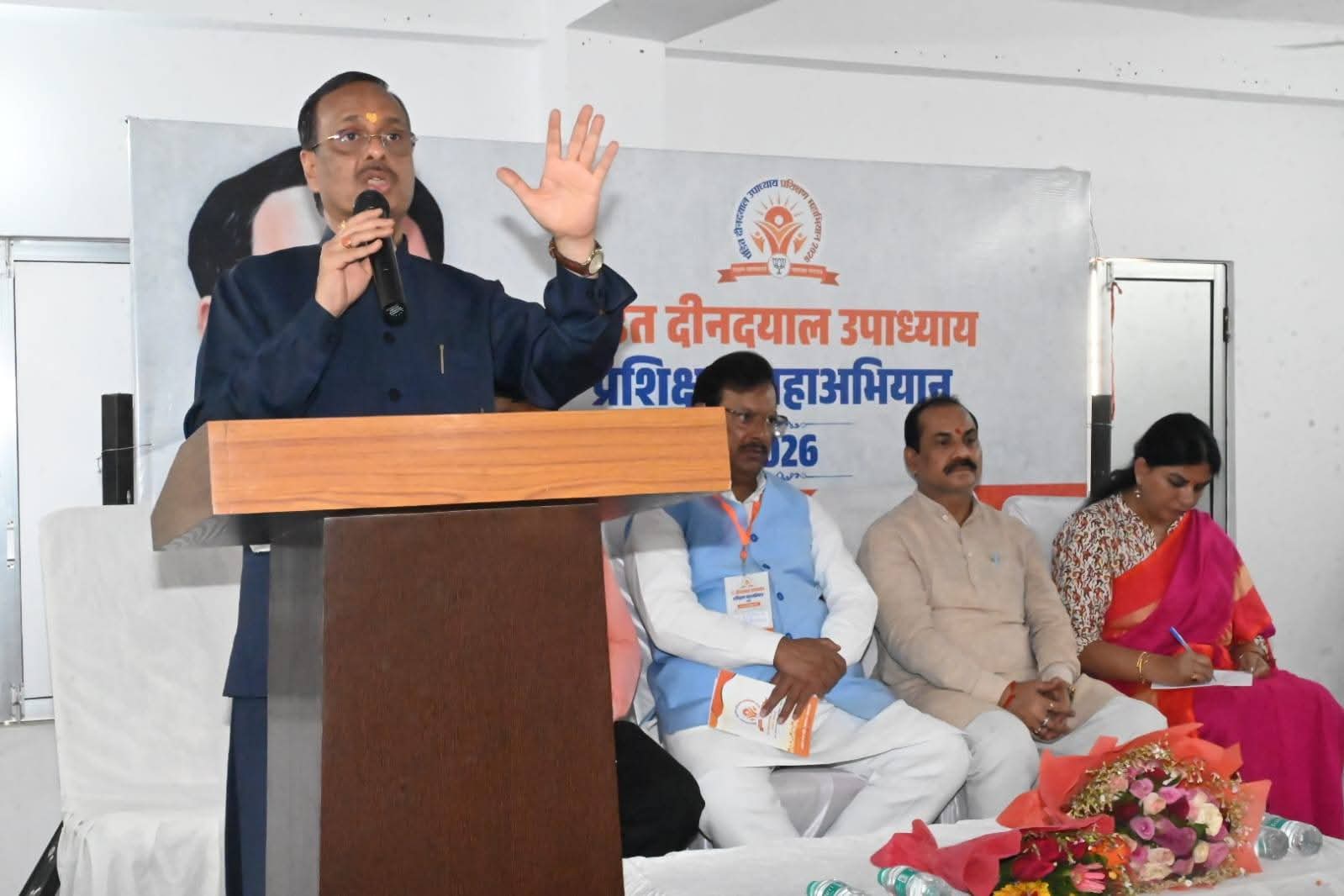
Lucknow: The Bharatiya Janata Party (BJP) Lucknow Metropolitan unit has launched two-day Pandit Deendayal Upadhyaya training camps at the mandal level across all assembly constituencies in the city to strengthen organisational structure and train party workers.
During various sessions of the training camps, speakers held detailed discussions on the party’s ideological foundations, organisational functioning, and achievements of the government. The workshops were aimed at equipping party workers with the knowledge and skills required to strengthen grassroots activities.
Several senior leaders addressed different sessions as chief speakers. Dinesh Sharma, Member of Parliament in the Rajya Sabha, addressed workers in Mandal-2 of Purab Assembly constituency. Another Rajya Sabha MP, Amarpal Maurya, spoke at the session held in Mandal-1 of Sarojini Nagar Assembly constituency.
Member of the Uttar Pradesh Legislative Council Santosh Singh addressed participants in Mandal-1 of Uttar Assembly constituency. The session was also attended by Raju Bhandari, former General Secretary of the BJP in Uttarakhand and in-charge of the Lucknow zone.
Other speakers included Tryambak Tripathi, BJP State Vice President, who addressed the session in Mandal-1 of Paschim Assembly constituency, and Kamlesh Mishra, Awadh Regional President of the party, who addressed workers in Mandal-3 of the Central Assembly constituency. MLA OP Srivastava was also present during the programme in the Purab Assembly area.

Speaking about the initiative, BJP Lucknow Metropolitan President Anand Dwivedi said that workers trained in these camps would further train booth-level workers in their respective mandals, which would help strengthen the party’s grassroots organisation.
He added that the training sessions included detailed guidance on the party’s working methodology, use of social media, and digital applications. Special emphasis was placed on booth management activities such as “Mann Ki Baat” listening sessions, tiffin meetings, and booth-level outreach programmes.
In addition, participants were introduced to the practical use of Artificial Intelligence (AI). Workers were trained on how to use AI tools to create social media content, prepare speeches, translate material, and organise information more effectively, helping them adopt modern digital methods in political communication.