
Dhaka |
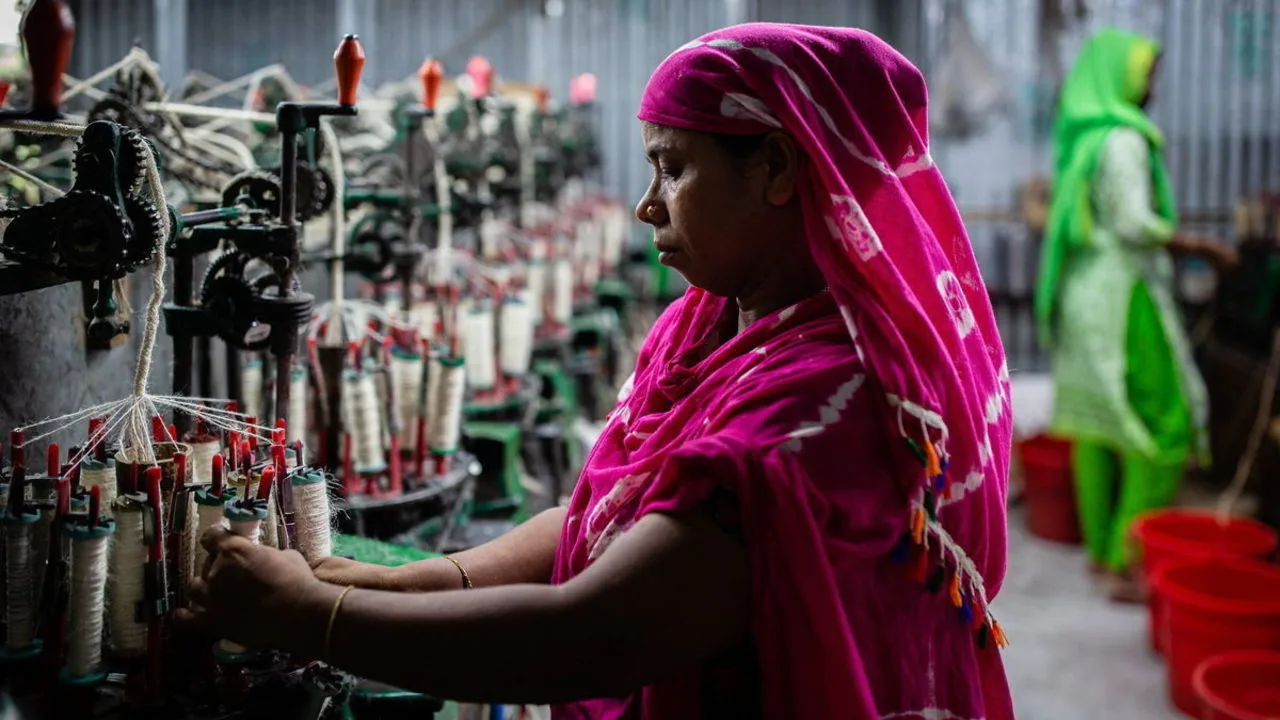
Bangladesh’s textile sector, the backbone of its economy, is facing a severe crisis that threatens the livelihoods of nearly one million workers. The industry, which contributes 80% of the country’s exports and employs around 4 million people, is struggling due to rising import costs, domestic supply issues, and recent policy changes.
Duty-Free Yarn Imports Suspended
The Bangladesh government recently suspended the duty-free import facility for cotton yarn under the bonded warehouse system, following recommendations from the Ministry of Commerce and the National Revenue Board (NBR). This facility had allowed garment manufacturers to import cotton yarn from India and polyester yarn from China at no import duty, keeping production costs low.
Bangladesh Textile Mills Association (BTMA) warned that if the duty-free imports are not restored by the end of January, all spinning units across the country could halt production starting February 1, 2026. BTMA chairman Salim Rahman stated that over 50 mills have already shut down, leaving thousands unemployed and stockpiles of unsold yarn worth approximately BDT 12,000 crore.
Economic and Supply Challenges
The textile sector has also been hit by a recent gas shortage, irregular supply, and rising energy costs, which have reduced production capacity by 50% and caused losses estimated at $2 billion. While garment exporters rely on cheap imports to remain competitive internationally, domestic millers argue that local capacity can meet demand if the imports are restricted.

The disagreement between millers and the Bangladesh Garment Manufacturers and Exporters Association (BGMEA) has intensified, with exporters warning that halting duty-free imports will increase costs, slow production, and hurt global competitiveness.
Impact on Global Competitiveness and Jobs
Bangladesh imports around 70 million kilograms of yarn annually, 78% of which comes from India. Without affordable imports, domestic mills may struggle to meet production targets, risking delays in fulfilling export orders. Analysts warn that if the crisis is not resolved, it could trigger economic downturns and social unrest.
India’s recent stricter enforcement on yarn exports and cross-border trade has amplified the pressure on the sector, making it a pivotal moment for Bangladesh’s economy. Immediate government intervention, policy clarity, and support for domestic mills are seen as critical to prevent a full-scale collapse of the industry and the loss of jobs for hundreds of thousands of workers.