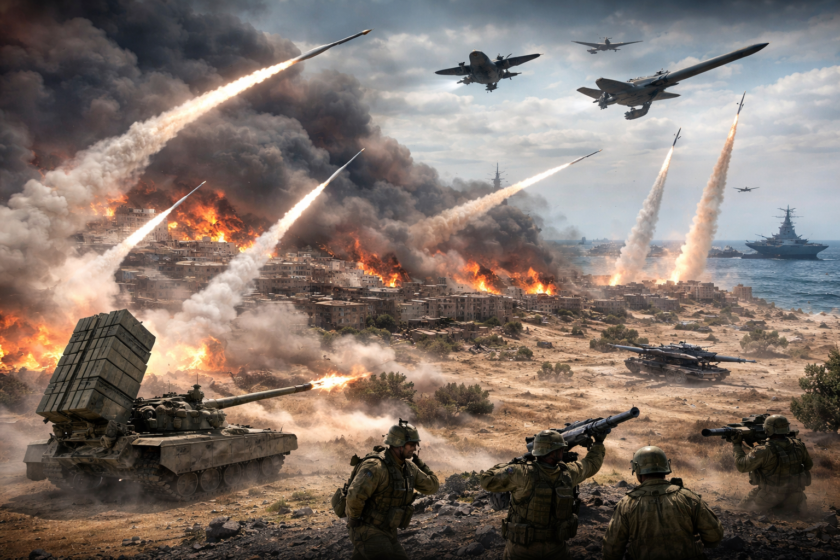
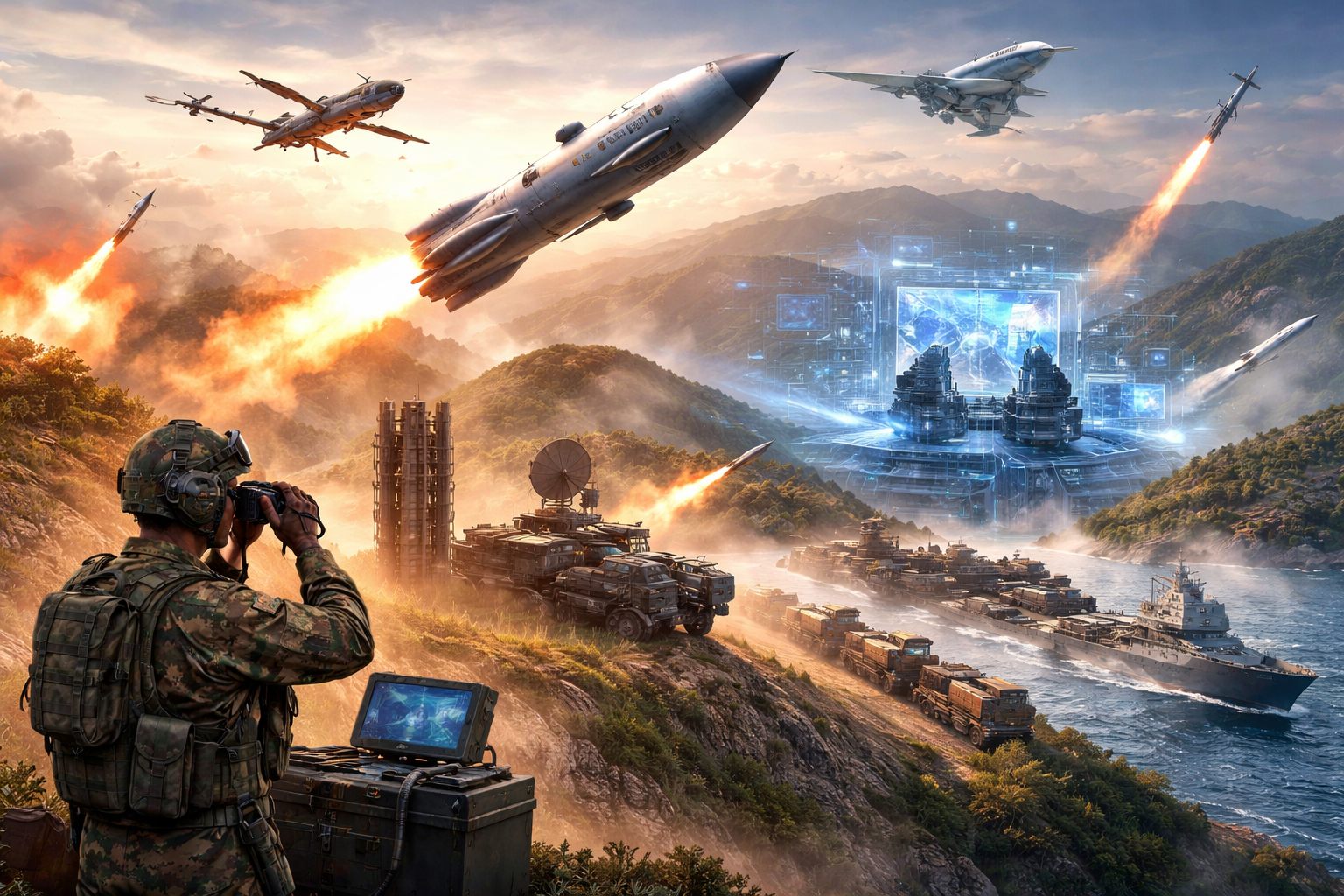
Lucknow: As conflicts across regions such as West Asia, Eastern Europe, and parts of Africa redefine the nature of warfare, India is carefully studying these evolving battlefields to reshape its own military doctrine, defence industry, and strategic posture. The lessons emerging from these global conflict zones—particularly the rise of drone warfare, precision strikes, cyber operations, and cost-effective combat strategies—are significantly influencing India’s approach to national security.
For a country like India, which faces complex security challenges on multiple fronts, adapting to these lessons is not just an option—it is a necessity.
Shift Toward Modern, Technology-Driven Warfare
One of the most striking lessons from recent global conflicts is the dominance of technology over sheer numbers. From Ukraine to West Asia, wars are increasingly being fought using drones, missiles, artificial intelligence, and electronic warfare systems.
Recognizing this shift, the Indian Armed Forces are rapidly modernising their capabilities. The focus has moved toward network-centric warfare, where real-time data, surveillance, and communication systems play a decisive role in battlefield outcomes.
India is investing heavily in advanced surveillance platforms, satellite systems, and integrated command-and-control networks to ensure faster decision-making and better coordination between the Army, Navy, and Air Force.
Rise of Drone Warfare and Counter-Drone Systems
Perhaps the most transformative lesson has been the rise of drones as a dominant force multiplier. Low-cost unmanned aerial systems have proven capable of inflicting significant damage on high-value targets.
India has taken note. Indigenous drone development has accelerated, with both government agencies and private startups contributing to a rapidly expanding ecosystem. The Defence Research and Development Organisation is spearheading efforts to develop advanced drones for surveillance, combat, and logistics.
At the same time, counter-drone systems have become a priority. India is deploying anti-drone technologies along sensitive borders, particularly in areas prone to infiltration or smuggling via unmanned systems.
Emphasis on Long-Range Precision Strike Capabilities
Modern conflicts have shown the importance of striking targets deep inside enemy territory without exposing troops to direct combat. Stand-off weapons—such as cruise and ballistic missiles—have become central to military strategy.
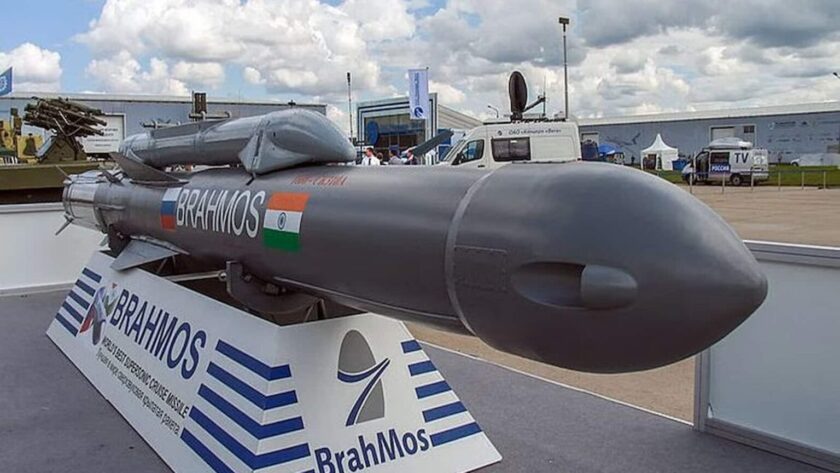
India is enhancing its long-range strike capabilities through systems like the BrahMos missile, one of the fastest cruise missiles in the world. Plans to induct extended-range variants further underscore India’s intent to build a credible deterrent.
These capabilities allow India to neutralise critical infrastructure, command centres, and logistics hubs of adversaries with precision, reducing the need for prolonged ground engagements.
Air Defence and Missile Shield Modernisation
The increasing use of drones and missiles in global conflicts has exposed vulnerabilities in traditional air defence systems. Saturation attacks—where large numbers of low-cost weapons overwhelm defences—have become common.
In response, India is strengthening its multi-layered air defence network. Systems such as the S-400 missile system provide long-range interception capabilities, while indigenous projects aim to create a comprehensive shield against diverse threats.
India is also exploring directed-energy weapons, including laser-based systems, to counter drones more cost-effectively—addressing the growing concern of economic imbalance in modern warfare.
Integration of Artificial Intelligence and Cyber Warfare
Artificial intelligence (AI) and cyber capabilities are redefining how wars are planned and executed. From autonomous drones to predictive analytics, AI is enabling faster and more accurate decision-making.
India is increasingly incorporating AI into its defence framework. The government has launched initiatives to promote AI research in military applications, including surveillance, threat detection, and battlefield simulations.
Cybersecurity has also become a critical domain. Protecting communication networks, critical infrastructure, and defence systems from cyberattacks is now a top priority, especially in an era where digital warfare can disrupt entire operations without a single shot being fired.
Self-Reliance and Defence Manufacturing Push
Global conflicts have underscored the importance of self-reliance in defence production. Supply chain disruptions and geopolitical tensions can severely impact a country’s ability to procure critical equipment.

Under initiatives like Make in India and Aatmanirbhar Bharat, India is aggressively promoting indigenous defence manufacturing.
Private sector participation has increased significantly, with companies entering areas such as small arms, drones, aerospace systems, and advanced electronics. This shift not only reduces dependency on imports but also positions India as a potential exporter of defence equipment.
Learning from Hybrid and Asymmetric Warfare
Modern conflicts are rarely fought through conventional means alone. Hybrid warfare—combining military action with cyberattacks, misinformation campaigns, and economic pressure—has become the new normal.
India is adapting to this reality by strengthening its intelligence and counter-intelligence capabilities. Monitoring information warfare, combating fake news, and safeguarding public morale are now integral parts of national security strategy.
Additionally, India is focusing on special operations forces and rapid-response units capable of handling unconventional threats, including terrorism and insurgency.
Maritime Security and Strategic Chokepoints
Conflicts in regions like the Red Sea have highlighted the vulnerability of global trade routes. Disruptions in maritime chokepoints can have far-reaching economic consequences.
The Indian Navy is enhancing its presence in the Indian Ocean Region to secure vital sea lanes. Investments in surveillance aircraft, submarines, and naval drones are aimed at strengthening maritime domain awareness.
India is also collaborating with international partners to ensure the safety of shipping routes and counter emerging threats such as piracy and drone attacks on vessels.
Focus on Logistics and War Sustainability
Another critical lesson from global conflicts is the importance of logistics and sustainability. Wars are not won solely on the battlefield—they require sustained supply chains, ammunition reserves, and industrial capacity.
India is working to improve its logistics infrastructure, including border roads, tunnels, and airstrips, to ensure rapid troop deployment and supply movement. Efforts are also underway to boost domestic production of ammunition and spare parts to maintain operational readiness during prolonged conflicts.
Human Element and Training Evolution
While technology plays a crucial role, the human element remains central to warfare. Training, adaptability, and morale are key factors in determining outcomes.
India is modernising its training programs to include simulations, joint exercises, and exposure to new technologies. Collaboration with friendly nations allows Indian forces to learn from real-world combat experiences and adopt best practices.
Diplomacy and Strategic Balance
Even as India strengthens its military capabilities, it continues to emphasise diplomacy and strategic balance. Maintaining strong relationships with global powers while safeguarding national interests is a delicate but essential task.
India’s approach reflects a blend of deterrence and dialogue—preparing for worst-case scenarios while working toward stability and peace.
Preparing for the Future Battlefield
The lessons from global conflict zones are clear: warfare is becoming faster, smarter, and more unpredictable. Nations that fail to adapt risk falling behind.
For India, the response has been proactive and comprehensive. By embracing technology, promoting self-reliance, strengthening defence capabilities, and learning from global experiences, the country is positioning itself to meet future challenges with confidence.
As the nature of warfare continues to evolve, India’s ability to integrate these lessons into its strategic framework will play a crucial role in ensuring its security and stability in an increasingly uncertain world.