Balochistan | A new and troubling dimension has emerged in Pakistan’s restive Balochistan province as armed women have begun appearing prominently in insurgent activities, signalling a deeper social and strategic shift within the Baloch resistance movement. Recent coordinated attacks by Baloch militants across 12 locations in the province targeted security forces, police units and civilian infrastructure, leaving at least 10 security personnel dead and further destabilising the region’s fragile security environment.
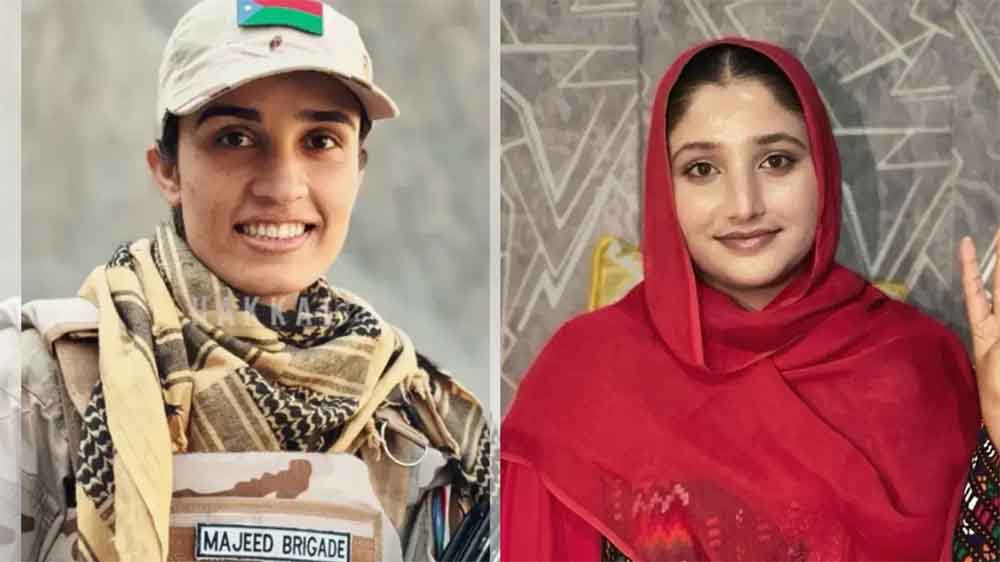
The attacks have visibly shaken both the provincial government and the military establishment. Chief Minister Sarfaraz Bugti appeared publicly distressed following the incidents, underscoring the gravity of the situation. Shortly after the attacks, the Balochistan Liberation Army (BLA) released images of two attackers—both women—drawing widespread attention and debate. Armed insurgency in the region has traditionally been male-dominated, making the visual confirmation of female militants particularly significant.
Rising Anger Within Society
Security analysts suggest the Baloch resistance is undergoing a transformation, moving beyond traditional tribal leadership towards broader social mobilisation and tactical evolution. Harsh counterinsurgency operations, allegations of enforced disappearances, and the absence of sustained political dialogue have deepened resentment among local communities.
Political analyst Ayesha Siddiqa notes that the active participation of women in armed movements often reflects profound societal anger and a breakdown of social structures. According to her, when women take up arms, it indicates that conflict has penetrated deeply into everyday civilian life.
Female Militants Identified
Following a series of recent attacks that reportedly killed 50 civilians and 17 security personnel, the BLA publicly identified two female militants. One of them was named as 24-year-old Asifa Mengal. Pakistan’s Defence Minister Khawaja Asif also acknowledged that women were involved in at least two of the attacks.
The BLA claimed that Mengal had decided to carry out a suicide operation in January 2024 and later executed an attack in Nushki district. Separately, a video circulating on social media showed an armed female militant conducting surveillance near security installations alongside male fighters, openly mocking Pakistan’s security forces.
Growing Role of Baloch Women
The participation of women in Baloch militant groups has been steadily increasing in recent years. This is not without precedent. In April 2022, a female suicide bomber carried out an attack outside the Confucius Institute at Karachi University, killing four people, including three Chinese nationals. Subsequent attacks involving female militants were reported in June 2022 and March 2025.

Security agencies acknowledge that these incidents have significantly complicated Pakistan’s internal security landscape. Experts argue that as leadership of the Baloch movement has shifted from tribal elites to a more educated middle class, women’s involvement has expanded accordingly.
Human rights groups estimate that over 5,000 people have gone missing in Balochistan since 2000, most of them men. As a result, women in many families have assumed greater roles in social, political and, increasingly, armed resistance.
Strategic and Political Challenge for Pakistan
Strategic affairs expert Brahma Chellaney has described the rise of female militants as a reflection of deep frustration and despair within Baloch society. Meanwhile, analysts close to Pakistan’s establishment argue that this should not be seen as empowerment, alleging that militant groups are exploiting young women through emotional and ideological pressure.
Security data indicates that at least 350 people have been killed in Baloch insurgency-related violence since 2011, with fatalities rising sharply in 2024 and 2025. Analysts warn that the growing intensity of the conflict—combined with the increasing participation of women—poses a serious strategic, political and security challenge for Pakistan.
As the conflict evolves, the changing face of militancy in Balochistan suggests that the crisis is no longer confined to armed confrontation alone but reflects a deeper societal rupture that may be increasingly difficult to contain.