- A major step towards commercializing natural dyeing; AMA’s rope dyeing technology gets patented
- Less water, lower cost and uniform colour; AMA Herbal Group’s unique rope dyeing technique earns patent
Lucknow: AMA Herbal Group of Companies has received a patent for its innovative natural rope dyeing process. The patent has been granted for a technology that enables uniform colouring of long yarns using natural dyes. It has been developed to use less water, reduce costs, and support large-scale production. At present, this process is not available with any other company.
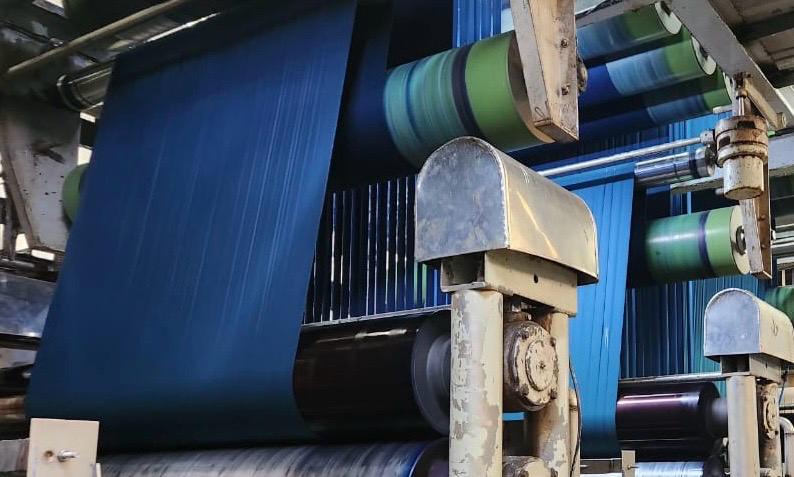
Rope dyeing is a machine-based process commonly used to dye denim yarns. However, it is not limited to denim alone. Through this method, yarns ranging from 10,000 to 20,000 meters in length can be dyed continuously.
Typically, yarn is dyed either in cone form weighing 2 to 2.5 kg, or in hank form weighing 0.5 to 1 kg. In traditional natural dyeing, hanks need to be knotted together, making the process complex and time-consuming. With the new rope dyeing process, the entire operation is carried out in a continuous manner, significantly speeding up the process.
One of the key advantages of this technology is reduced water consumption, which lowers overall dyeing costs. Earlier, natural dyeing was largely limited to indigo, as other natural dyes had low affinity with cotton and required multiple separate steps such as pre-treatment, dyeing, washing, and fixation. AMA Herbal Group has successfully integrated all these processes into a single rope dyeing system.

This process has already been used at a commercial level in two textile mills, delivering high-quality products. From a cost perspective, the technology is highly efficient, and the uniform colour across the entire yarn length makes large-scale adoption of natural dyes easier.
Commenting on the achievement, AMA Herbal Group of Companies Co-Founder & CEO, Mr. Yawer Ali Shah , said, “This is our second patent and a major step towards strengthening natural dyeing at a commercial level. This process will promote environmentally friendly textile production and give a new momentum to the industry.”