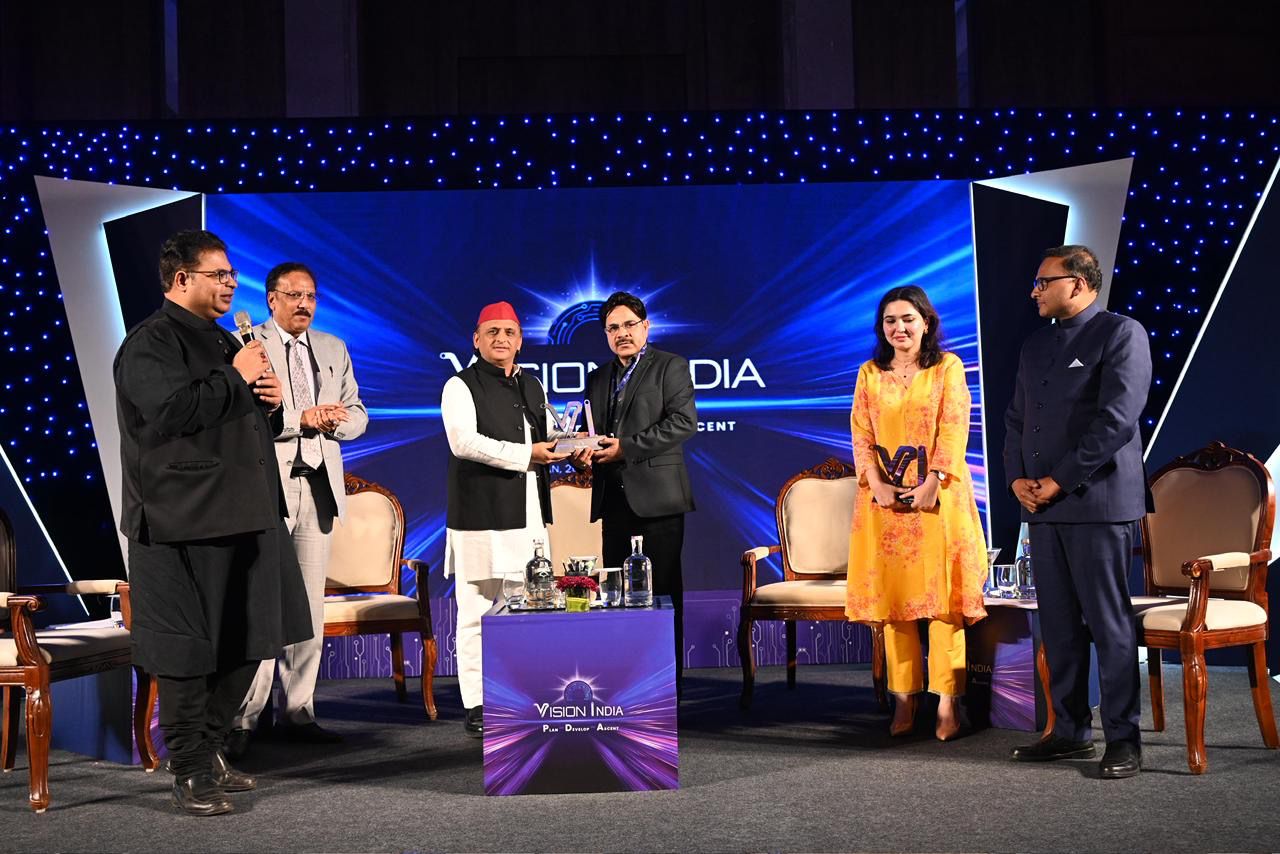
Bhubaneswar: Samajwadi Party National President and former Uttar Pradesh Chief Minister Akhilesh Yadav addressed the Holistic Health Summit organised under the Vision India Programme in Odisha’s capital Bhubaneswar. Yadav attended the summit as the chief guest and strongly advocated a comprehensive, preventive and people-centric approach to healthcare.
Addressing the gathering, Akhilesh Yadav said that discussions on health today must go beyond diseases and medical treatment to include mental well-being, emotional balance and social conditions. He stressed that holistic health encompasses physical fitness, nutritious food, positive social support, happy working conditions and a healthy environment. “This is why the focus must shift from slogans to a mission-driven approach,” he said.
He explained the distinction between healthcare and medical care, stating that health is preventive in nature, while medical services are curative. “When health systems fail, people are pushed towards hospitals. But if we focus on holistic health, people will fall ill less often, remain happier and contribute more productively to society,” Yadav remarked.
Highlighting the impact of environmental and social factors on health, he cited examples such as air pollution in Delhi and the recent toxic water tragedy in Indore, a city repeatedly awarded for cleanliness. “Deaths caused by contaminated drinking water in such cities show the serious gaps in governance. Air, water and noise pollution are directly linked to public health,” he said.
Yadav expressed concern over the poor state of primary healthcare infrastructure in the country, stating that only about 30 per cent of holistic health needs are being adequately addressed. He pointed out that Primary Health Centres (PHCs) and Community Health Centres (CHCs) are in poor condition, emergency services have virtually collapsed in Uttar Pradesh, and mental health services remain largely absent. He also noted that health data for rural populations is inadequate, while ASHA workers are overburdened and underpaid despite being the backbone of grassroots healthcare.
Criticising governments for neglecting environmental factors, Yadav said rivers remain polluted due to industrial waste, which eventually contaminates farmland and food systems. He also questioned the lack of structured health education in schools and colleges, despite frequent public speeches on yoga and wellness.

Calling for systemic reforms, Akhilesh Yadav said healthcare faces both medical and social challenges. Public awareness, education and proactive wellness must be prioritised. He advocated the expansion of digital medical services, telemedicine, regular health check-ups and free diagnostic tests. Recalling his tenure as Chief Minister, he said all medical tests were free under the Samajwadi government and pledged to restore and expand such initiatives.
Yadav emphasised the need for investment in healthcare infrastructure, fair compensation and social security for doctors, nurses and ASHA workers. “If healthcare workers remain anxious about their own futures, they cannot deliver quality care,” he said.
He also proposed using artificial intelligence to map regional health challenges, linking telemedicine services to every panchayat, providing home-based diagnostic services, mobile consultations and greater allocation of CSR funds to the health sector. Additional training centres for nursing staff and a 360-degree approach integrating diet, fitness, yoga, dental care and family planning were also highlighted.
“Health is human capital for the economy. A ‘Healthy India’ should not be just a slogan—it must become a national mission,” Yadav concluded, adding that health would be the top priority of a future Samajwadi Party government with adequate budgetary support.
The summit was also attended by Rajya Sabha MP Rajeev Rai, former minister Abhishek Mishra, and former IAS officer Alok Ranjan, who actively participated in the discussions.