Building India’s AI-Ready Educators: CU UP Hosts Second Official Pre-Event of India AI Impact Summit
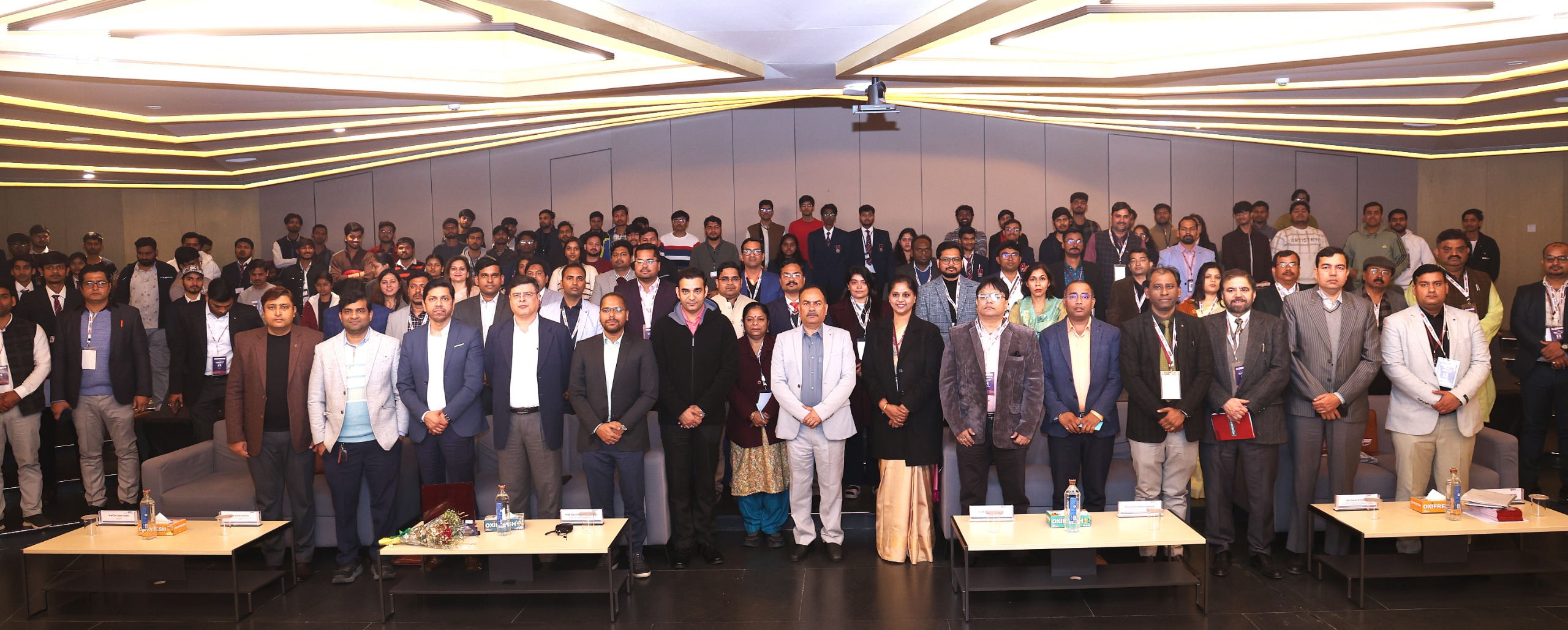
Unnao: Reinforcing its position at the forefront of India’s AI-led academic transformation, Chandigarh University Uttar Pradesh on Saturday organized the second official pre-event of the Government of India’s India AI Impact Summit 2026, themed ‘Faculty Futures 2035: Reimagining Professional Development in the Age of AI’. The international workshop was held in collaboration with the University of Canada West, Canada, and the Canterbury Institute of Management, Australia.
Designed as a hybrid co-design workshop, the summit brought together faculty developers, academic leaders, and AI education specialists from India, Canada, and Australia to collectively envision the future of faculty development in an AI-driven higher education ecosystem. The initiative marked a significant step towards building globally aligned, ethically grounded, and future-ready academic frameworks.
The workshop focused on co-creating the ‘Faculty Futures 2035 Roadmap’, addressing emerging competencies, ethical foundations and institutional frameworks essential for professional growth in the age of artificial intelligence. Representatives from India and Australia closely observed the process, enabling the model to be replicated across institutions using standardized prompts.
A total of 24 guest participants engaged in intensive deliberations through structured table rotations, involving six discussion tables and six focused prompts, with ten minutes dedicated to each interaction. Discussions revolved around three interconnected dimensions of AI-enabled higher education—curriculum transformation, pedagogical innovation, and faculty upskilling—ensuring dynamic exchanges and actionable outcomes from experienced academics and institutional leaders.
The chief guest, Dr. Anand Handa, Senior cybersecurity expert associated with C3iHub (Cybersecurity Technology Innovation Hub), IIT Kanpur, said “It is an honor and a privilege to be present at Chandigarh University, Uttar Pradesh campus. Today, it is clear that AI is a necessity for the future, and integrating it with fields like cybersecurity, quantum and post-quantum technologies, blockchain, IoT, and cloud computing is absolutely essential. Over the next ten years, these technologies will not only transform the economy but also reshape the entire ecosystem. To realize the Prime Minister’s vision of Digital India by 2047, it is crucial to make AI and emerging technologies an integral part of the curriculum. I congratulate the faculty members and all stakeholders involved in organizing this summit at CU-UP, as ultimately, it is the students who are the real beneficiaries of these initiatives.
On the occasion, Dr. Thipendra P Singh, Pro Vice Chancellor, Chandigarh University, Uttar Pradesh said “Organized under the India AI Impact Summit 2026, this international workshop on ‘Faculty Futures 2035’ reflects Chandigarh University Uttar Pradesh’s strong commitment to advancing AI-driven education. Conducted in collaboration with University Canada West and the Canterbury Institute of Management, Australia, the hybrid-format workshop brought together faculty developers, academic leaders, and AI education experts from India, Canada, and Australia. The discussions focused on faculty development, curriculum transformation, and professional upskilling in the age of AI, leading to a shared global perspective. The ‘Faculty Futures 2035 Roadmap’ emerging from this initiative will serve as a strong foundation for building an ethical, inclusive, and future-ready higher education ecosystem, ultimately benefiting both educators and students.”.
Key Outcomes of the Workshop
The deliberations resulted in a shared understanding of AI’s impact on teaching, learning, and curriculum design, forming a common knowledge base for future planning. Participants identified preliminary AI-related competency frameworks for faculty and students, which will serve as a foundation for professional development initiatives.
Collaborative strategies were also developed to ensure ethical and responsible integration of AI in academic environments, while enhancing institutional foresight, agility, and adaptability to technological change. The initiative further strengthened global academic collaboration, enabling cross-institutional exchange of best practices.
The workshop’s cross-group reporting and sense-making exercise will culminate in a white paper, jointly authored by Chandigarh University, Uttar Pradesh, University of Canada West, and Canterbury Institute of Management, to be submitted for publication in a leading academic journal.

Part of a Larger National AI Vision
The Faculty Futures 2035 workshop is the second in a series of three official pre-events being hosted by Chandigarh University, Uttar Pradesh, as part of the Government of India’s India AI Impact Summit 2026, scheduled in New Delhi from February 16–20.
The first official pre-event, the AI Convergence Summit 2026, was organized on January 10 in collaboration with the Government of Uttar Pradesh. The summit positioned Uttar Pradesh as a key execution partner in India’s AI and Quantum journey and featured participation from AI and technology experts from five countries. A major highlight was India’s first AI Healthcare Hackathon, aligned with Uttar Pradesh’s nationally assigned theme of ‘Health & AI’, which witnessed participation from 1,500 teams comprising over 5,000 youth innovators working on more than 100 healthcare problem statements provided by government agencies and industry.
The AI Convergence Summit also marked the launch of landmark initiatives such as ‘Quantum for Bharat’ and ‘AI for All’, focusing on digital literacy, AI capacity building and policy-to-platform collaboration. The summit saw participation from the Ministry of Electronics and Information Technology (MeitY), IndiaAI, Digital India, MeitY Startup Hub, and senior policymakers, researchers, and industry leaders.
Third Pre-Event on January 29
Continuing this momentum, Chandigarh University, Uttar Pradesh, will host the third official pre-summit event on January 29, titled ‘Young Researchers’ Symposium on Data Science for Science’. The symposium will provide a national platform for undergraduate, postgraduate, and doctoral researchers to present interdisciplinary research integrating AI, machine learning, data analytics, and computational modelling across domains such as biotechnology, forensic science, life sciences, climate studies, physics, chemistry, agriculture, and healthcare.
Aligned with the IndiaAI Mission, the symposium emphasizes inclusive, responsible, and impactful AI, encouraging ethical research practices, data privacy, bias mitigation, and adherence to FAIR data principles. By connecting young researchers with mentors, institutions, and policymakers, the event aims to strengthen India’s AI-driven scientific research ecosystem.
A Key Host of India AI Impact Summit 2026
With three official pre-events spanning policy dialogue, faculty transformation, and young researcher engagement, Chandigarh University Uttar Pradesh has emerged as a major academic hub supporting the Government of India’s India AI Impact Summit 2026, reinforcing its commitment to shaping India’s AI-ready future through education, research, and global collaboration.