
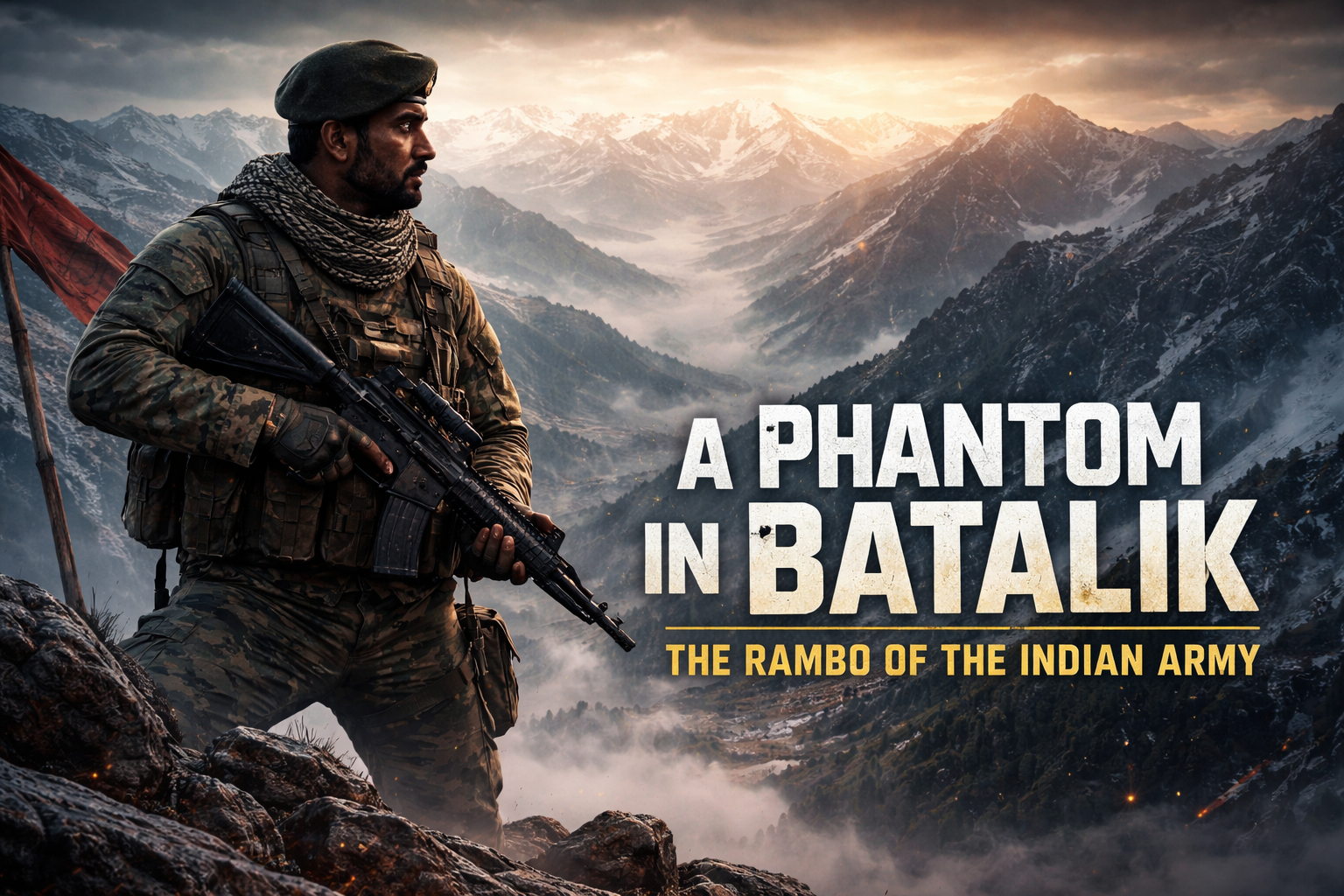
Lucknow: When the Kargil War erupted in May 1999, the Indian Army faced an enemy perched atop treacherous ridgelines, threatening the lifeline of Ladakh—National Highway 1A. Conventional infantry assaults alone couldn’t dislodge the intruders. That’s when Major Sudhir Walia, later dubbed the Rambo of the Indian Army, stepped into the shadows of Batalik.
Fresh from a stint with RAW’s clandestine operations, then-Captain Walia knew the mountains, guerrilla tactics, and the endurance required to survive days in sub-zero conditions with minimal support. Assigned to 9 Para (SF), his missions combined intelligence gathering, sabotage, and surgical strikes—all conducted deep behind enemy lines.
The Art of Silent Warfare
Walia led long-range reconnaissance patrols, threading through enemy-held ridges and vertical cliffs. One mission on Munthodalo Ridge saw him and his team climb 17,000 feet over two nights, evading snipers, before calling in precision artillery strikes that disrupted enemy logistics. On another operation, he personally neutralized a Pakistani mortar nest in Yaldor, crawling through snow mere meters from enemy sentries, clearing the path for Indian infantry.
Sleep was a luxury he rarely afforded—72-hour stretches were common, sustained only by tea, dry rations, and sheer will. Yet, despite exhaustion and injuries, he remained the calm anchor for his team, anticipating enemy movements and planning every exit strategy. Junior officers recall: “If we had to bet our lives on someone leading us through hell, it would be Walia.”
Decorated but Undistracted
For his bravery, Walia received a Bar to his Sena Medal, one of the few officers to be honoured twice during Kargil. Yet, accolades never distracted him. He declined staff postings, returning instead to counter-insurgency operations in Jammu and Kashmir, saying simply, “The job is not done yet.”

Why Walia Mattered in Kargil
While infantry assaults bore the brunt of bloodshed, Walia’s covert operations softened enemy defences, disrupted supply lines, and secured high-value ridges—all often unseen by cameras or media. His surgical precision allowed Indian artillery and infantry to operate more effectively, changing the dynamics of the conflict without fanfare.
The Man Behind the Legend
Fluent in Pashto and Dari, Walia’s experience with RAW had honed his skills for cross-border and counter-insurgency operations. His peers recall him as a soldier who would “go where others won’t, do what others can’t.” Tragically, a year after Kargil, Walia fell in Kupwara while eliminating four terrorists and saving his team, posthumously receiving the Ashoka Chakra.
A Shadow Among Peaks
Kargil had many heroes, but Walia was different—an invisible force, operating in extreme altitudes with only snow and silence as witnesses. His story is one of grit, precision, and unyielding courage: the Rambo of the Indian Army, who fought unseen but left an indelible mark on India’s military history.