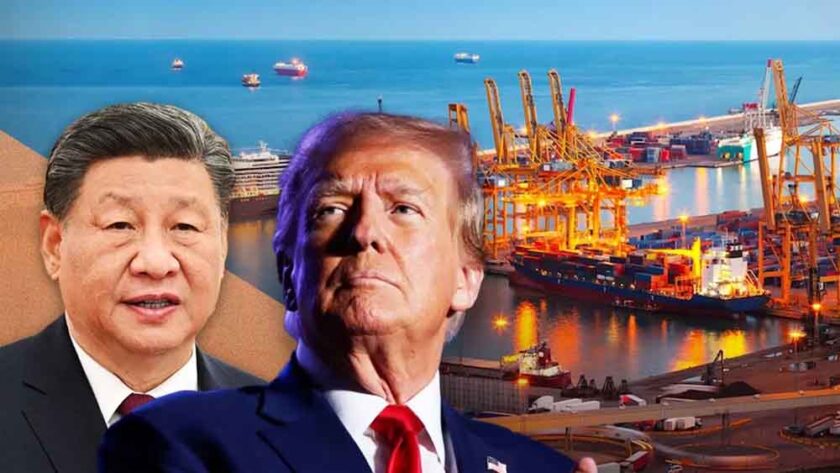

New Delhi: After signing a landmark Free Trade Agreement (FTA) with the United Kingdom, India has further accelerated its trade diplomacy by concluding a Comprehensive Economic Partnership Agreement (CEPA) with Oman. The agreement was formally signed on December 18, 2025, in the presence of Prime Minister Narendra Modi and Oman’s Sultan Haitham bin Tariq, marking a significant milestone in India’s engagement with the Gulf region. This move gains added importance amid rising global trade tensions, especially after the United States imposed steep tariffs of up to 50 percent on certain Indian exports.
A Strategic and Timely Agreement
The India–Oman CEPA is India’s second FTA in six months and Oman’s first bilateral trade agreement since 2006, underscoring its strategic importance for both nations. The deal is designed to boost trade, investment, and services while safeguarding sensitive domestic sectors in India. Bilateral trade between the two countries is expected to cross USD 10 billion in 2024–25, strengthening Oman’s position as a key gateway for Indian goods and services to West Asia, East Africa, and beyond.

Major Gains for Indian Exports
One of the biggest advantages for India lies in the near-complete duty-free access granted by Oman. Under the agreement, Oman has offered zero-duty access on 98.08 percent of its tariff lines, covering 99.38 percent of India’s export value. Notably, 97.96 percent of these tariff lines will see immediate elimination of duties, making Indian products significantly more competitive in the Omani market.
Key labour-intensive sectors stand to gain the most. These include textiles, leather, footwear, gems and jewellery, engineering goods, plastics, furniture, agricultural products, pharmaceuticals, medical devices, sports goods, and automobiles. For the first time, India’s traditional medicines and AYUSH products have also been included, opening new avenues in Gulf markets.
Balanced Protection of Sensitive Sectors
While India has extended tariff liberalisation on 77.79 percent of its tariff lines, covering 94.81 percent of imports from Oman by value, it has carefully protected sensitive sectors. Products such as dairy, tea, coffee, rubber, tobacco, gold and silver bullion, jewellery, footwear, sports goods, and certain metal scraps have been excluded or placed under tariff-rate quota (TRQ) mechanisms. This approach ensures that Indian farmers, MSMEs, and vulnerable industries remain shielded from sudden import surges.
Services and Skilled Professionals: A Game Changer
The services component of the CEPA is seen as a major breakthrough. Oman’s total global services imports stand at USD 12.52 billion, while India’s current share is just over 5 percent—highlighting vast untapped potential. Oman has made significant commitments across 127 sub-sectors, including IT and computer services, business and professional services, audio-visual media, R&D, education, and healthcare.

Crucially, Oman has, for the first time, offered liberal commitments under Mode 4 (movement of skilled professionals). The quota for intra-corporate transferees has been increased from 20 percent to 50 percent, while the permitted stay for contractual service suppliers has been extended from 90 days to two years, with the possibility of further extension. Professionals in fields such as accountancy, taxation, architecture, and medical services will benefit directly.
Investment, Diaspora, and Long-Term Impact
The agreement allows 100 percent FDI by Indian companies in key service sectors in Oman. With over 7 lakh Indians residing in Oman and more than 6,000 Indian establishments already operating there, the CEPA is expected to deepen economic integration. India currently receives nearly USD 2 billion annually in remittances from Oman, a figure likely to rise with increased employment opportunities.
Both countries have also agreed to explore a Social Security Coordination Agreement in the future, which would further safeguard the interests of Indian workers.
Strengthening India’s Gulf Footprint
The India–Oman CEPA complements New Delhi’s broader FTA strategy, which already includes agreements with UAE, ASEAN, Australia, Japan, South Korea, EFTA nations, and others. Negotiations are ongoing with partners such as the US, EU, New Zealand, Israel, and Latin American countries.
In essence, the Oman agreement strikes a careful balance—boosting exports, services, and jobs while protecting core domestic interests. At a time of global trade uncertainty, it enhances India’s economic resilience, strengthens its presence in the Gulf, and opens new pathways for growth, investment, and employment.