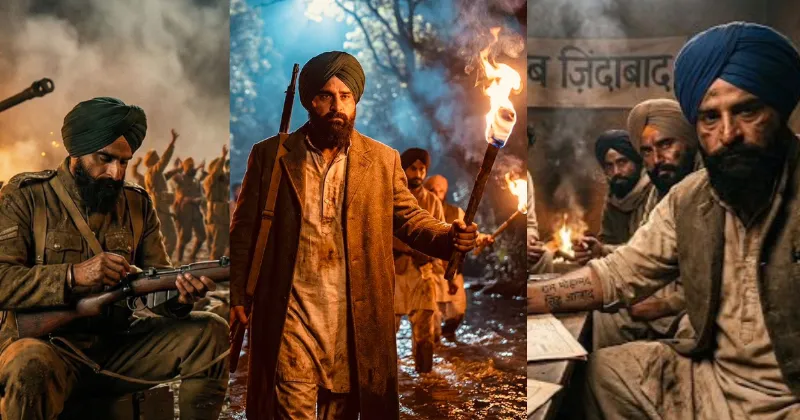
Mumbai: The enduring appeal of real-life historical narratives continues to shape Hindi cinema, especially stories rooted in India’s freedom struggle. The Legend of Udham Singh, directed by Waseem Amrohi, revisits one of the most defining chapters of India’s revolutionary history with intensity, emotion, and a striking sense of purpose. The film, now streaming on Waves OTT, stands as a compelling cinematic tribute to one of the nation’s most iconic freedom fighters.
Set against the turbulent backdrop of pre-independence India, the film powerfully recreates the aftermath of the 1919 Jallianwala Bagh massacre and the decades-long pursuit of justice that followed. It traces Udham Singh’s journey across more than twenty years, culminating in the assassination of Michael O’Dwyer in 1940. The narrative unfolds at a measured pace, allowing the emotional gravity of each moment to fully resonate without feeling rushed or superficial.
Waseem Amrohi anchors the film with a commanding and deeply immersive performance. He brings Udham Singh to life with conviction, portraying him as a man shaped by grief, driven by vengeance, and ultimately defined by an unwavering sense of purpose. His performance balances restraint with intensity, lending the character both emotional depth and cinematic power.
The supporting cast, including Afsar Amrohi, Khushboo Khan, Rajesh Dubeay, and Satyam Tiwari as Sardar Bhagat Singh, adds further strength to the narrative. Each performance contributes to a layered and believable world, enhancing the film’s historical authenticity and emotional texture.
One of the film’s standout strengths is its unflinching depiction of historical brutality. The portrayal of the Jallianwala Bagh tragedy is stark and impactful, serving as the emotional foundation of the story. These sequences are difficult to watch, yet essential in understanding the forces that shaped Udham Singh’s journey. The screenplay, co-written with Shifuji Shaurya Bharadwaj, remains focused and engaging throughout.
On the technical front, the film excels in scale and detail. The production design convincingly recreates the era, while the cinematography captures both its visual grandeur and underlying harshness. Zayed Ishaq’s background score heightens the tension at key moments, adding urgency and emotional weight without overwhelming the narrative.

The action sequences are sharp and well-executed, complementing the storytelling rather than overshadowing it. At the same time, quieter, introspective moments offer insight into Udham Singh’s inner turmoil, making the character arc more grounded and human.
While comparisons with earlier portrayals of Udham Singh are inevitable, this version distinguishes itself through its heightened emotional intensity and contemporary storytelling style. It occasionally opts for power over subtlety, but the overall impact remains strong and memorable.
Ultimately, The Legend of Udham Singh delivers a gripping and emotionally charged cinematic experience. It serves not only as a tribute to a revolutionary hero but also as a reminder of a sacrifice that continues to echo through history. With creative direction by Dinesh Sudarshan Soi, the film leaves a lasting impression on its audience.
Rating: 4/5