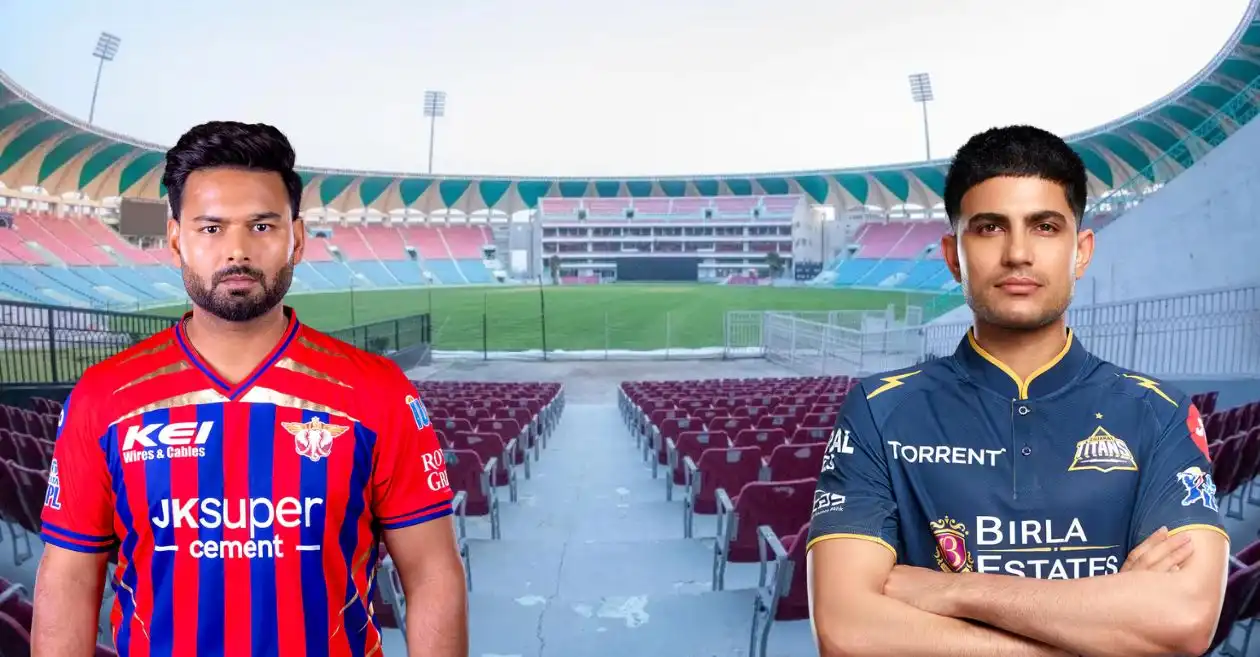
Lucknow: At the Bharat Ratna Shri Atal Bihari Vajpayee Ekana Cricket Stadium, the Gujarat Titans produced a thoroughly professional display to defeat the Lucknow Super Giants by seven wickets with eight balls to spare in Match 19 of the Indian Premier League 2026 on April 12. Gujarat chased down 165 with composure, finishing at 165/3 in 18.4 overs after restricting Lucknow to 164/8, in a contest that steadily tilted in the visitors’ favour through superior execution.
A Surface That Demanded Precision
The afternoon fixture began under intense heat, with temperatures hovering around 36°C. The black-soil pitch at Ekana showed signs of dryness and variable bounce, conditions that historically make strokeplay tricky and reward bowlers who maintain discipline. With little dew expected in a day game, the toss assumed added importance. Gujarat captain Shubman Gill read the conditions astutely and opted to bowl first, backing his pace-heavy attack featuring Kagiso Rabada, Mohammed Siraj and Prasidh Krishna, alongside the spin of Rashid Khan and Washington Sundar.

Lucknow, led by Rishabh Pant, fielded an unchanged XI that included aggressive top-order batters like Mitchell Marsh and Aiden Markram, with finishing firepower from Nicholas Pooran and support from players such as Ayush Badoni and Abdul Samad. Their bowling attack was spearheaded by Mohammed Shami, alongside Avesh Khan and Prince Yadav.
Early Intent, But Familiar Setbacks for LSG
Lucknow’s innings began with a burst of aggression as Mitchell Marsh struck Rabada for a boundary and a six in the opening over. However, his intent proved short-lived. Attempting another attacking stroke, he miscued a lofted shot and was caught at mid-off, departing for a quick 11 off just four deliveries. The early wicket once again exposed Lucknow’s vulnerability to losing momentum despite positive starts.
Rishabh Pant looked to counterattack, scoring a brisk 18 off 11 balls with two boundaries and a six. He injected urgency into the innings, but his stay was cut short in the fifth over when Mohammed Siraj produced a wobble-seam delivery that angled across and bounced awkwardly, forcing a mistimed shot that was safely taken by Rahul Tewatia at mid-off. At 45/2, Lucknow were already under pressure.
Prasidh Krishna’s Game-Changing Spell
The turning point came in the middle overs, where Prasidh Krishna delivered a decisive spell that dismantled the Lucknow batting lineup. Exploiting the pitch’s uneven bounce, he relied heavily on short-pitched deliveries, targeting the batters’ discomfort against rising deliveries.
Aiden Markram, who appeared the most settled with a fluent 30 off 21 balls, including five boundaries and a six, fell to this tactic, pulling a short ball straight to deep midwicket. In the very next phase, Ayush Badoni (9 off 11) met a similar fate, leaving Lucknow in trouble at 74/4.
Nicholas Pooran struggled throughout his innings, managing only 19 off 21 balls. Despite hitting a couple of sixes off Rashid Khan, he never found rhythm and eventually succumbed to another short delivery from Prasidh, caught at mid-off by Shubman Gill. Abdul Samad’s brief stay ended when he pulled a delivery from Ashok Sharma to the deep, further deepening the collapse.
Prasidh’s figures of 4/28 in four overs underlined his dominance. His dismissals followed a consistent pattern—forcing batters into mistimed pulls and hurried strokes—demonstrating a clear tactical plan executed to perfection.
Late Resistance Pushes LSG to 164
With the innings faltering, Lucknow’s lower order attempted to salvage respectability. Mukul Choudhary contributed a fighting 18 off 14 balls, showing intent with a couple of aggressive strokes. He survived a run-out chance and managed to find the boundary through a top edge before eventually edging a slower bouncer from Prasidh to Jos Buttler behind the stumps.
Mohammed Shami added a late cameo, scoring quick runs in the final overs, while Avesh Khan chipped in with a boundary off his only delivery. These late contributions helped Lucknow cross the 150 mark, finishing at 164/8 in their 20 overs.
Despite the recovery, the total felt below par, especially considering the projected competitive score. The lack of substantial partnerships and repeated middle-order collapses once again haunted Lucknow on their home ground.
Gill and Buttler Lay the Foundation
Chasing 165, Gujarat Titans began confidently, with Shubman Gill and Sai Sudharsan providing a steady start. Sudharsan found early boundaries against Mohammed Shami, driving elegantly through the covers and straight down the ground. Gujarat reached the 50-run mark within the powerplay, ensuring they stayed ahead of the required rate.

Jos Buttler then joined Gill and injected momentum into the innings. The duo stitched together a crucial 84-run partnership that effectively put the game beyond Lucknow’s reach. Buttler, who was dropped early by Rishabh Pant, made the most of the reprieve, unleashing a series of attacking strokes, particularly through the off-side.
Gill, on the other hand, anchored the innings with a composed half-century, scoring in the range of 50-plus runs off around 35 deliveries. His ability to rotate strike and find gaps ensured that pressure never built on Gujarat during the chase.
Controlled Acceleration and Clinical Finish
Gill’s dismissal in the eighth over, caught behind off a short delivery from Prince Yadav, brought a brief moment of hope for Lucknow. However, Gujarat’s depth ensured there was no shift in momentum. Buttler continued to dominate, keeping the scoreboard ticking with calculated aggression.
As the innings progressed, Washington Sundar and Rahul Tewatia stepped in to complete the job. Sundar played an impressive unbeaten knock of 21 off 13 balls, including two boundaries and a six over fine leg, showcasing his ability to accelerate when required. Tewatia supported him with a composed 10 off eight balls, including a well-timed boundary.
The winning runs came in the 18.4th over, fittingly struck by Sundar, sealing a comfortable victory for Gujarat Titans.
Bowling vs Batting: The Defining Contrast
The contrast between the two sides was most evident in how they approached similar conditions. Gujarat’s bowlers adapted quickly, using variations in length and pace to exploit the surface. Prasidh Krishna’s disciplined short-ball strategy stood out, while Siraj and Rabada provided early breakthroughs. Rashid Khan’s economical spell ensured that Lucknow never found momentum in the middle overs.
Lucknow’s bowlers, in contrast, struggled to replicate that level of control. Mohammed Shami bowled only two overs before leaving the field due to discomfort, limiting his impact. The rest of the attack, including Avesh Khan and Prince Yadav, failed to apply consistent pressure, allowing Gujarat to dictate terms throughout the chase.
Implications for Both Teams
This victory marked Gujarat Titans’ second consecutive win, strengthening their position in the points table and improving their net run rate. With a balanced squad featuring experienced international players and dependable domestic talent, Gujarat appear well-equipped to sustain their momentum in the tournament.
For Lucknow Super Giants, the defeat highlighted persistent issues, particularly their struggles when batting first at Ekana. This loss reportedly extended a worrying trend of defeats at home in similar scenarios. Addressing middle-order fragility and improving game awareness in challenging conditions will be crucial if they are to remain competitive.
The match ultimately underscored the importance of discipline, adaptability, and execution in T20 cricket. Gujarat Titans excelled in all departments, delivering a performance that was both clinical and commanding. Lucknow Super Giants, despite moments of promise, were unable to sustain momentum or capitalize on key phases.
As the Indian Premier League 2026 progresses, Gujarat’s all-round strength and tactical clarity position them as strong contenders, while Lucknow must regroup quickly to address their shortcomings. On a demanding Ekana surface, it was precision over power that made the difference—and Gujarat Titans executed it to near perfection.




 ---------------------------------------------------------------------------------------------------