Lucknow: The Uttar Pradesh government has issued detailed guidelines and procurement targets for pulses and oilseeds under the Price Support Scheme (PSS) for the Rabi Marketing Year 2026–27. The procurement process for key crops—tur (arhar), gram, lentil, and mustard—will commence from April 7, 2026.
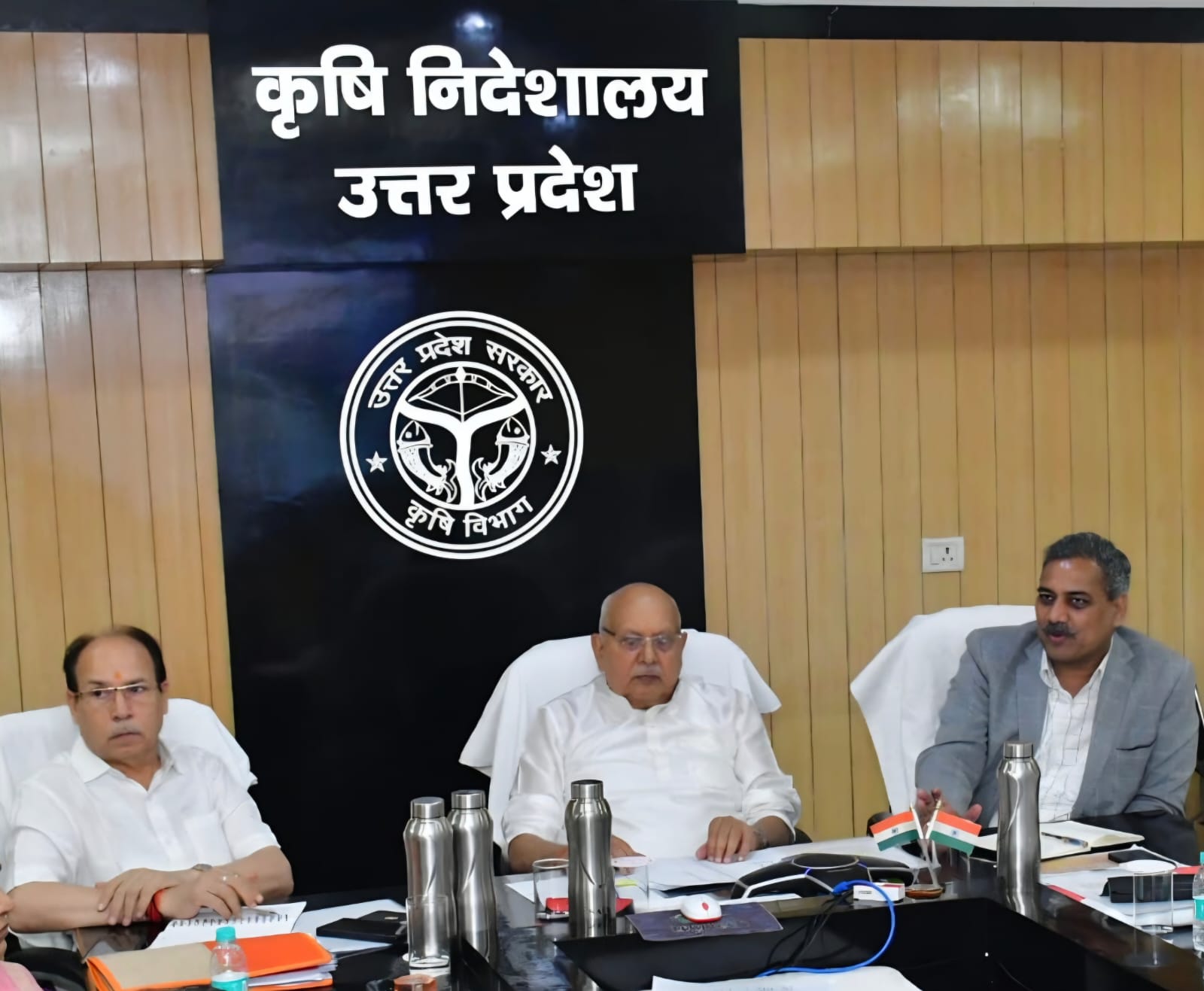
The announcement was made following a high-level review meeting chaired by State Agriculture Minister Surya Pratap Shahi at the state Agriculture Bhawan. He emphasized that farmers will be eligible to benefit from the scheme only after completing their farmer registry, urging cultivators to register at the earliest to avail of minimum support price (MSP) benefits.

Under the scheme, procurement responsibilities have been divided between central agencies in an 80:20 ratio. The National Agricultural Cooperative Marketing Federation of India has been allocated 80 percent of the total procurement target, while the National Cooperative Consumers Federation of India will handle the remaining 20 percent.
According to official figures, NAFED will procure 91,024 metric tonnes of tur, 1,79,200 metric tonnes of gram, 5,41,600 metric tonnes of lentils, and 4,24,000 metric tonnes of mustard. NCCF, on the other hand, has been assigned targets of 22,756 metric tonnes of tur, 44,800 metric tonnes of gram, 1,35,400 metric tonnes of lentils, and 1,06,000 metric tonnes of mustard. The total approved procurement targets stand at 1,13,780 metric tonnes for tur, 2,24,000 for gram, 6,77,000 for lentils, and 5,30,000 for mustard.
The procurement operations will be carried out across multiple districts, with NAFED covering 55 districts and NCCF handling 20 districts. The move aims to ensure wider outreach and efficient procurement across the state.

At the state level, procurement targets have also been distributed among various agencies. The Uttar Pradesh Cooperative Union has been assigned the largest share at 40 percent, followed by Uttar Pradesh Provincial Cooperative Federation with 20 percent. Other agencies including JAFED, UPSS, and HAFED have been allocated 15 percent, 15 percent, and 10 percent targets respectively.
Officials stated that procurement centres will be established district-wise based on actual surplus production, with approvals from district magistrates. Strict adherence to PSS guidelines will be ensured, and the entire process will be closely monitored at the state level to guarantee that farmers receive remunerative prices for their produce.
Earlier in the day, Agriculture Minister Surya Pratap Shahi also participated in a virtual meeting chaired by Union Minister Shivraj Singh Chouhan, where discussions were held on farmer ID creation, balanced use of fertilizers, agricultural campaigns, and procurement strategies for the ongoing Rabi season.
The initiative reflects the state government’s commitment to strengthening agricultural procurement systems, ensuring price support for farmers, and enhancing transparency and efficiency in the overall process.




 ---------------------------------------------------------------------------------------------------