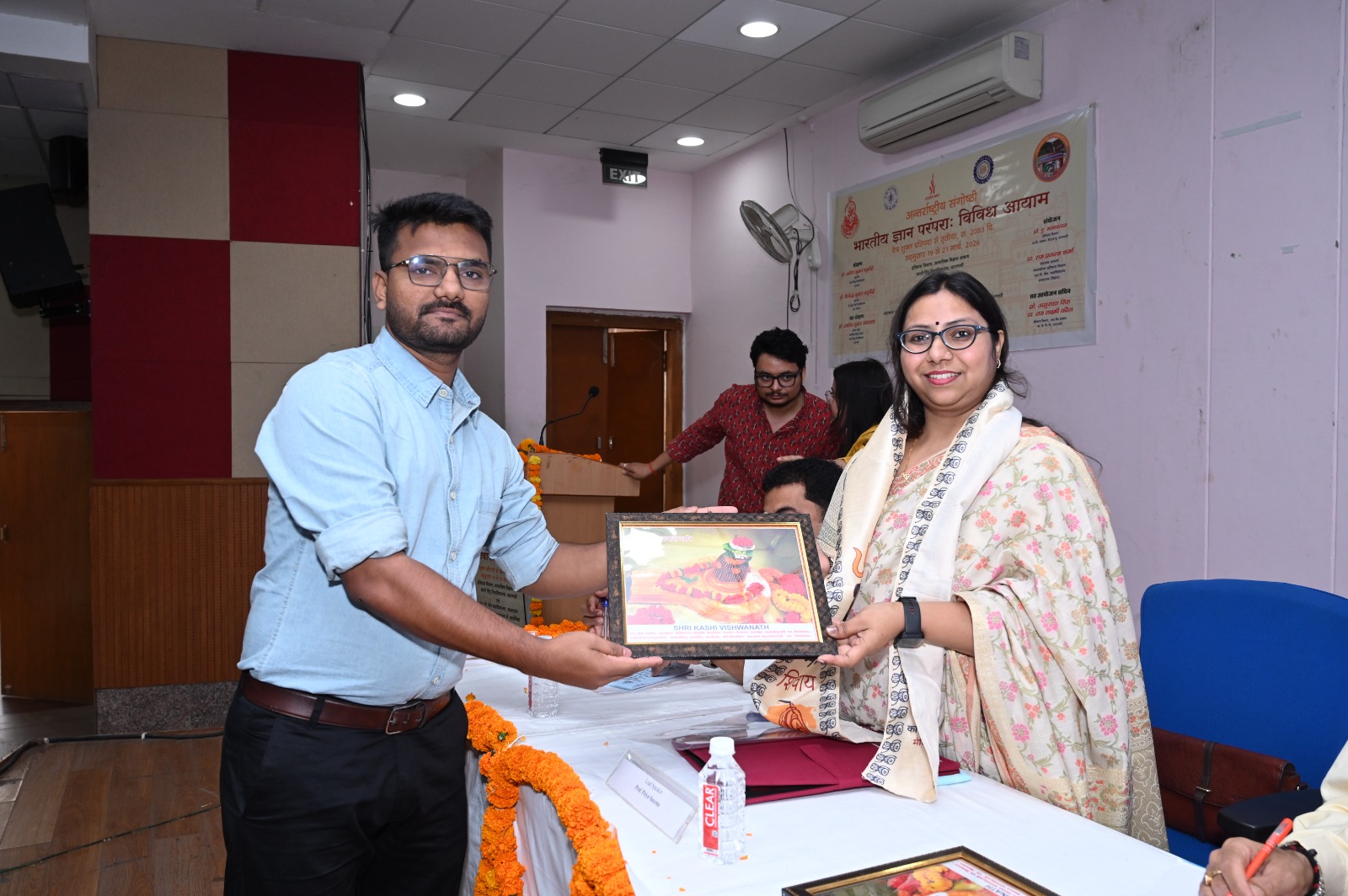
Bareilly: Showcasing academic excellence and the richness of India’s cultural heritage, Dr. Priya Saxena from Mahatma Jyotiba Phule Rohilkhand University delivered an expert lecture at an international conference on “Indian Knowledge Tradition: Diverse Dimensions,” organized by the Department of History at Banaras Hindu University.
The participation of Dr. Saxena was inspired by the guidance of the university’s Vice-Chancellor and reflects the institution’s commitment to promoting research in ancient Indian history and culture.

Exploring Artistic Traditions through Indian Knowledge Systems
Dr. Saxena presented her lecture on March 21 on the topic “Reinterpreting Artistic Tradition through Indian Knowledge Systems.” Her presentation highlighted the deep interconnection between India’s traditional crafts (शिल्प) and its ज्ञान परंपरा, tracing their roots back to the Vedic period.
She explained that art and craftsmanship were integral parts of Vedic literature and the Gurukul education system, supported by archaeological evidence. References from the Rigveda were cited, particularly the mention of divine craftsmen such as Tvastar and Vishwakarma, symbolizing the sacred origins of artistic traditions.
Dr. Saxena further elaborated on various forms of traditional craftsmanship, including pottery, terracotta sculptures, bead-making, and metalwork involving iron and copper. She emphasized that these practices, once central to daily life, now represent invaluable cultural heritage that must be preserved and revitalized in contemporary times.

Bridging Tradition with Modernity
Her lecture underscored the importance of integrating ancient artistic traditions with modern perspectives, advocating for their conservation as part of India’s living heritage. The session was well received by scholars and participants, who appreciated the depth of research and cultural insights presented.
Conference Participation and Recognition
The conference was organized under the leadership of Prof. Gangadharan, with Dr. Ram Prakash Sharma serving as co-organizer. Both extended their congratulations to Dr. Saxena for her valuable contribution.
The concluding session featured addresses by eminent academicians including Shailendra Chaturvedi, Rajneesh Shukla, and Om Upadhyay, who highlighted the importance of Indian knowledge systems in shaping contemporary academic discourse.
Promoting India’s Intellectual Heritage
The conference concluded successfully, reinforcing its objective of exploring and promoting the evolving dimensions of Indian culture and knowledge traditions. Dr. Saxena’s participation not only brought recognition to Mahatma Jyotiba Phule Rohilkhand University but also contributed meaningfully to the global dialogue on India’s intellectual and artistic legacy.