By Atul Malikram
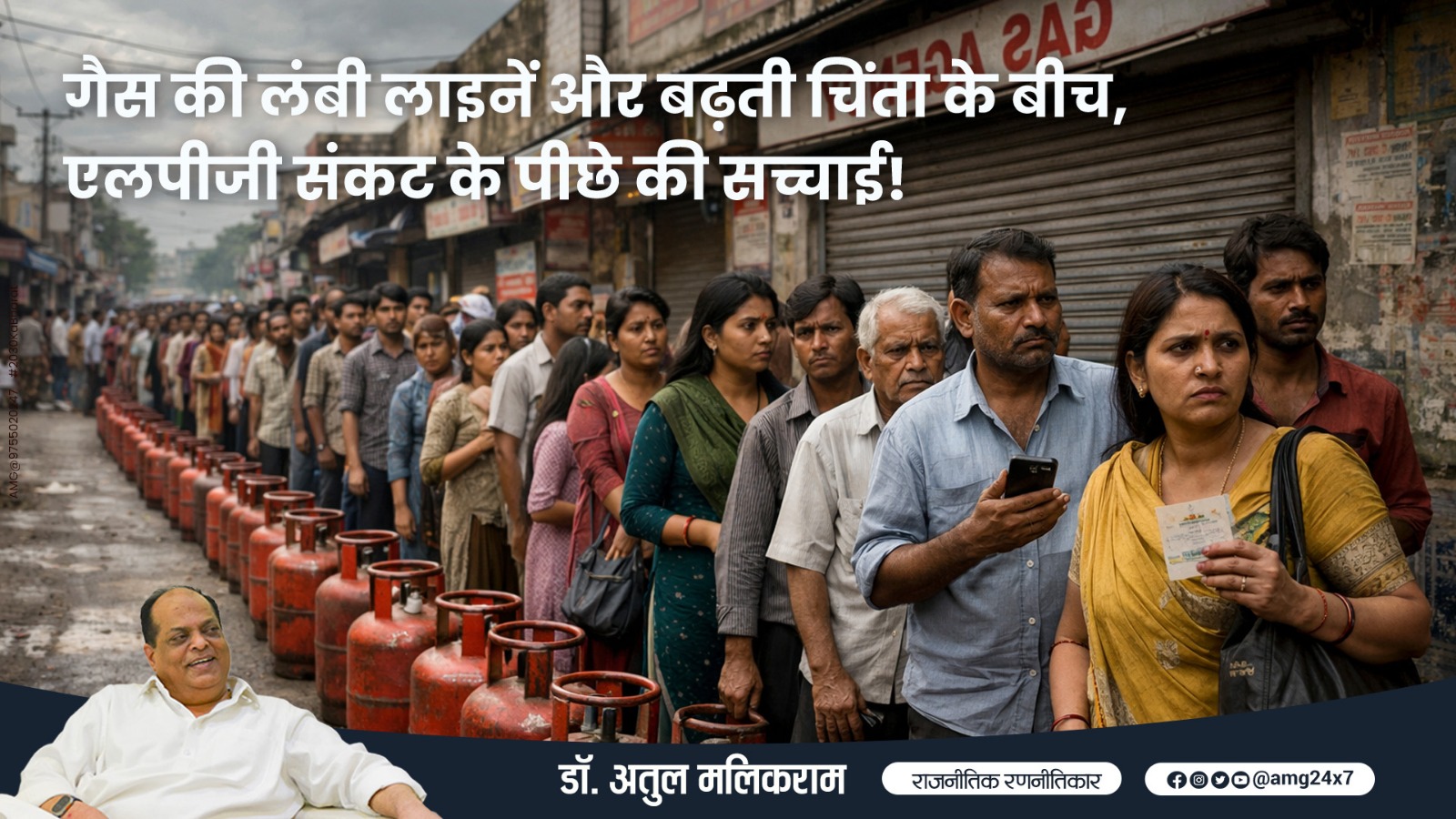
New Delhi: Over the past few days, similar scenes have been reported from several cities across India—long queues outside LPG agencies, anxious households waiting for cylinder refills, and restaurant owners struggling to keep their kitchens running. In some unfortunate cases, elderly people reportedly fell ill after standing in queues for hours, intensifying public concern over the sudden shortage of cooking gas.
Naturally, the question being asked by citizens and political parties alike is: why has there been such an abrupt shortage of LPG cylinders? Opposition leaders have criticised the government, arguing that better preparedness could have prevented the current situation.
However, according to political strategist Atul Malikram, the issue needs to be viewed through a broader global lens rather than as a purely domestic problem.
Impact of Global Energy Tensions
The global energy market is deeply influenced by geopolitical developments. Toward the end of February 2026, tensions in West Asia escalated sharply after military strikes involving Israel, the United States, and Iran. In response, Iran reportedly restricted movement through the Strait of Hormuz, one of the world’s most critical maritime corridors for oil and gas shipments.
Any disruption to this strategic route inevitably affects global energy supply chains. As a result, international oil and gas prices became volatile and supply flows were disrupted in several countries.
Why India Feels the Pressure
The impact is particularly significant for India, which is among the world’s largest consumers of LPG. The country requires millions of tonnes of LPG annually, and a substantial portion of this demand is met through imports. When global supply chains tighten, domestic distribution systems also experience pressure.
Consequently, many cities have witnessed a surge in crowds at gas agencies and delays in cylinder deliveries. Commercial LPG cylinders, used by hotels, restaurants and small eateries, have been especially affected, leading to operational challenges for businesses.
Government Response
The government maintains that its immediate priority during the shortage is to protect domestic consumers. With more than 33 crore LPG connections across the country, ensuring uninterrupted cooking fuel for households remains the primary focus.
According to the Ministry of Petroleum and Natural Gas, refineries have been directed to increase LPG production and alternative import sources are being explored to stabilise supply. Officials also say efforts are underway to secure additional shipments from other countries to ease the shortage in the coming weeks.

Debate Over Preparedness
While the government points to global disruptions as the main cause, opposition leaders and some experts argue that a country of India’s size should have stronger contingency planning for energy supply.
They suggest that better distribution management and local-level coordination might have prevented the long queues and panic witnessed in several cities.
Role of Panic Buying and Hoarding
Another factor contributing to the crisis is panic buying. When consumers fear that cylinders may become unavailable, many attempt to stock up beyond their immediate needs. Such behaviour can worsen shortages and disrupt supply chains.
Authorities have therefore instructed state administrations to keep strict watch on black marketing and hoarding. Citizens have also been urged not to believe rumours and to purchase cylinders only as required.
A Broader Lesson for Energy Security
Despite the current challenge, Malikram notes that India has made significant progress in strengthening its energy infrastructure over the past decade. Measures such as the development of strategic petroleum reserves, expansion of gas pipeline networks and growth in LNG terminal capacity were designed to cushion the country from global shocks.
Yet the ongoing LPG shortage also highlights a larger truth: as long as India remains heavily dependent on imported energy, international conflicts and geopolitical crises will continue to influence domestic supply.
The Way Forward
In the immediate term, cooperation and patience will be crucial. Governments, administrators, political parties and citizens all have a role to play in managing the situation responsibly.
India has faced many crises in the past and successfully navigated them. With coordinated efforts and stable global supply chains, the current LPG shortage is expected to ease in the coming weeks—allowing households and businesses to return to normalcy.