New Delhi: Escalating military tensions involving the United States, Iran, and Israel are beginning to impact millions of Indian expatriates living and working across Gulf countries, triggering growing anxiety and uncertainty within the community.
The ongoing geopolitical friction in the Middle East has intensified in recent weeks, with military actions against Iran-backed targets and retaliatory warnings from Tehran heightening fears of a wider regional conflict. As tensions rise, their ripple effects are being felt across key Gulf nations including the United Arab Emirates, Saudi Arabia, Kuwait, Qatar, and Oman, where a large Indian diaspora resides.

According to estimates, nearly 8 to 9 million Indians live in the Gulf region. A significant number of them come from states such as Kerala, Uttar Pradesh, Rajasthan, Bihar, and Telangana, working in sectors ranging from construction and services to engineering and healthcare. Many families in India rely heavily on the income sent home by these workers.
Experts warn that if the situation escalates into a full-scale conflict, the energy sector could be the first to face disruption. The Gulf region remains one of the world’s largest oil-producing hubs, and any military confrontation could interrupt oil production and supply chains. Such disruptions would inevitably affect economic activities in the region, potentially leading to job losses for expatriate workers employed in industries like construction, transport, and services.
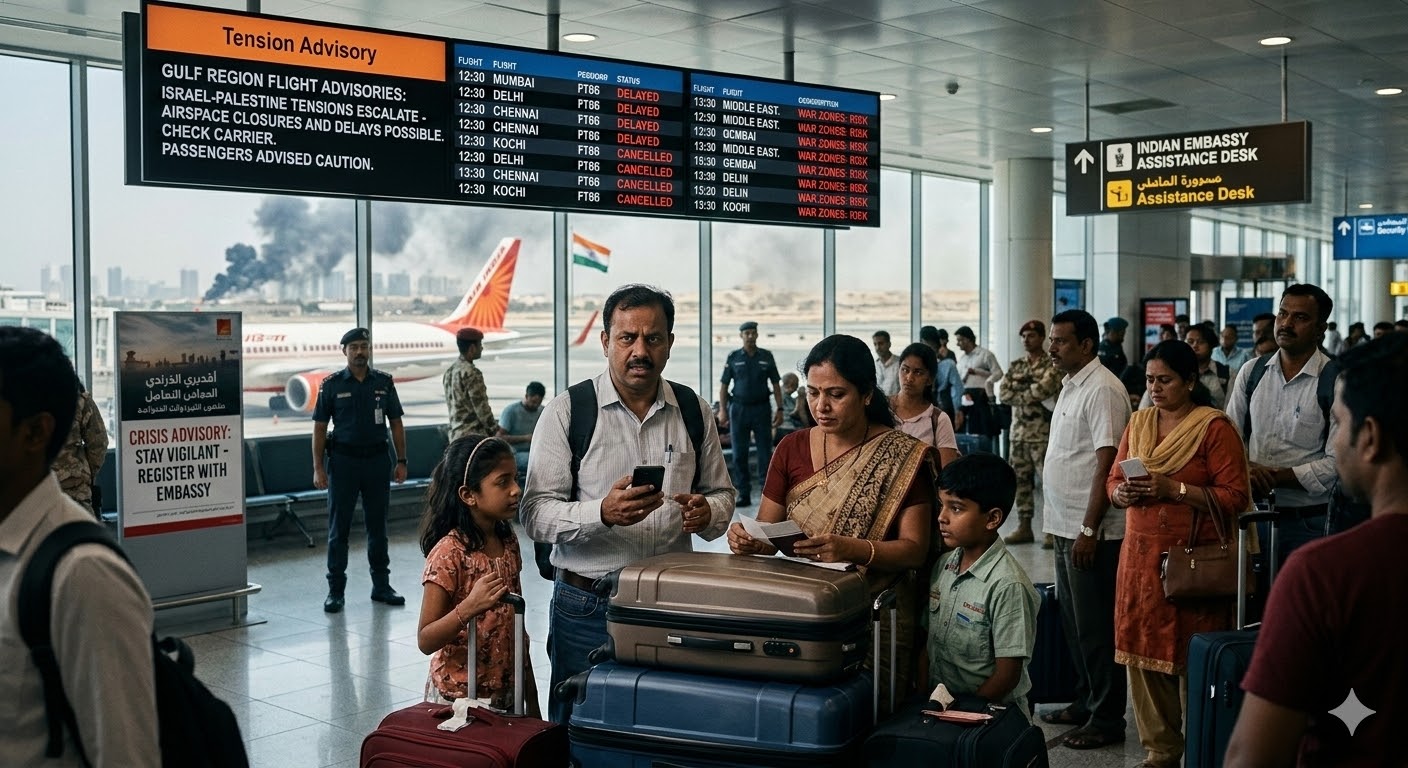
The rising tension is also beginning to impact international air travel. Reports have emerged of flight routes being altered or cancelled due to security concerns. If the situation deteriorates further, Indian nationals planning to travel back home could face serious logistical challenges. In extreme circumstances, large-scale evacuation efforts—similar to those undertaken during previous Middle Eastern conflicts—may become necessary.
The Government of India is closely monitoring the evolving situation. The Ministry of External Affairs (MEA) has reportedly directed Indian embassies in Gulf countries to remain alert and maintain constant communication with Indian citizens. Authorities have also advised expatriates to follow local administrative guidelines and avoid spreading or believing in unverified rumours.
While many Indians in Gulf countries say daily life continues as usual for now, the growing military tension has created a sense of uncertainty about the future. Workers whose families depend entirely on remittances are particularly concerned about job security and safety.
In some cases, expatriates have already begun returning to India as a precaution. Several workers from Bikaner in Rajasthan, who had been living in Dubai, recently returned home safely amid fears of escalating conflict. Their arrival brought visible relief to their families, many of whom had been anxiously awaiting news of their safety.

The returnees described the atmosphere in the region as “frightening,” recalling how streaks of light resembling fireballs were visible in the sky and tension gripped the area. They said that although the UAE has traditionally been considered one of the safest countries in the Gulf, the current geopolitical climate has unsettled many residents.
According to them, securing flights from Dubai to India had become difficult due to the tense situation. As a result, they undertook a long road journey to Oman, from where they managed to find a flight to Goa before eventually reaching Bikaner.
Many of the returning workers now face an uncertain economic future. They said the unfolding conflict may force them to explore new employment opportunities either within India or in other countries if instability persists in the Gulf region.
Analysts believe that the ongoing tensions between the United States, Iran, and Israel could have far-reaching consequences beyond the Middle East if diplomatic efforts fail to ease the situation. Apart from affecting global oil markets and economic stability, the crisis could also disrupt international labour flows.
For India, the safety and welfare of its large expatriate population in the Gulf remain a major concern. With millions of livelihoods tied to the region, the government may have to prepare contingency plans to safeguard the interests of its citizens should the conflict intensify.
For now, the situation remains tense but under watch, with diplomacy seen as the only viable path to preventing the crisis from escalating further and impacting millions of lives across the region.