New Delhi: The Delhi Excise Policy case—popularly dubbed the “Delhi liquor policy case” or “liquor scam”—has been one of the most politically charged legal battles in recent Indian history. What began as an ambitious attempt by the Aam Aadmi Party (AAP) government to reform liquor sales in the national capital evolved into a high-stakes confrontation involving top political leaders, central investigative agencies, and years of courtroom scrutiny.
On February 27, 2026, the saga reached a dramatic turning point when a special Central Bureau of Investigation (CBI) court discharged all 23 accused in the corruption case, including Delhi Chief Minister Arvind Kejriwal and former Deputy Chief Minister Manish Sisodia. The ruling, delivered by Judge Jitender Singh at the Rouse Avenue Court, has significantly altered the political narrative surrounding the case.

The Policy: Reform or Risk?
In November 2021, the Delhi government rolled out its Excise Policy 2021–22. Spearheaded by Sisodia, who held the excise portfolio, the policy aimed to overhaul the liquor trade in the capital. The government argued that the previous regime had encouraged cartelization, black marketing, and uneven distribution of liquor outlets.
The new policy sought to privatize retail liquor sales, eliminate government-run shops, increase competition, boost revenue, and improve consumer experience. The AAP government claimed it would curb corruption by removing middlemen and creating a transparent bidding process.
However, critics alleged that the policy’s formulation and implementation favored certain private players and created opportunities for kickbacks.
Allegations Surface
The controversy intensified in July 2022 when Delhi Chief Secretary Naresh Kumar submitted a report to Lieutenant Governor V.K. Saxena highlighting alleged procedural irregularities and financial lapses. The Lieutenant Governor recommended a CBI investigation.
In August 2022, the CBI registered a First Information Report (FIR) against Sisodia and others under sections related to criminal conspiracy and corruption under the Prevention of Corruption Act. Soon after, the Enforcement Directorate (ED) initiated a parallel probe under the Prevention of Money Laundering Act (PMLA).
The investigations alleged that a “South Group” lobby had paid kickbacks of around ₹100 crore to influence the policy. Among those implicated was K. Kavitha, a political leader from Telangana.
Under mounting pressure, the Delhi government scrapped the excise policy in September 2022 and reverted to the old regime.
Arrests and Political Shockwaves
The case entered its most turbulent phase in early 2023. On February 26, 2023, the CBI arrested Sisodia. Days later, on March 9, the ED arrested him in a money-laundering case while he was already in custody. Sisodia remained in jail for approximately 17–18 months before being granted bail.
The spotlight soon turned to Chief Minister Kejriwal. Between October 2023 and March 2024, the ED issued nine summons to him in connection with the money-laundering probe. Kejriwal skipped the summons, alleging that the investigation was politically motivated and aimed at weakening AAP ahead of the 2024 Lok Sabha elections.
On March 21, 2024, after the Delhi High Court denied him protection from coercive action, the ED arrested Kejriwal. The timing—just weeks before the general elections—sparked fierce political debate. AAP accused the central government and the ruling Bharatiya Janata Party (BJP) of orchestrating a crackdown to cripple the party electorally.
In May 2024, the Supreme Court granted Kejriwal interim bail to campaign in the general elections. The bail was extended in phases. However, in June 2024, he was formally arrested by the CBI in the corruption case as well, before eventually securing bail in subsequent months.
The “Slamming” Phase: 2022–2025
From 2022 to 2025, the case cast a long shadow over AAP. The arrests of senior leaders, prolonged custody, and relentless media coverage severely dented the party’s public image. Opposition leaders repeatedly referred to the case as a “massive scam,” alleging favoritism to select liquor vendors and systematic kickbacks.
The political cost was tangible. In the 2024 Lok Sabha elections, AAP struggled in Delhi. The opposition narrative portrayed the party’s anti-corruption plank—once its core strength—as compromised.
Kejriwal and his colleagues, however, consistently maintained that the investigations were a “political vendetta.” They accused the BJP-led central government of misusing investigative agencies such as the CBI and ED to destabilize opposition-ruled states.
Three chargesheets were filed by the CBI in the corruption case, detailing allegations of conspiracy and financial misconduct. Yet, the defense argued that the case was built on assumptions rather than concrete evidence.

February 27, 2026: The Turning Point
In a landmark decision on February 27, 2026, the special CBI court discharged all accused in the corruption case. The court refused to take cognizance of the CBI’s chargesheet.
Judge Jitender Singh ruled that there was no evidence of an overarching conspiracy or criminal intent behind the excise policy. The order pointed out “internal contradictions” and “lacunae” in the prosecution’s case. It stated that the allegations did not withstand judicial scrutiny and appeared to rely on speculation rather than substantive material evidence.
In unusually strong observations, the court described parts of the investigation as a “premeditated and choreographed exercise.” It also ordered a departmental inquiry into the investigating officer for allegedly framing accused individuals without adequate supporting evidence.
The ruling effectively gave AAP a clean chit in the core corruption case.
Political Reactions
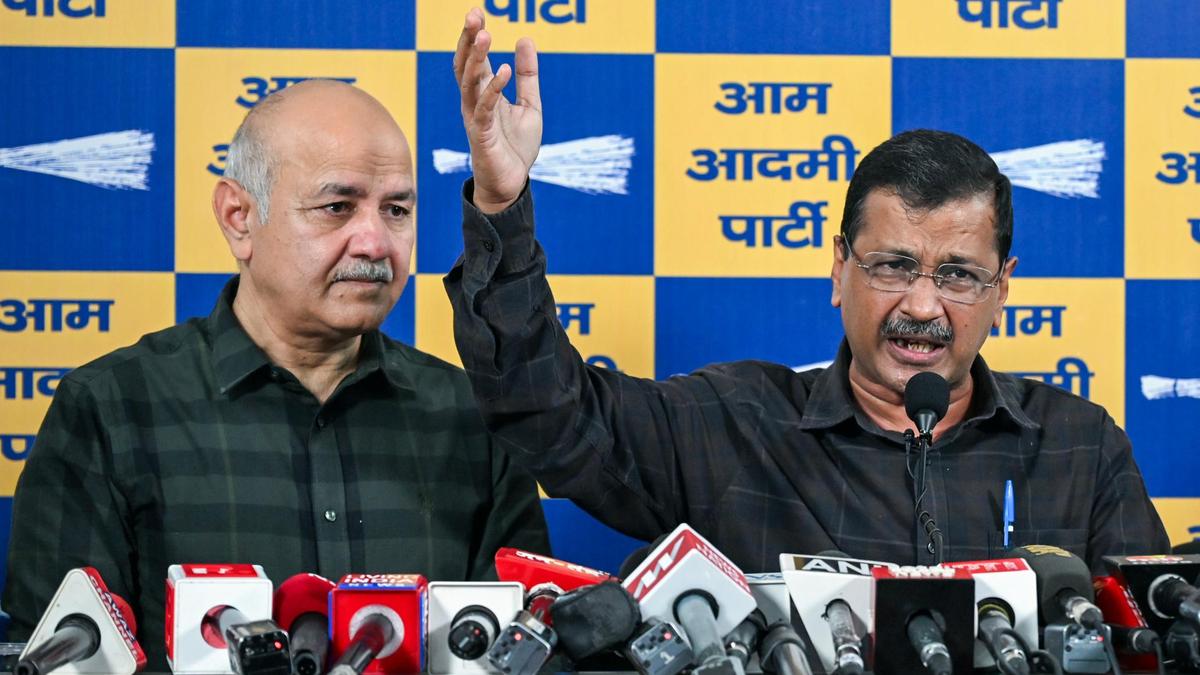
Outside the courtroom, an emotional Kejriwal declared, “Truth wins.” Reiterating his long-standing claim of being “kattar imaandaar” (staunchly honest), he accused Prime Minister Narendra Modi and Home Minister Amit Shah of conspiring to jail AAP’s top leadership to destroy the party.
AAP leaders celebrated the verdict as vindication of their integrity and renewed calls for fresh Delhi Assembly elections. They framed the judgment as proof that investigative agencies had been misused for political ends.
The BJP, on the other hand, indicated that the legal battle was not over. The CBI announced it would appeal the decision in the Delhi High Court, signaling that the matter may continue through higher judicial forums.
Implications for the ED Case
While the CBI court’s ruling dealt with the corruption case, the parallel money-laundering case being investigated by the ED may still proceed independently. However, legal experts note that the discharge in the predicate corruption offense could significantly impact the ED’s case, as money-laundering charges often hinge on the existence of a scheduled offense.
The ultimate trajectory of the ED proceedings remains uncertain, but the February 2026 ruling has undeniably altered the legal landscape.
A Political Rebound?
For AAP, the judgment marks a dramatic political rebound. For nearly four years, the party’s leadership operated under the cloud of serious corruption allegations. The court’s findings have enabled AAP to reposition itself from a party tainted by scandal to one claiming to be the victim of institutional overreach.
The narrative shift—from “liquor scam” to alleged misuse of central agencies—may reshape Delhi’s political discourse in the run-up to future elections.
At a broader level, the case has intensified debates about federalism, the autonomy of investigative agencies, and the intersection of law and politics in India. It underscores how legal proceedings involving elected officials can influence electoral dynamics and public perception for years.
The Delhi Excise Policy case encapsulates the volatile intersection of governance reform, political rivalry, and judicial oversight. What began as a policy experiment to modernize liquor sales spiraled into a multi-year legal and political battle involving some of the country’s most prominent leaders.
The February 2026 discharge order represents a pivotal moment, but not necessarily the final chapter. With the CBI set to challenge the ruling and the ED proceedings still unfolding, the legal contest may continue.
For now, however, the verdict stands as a significant moment of vindication for Arvind Kejriwal and the Aam Aadmi Party—reshaping both the party’s political fortunes and the broader narrative of one of India’s most contentious corruption cases.