Lucknow: The cultural soul of Awadh is set to find a grand new address in the historic precinct of Hussainabad, where the newly constructed Lucknow Museum of Heritage and Art is ready for inauguration. Developed by the Lucknow Development Authority (LDA), the museum has been built over an area of 4,973 square metres and will be opened to the general public following its formal inauguration on March 1, 2026.
Positioned amid the architectural legacy of old Lucknow, the museum promises to serve as a vibrant cultural hub celebrating the composite traditions, craftsmanship, literature and performing arts of Awadh. The project has been completed at a cost of ₹41.43 crore and is being described as one of the most architecturally distinctive public buildings in the state.

LDA Vice Chairman Prathamesh Kumar inspected the newly constructed museum ahead of its inauguration. During his visit, he reviewed the building’s structural features, exhibition galleries and visitor amenities, while issuing necessary directions to officials to ensure smooth operations once the museum opens to the public.
One of the most striking features of the museum is its 45-metre-long cantilever, constructed without the support of any column or pillar. This engineering feat makes it the first iconic building of its kind in Uttar Pradesh to feature such a massive unsupported cantilever span. The bold and contemporary design lends the structure a unique visual identity, seamlessly blending modern architecture with the historic ambience of Hussainabad.
Officials say the museum has been conceptualised not merely as a display space but as an immersive cultural experience. The interiors have been designed using modern technology to present Awadh’s historical, literary and cultural heritage in an engaging and interactive format.
The museum houses a series of themed galleries, each curated to reflect a distinct dimension of Awadhi culture. These include Mool Dhara, Hunar Ka Safar, Hastashilp, Saanjhi Aastha, Ganga-Jamuni Tehzeeb, Karigari, Mehfil-e-Awadh, Nrityakala, Natyashala, Soch evam Samvad, and Jaayka-e-Awadh. Through these galleries, visitors will be able to witness the evolution of Awadh’s syncretic traditions, fine craftsmanship, performing arts and culinary richness.
The Ganga-Jamuni Tehzeeb section, in particular, is expected to highlight the region’s centuries-old tradition of communal harmony and shared cultural practices. Meanwhile, Hunar Ka Safar and Karigari will spotlight the skills of local artisans, including chikankari, zardozi, and other traditional crafts that have long defined Lucknow’s artistic identity.
Adding a contemporary edge to the museum experience, a dedicated VR Gaming Arena has also been developed within the premises. This interactive digital zone aims to connect younger audiences with history through immersive virtual reality experiences, allowing visitors to engage with Awadh’s past in innovative ways.
According to LDA Vice Chairman Prathamesh Kumar, the museum has been constructed in line with the state government’s vision to promote tourism and preserve cultural heritage. He said the initiative would not only strengthen Lucknow’s identity as a city of heritage and art but also create new avenues for cultural tourism.

“The museum will serve as a bridge between the city’s rich past and its future generations,” Kumar said during the inspection. “By preserving and presenting Awadh’s art, literature and craftsmanship in a modern format, we aim to inspire pride among citizens and attract visitors from across the country.”
Officials also emphasised that the museum would play a significant role in supporting local artisans and craftsmen by providing them with visibility and institutional backing. By promoting handicrafts and traditional skills, the project is expected to contribute to strengthening the regional economy.
The architectural design of the building has already drawn attention for its sleek lines and structural boldness. The 45-metre cantilever not only demonstrates advanced engineering capability but also symbolises the city’s forward-looking aspirations. The absence of supporting pillars creates a vast, open interior space, allowing flexible exhibition layouts and unobstructed visitor movement.
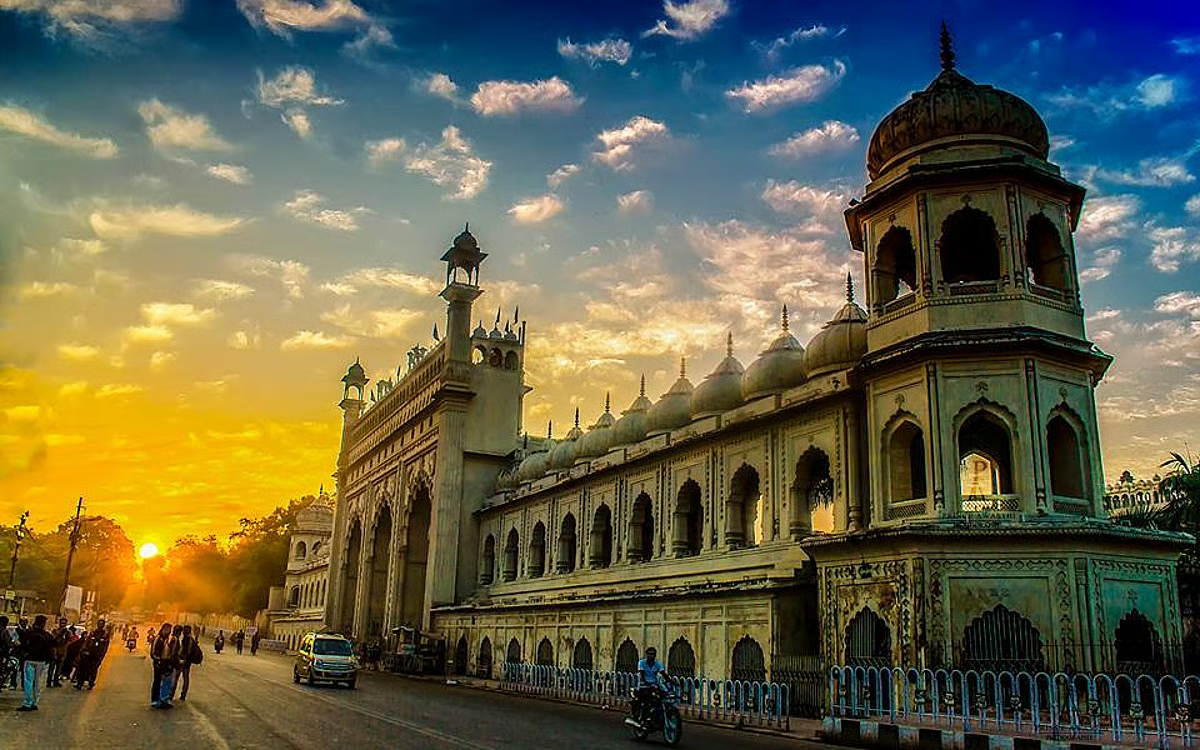
The museum’s location in Hussainabad further enhances its cultural relevance. The area is home to several historic landmarks and has long been associated with the Nawabi era of Lucknow. By situating the museum here, planners aim to integrate it into the existing heritage circuit, encouraging tourists to explore multiple sites in the vicinity.
Senior LDA officials present during the inspection included Secretary Vivek Srivastava, Nazul Officer Prabhakar Singh, Chief Engineer Manvendra Singh, Superintending Engineer Navneet Sharma, and Executive Engineers Manoj Sagar and Neeraj Kumar, among others.
With its blend of architectural innovation and cultural depth, the Lucknow Museum of Heritage and Art is poised to become a landmark institution in Uttar Pradesh. As it prepares to open its doors on March 1, anticipation is building among residents, historians, artists and tourism stakeholders alike.
Once operational, the museum is expected to redefine how the story of Awadh is told—transforming heritage from static displays into living narratives that celebrate the enduring spirit of Lucknow.






 ---------------------------------------------------------------------------------------------------