Lucknow: As winter recedes and spring sets in, Lucknow begins to glow in anticipation of Holi. In 2026, the festival of colors has once again emerged as a powerful catalyst for the city’s travel and hospitality boom, transforming the Uttar Pradesh capital into a vibrant confluence of culture, commerce and celebration.
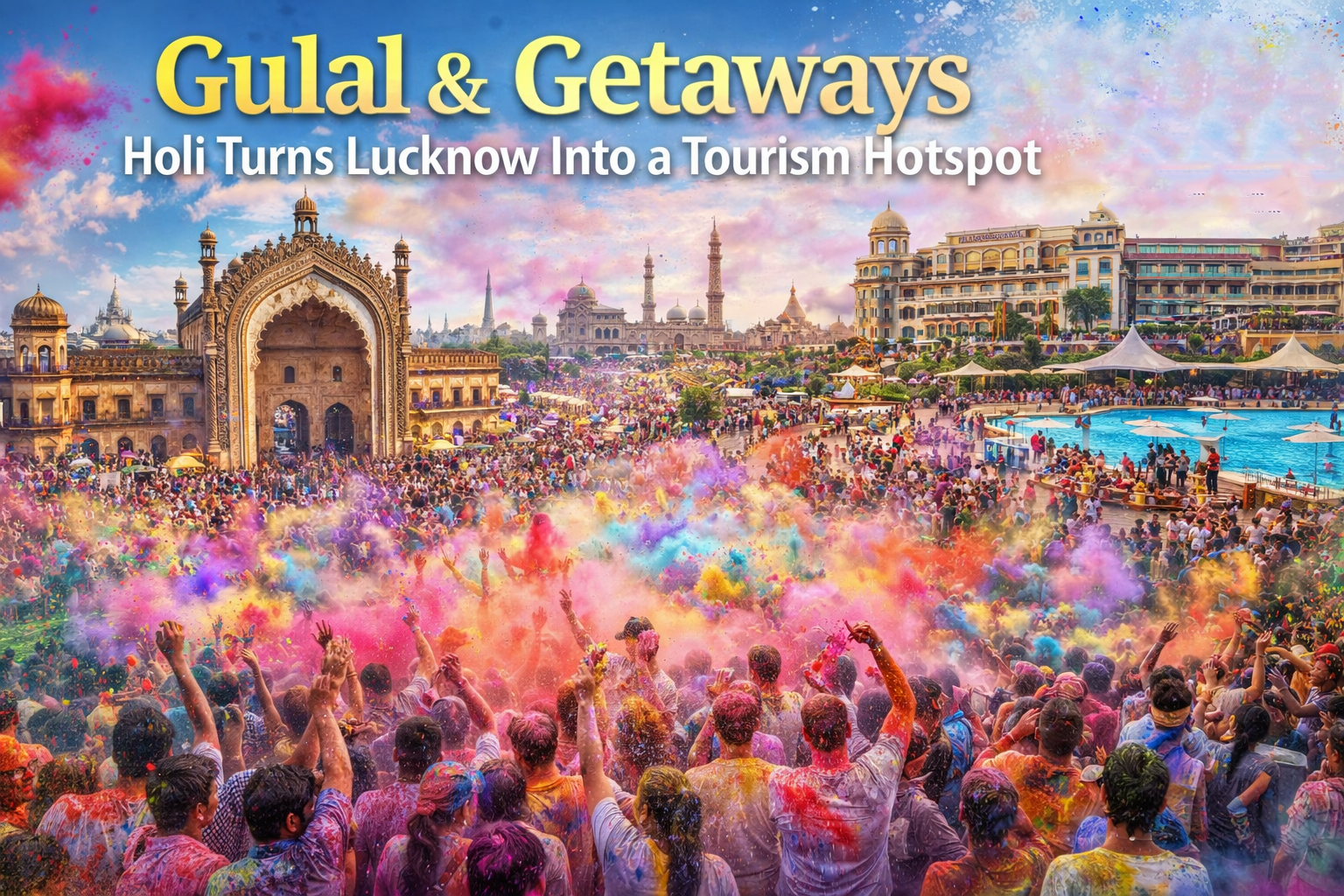
Known for its Nawabi grace, refined tehzeeb and legendary Awadhi cuisine, Lucknow offers a distinctive Holi experience. Unlike the high-octane, often chaotic festivities of Mathura, Vrindavan or Barsana, Lucknow blends tradition with curated modern celebrations. Historic landmarks such as Bara Imambara and Rumi Darwaza provide a regal backdrop as the city prepares for festivities that begin in late February and build up to Holi in March.

The travel surge around Holi reflects a broader national trend. In 2025, festival-linked tourism, spiritual circuits and tier-2 city explorations drove a significant upswing in domestic travel. Platforms like Paytm reported sharp spikes in festive bookings, and 2026 has carried that momentum forward. Responding to the demand, Indian Railways has announced more than 1,400 special trains for Holi 2026—a 23 percent increase over the previous year—improving connectivity to Uttar Pradesh cities, including Lucknow, from Delhi, Bihar and other high-traffic routes. The enhanced infrastructure has made it easier for families, students, and group travelers to plan extended festive getaways.
Hotel occupancy rates tell their own story. Luxury properties, boutique heritage hotels and mid-range accommodations report near-full bookings for the Holi weekend. Many have introduced themed packages featuring organic colors, traditional thandai and gujiya, live folk music and controlled play zones to attract families and eco-conscious travelers. Resorts on the outskirts, including Sparrow Farms & Resort, are promoting all-inclusive Holi experiences—complete with pool parties, buffet spreads, cottage stays and DJ nights—often selling out weeks in advance.
The 2026 Holi calendar in Lucknow reflects a fusion of old and new. In neighborhoods across the city, residents continue to celebrate with gulal, sweets and folk songs, preserving the charm of traditional Holi. At the same time, large-scale ticketed events have become major tourist magnets.
“Blast of Colours 3.0,” billed as Lucknow’s biggest Goa-style Holi celebration, runs from February 28 to March 2, promising multi-day music marathons, foam parties and celebrity performances in a secure, organized setting. “Lucknow Holi Mahotsav” and “Phoolon Ki Holi,” hosted at Dr. Ram Manohar Lohia Park, emphasize eco-friendly festivities, replacing chemical colors with natural flower petals and encouraging minimal water usage. Other popular gatherings such as “Balam Pichkari Season 3” and “My Color Fest” at premium venues feature Bollywood DJs, dance floors and curated group activities designed for young urban audiences.
These events create a ripple effect across the local economy. Vendors selling pichkaris, organic colors and festive attire see brisk business. Street food stalls offering dahi vada, malaiyo and thandai operate at full capacity, while established restaurants curate special Holi menus highlighting kebabs and biryanis. Artisans and small traders benefit from the seasonal spike in footfall.

The Uttar Pradesh Tourism Department has amplified its promotional efforts, positioning Holi in Lucknow as part of the state’s broader tourism narrative. Uttar Pradesh has consistently topped domestic tourism charts in recent years, and while the Braj region’s Lathmar Holi often grabs headlines, Lucknow’s polished yet rooted celebrations are carving a distinctive identity on India’s Holi map—rivaling Jaipur’s royal festivities and even Goa-style party destinations in terms of curated experiences.
Beyond the numbers, the boom reflects a shift toward experiential tourism. Visitors are no longer content with a single day of color play; they seek immersive itineraries. A typical Holi trip to Lucknow might include a morning exploration of the Residency ruins, an afternoon food trail through the old city, and an evening music festival under open skies. Social media has amplified this trend, with Instagram-ready visuals of color-splashed crowds and heritage backdrops fueling further interest.
Challenges remain—crowd management, environmental concerns and maintaining law and order—but authorities have emphasized designated HolikaDahan sites, eco-friendly practices and strict security protocols.
As Holi 2026 unfolds, Lucknow stands as a compelling example of how cultural heritage, strategic promotion and modern event management can transform a traditional festival into a powerful economic engine. In blending Nawabi elegance with contemporary celebration, the city has turned the festival of colors into a vibrant driver of tourism, livelihoods and lasting memories.