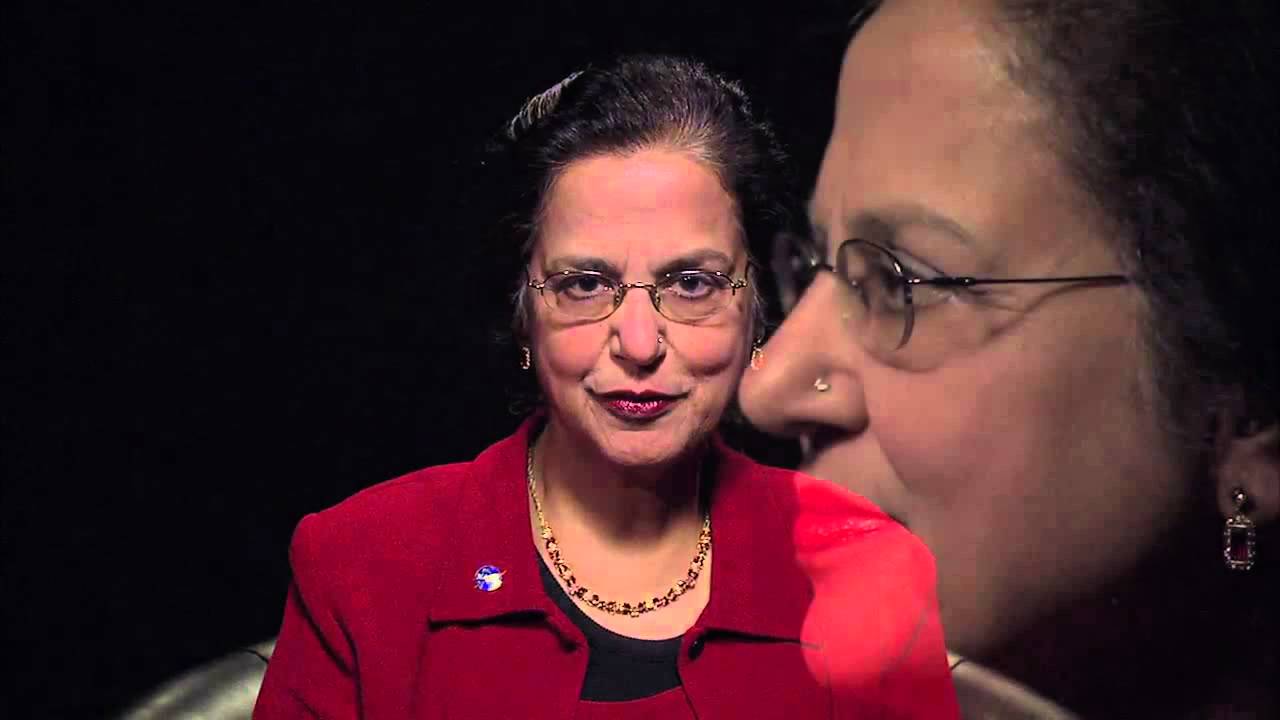
Washington D.C. – The journey of Indian-born scientist Hashima Hasan — from a childhood inspired by Sputnik to leadership roles in NASA’s most advanced space telescopes — exemplifies decades of dedication, international collaboration, and scientific resilience.
A Childhood Spark
On a cool October morning in 1957, seven-year-old Hasan stood in her family courtyard in Lucknow, gazing at the faint arc of Sputnik, the world’s first artificial satellite. Her grandmother had gathered the household to witness the event, and the sight ignited a lifelong passion for space science. Hasan later recalled that this brief moment shaped her dreams and guided her academic pursuits.

Academic Pursuits Across Continents
Hasan earned a scholarship to the University of Oxford, completing a doctorate in theoretical nuclear physics in 1976. Despite facing social and professional challenges as a woman in science, she continued her research across international institutions. In 1985, she moved to the United States with her husband and two sons, seeking broader opportunities in research and technology.
Contributions to the Hubble Space Telescope
At the Space Telescope Science Institute in Baltimore, Hasan helped prepare for the Hubble Space Telescope launch. She developed the Telescope Image Modelling (TIM) software, critical in analyzing early Hubble images when a flaw in the telescope’s primary mirror was discovered. Later, as Optical Telescope Assembly scientist, she ensured Hubble remained precisely focused, supporting corrective servicing missions.

Leadership at NASA and James Webb Space Telescope
In 1994, Hasan joined NASA Headquarters as a visiting senior scientist. She later took on key roles in the James Webb Space Telescope (JWST) program, coordinating technology development and international partnerships, particularly with the European Space Agency and the Canadian Space Agency. Despite challenges, including major reviews during the September 11, 2001 attacks, Hasan helped guide JWST to become a groundbreaking, operational observatory.
Inspiring the Next Generation
Hasan’s career spans multiple NASA missions, including serving as deputy program scientist for JWST. Her story — from watching Sputnik as a child to leading international space programs — highlights how early inspiration, sustained education, and global collaboration can shape the future of space exploration.
“Any young person with curiosity and persistence can reach for the stars,” Hasan has said, reflecting on a lifetime dedicated to scientific discovery







 ---------------------------------------------------------------------------------------------------