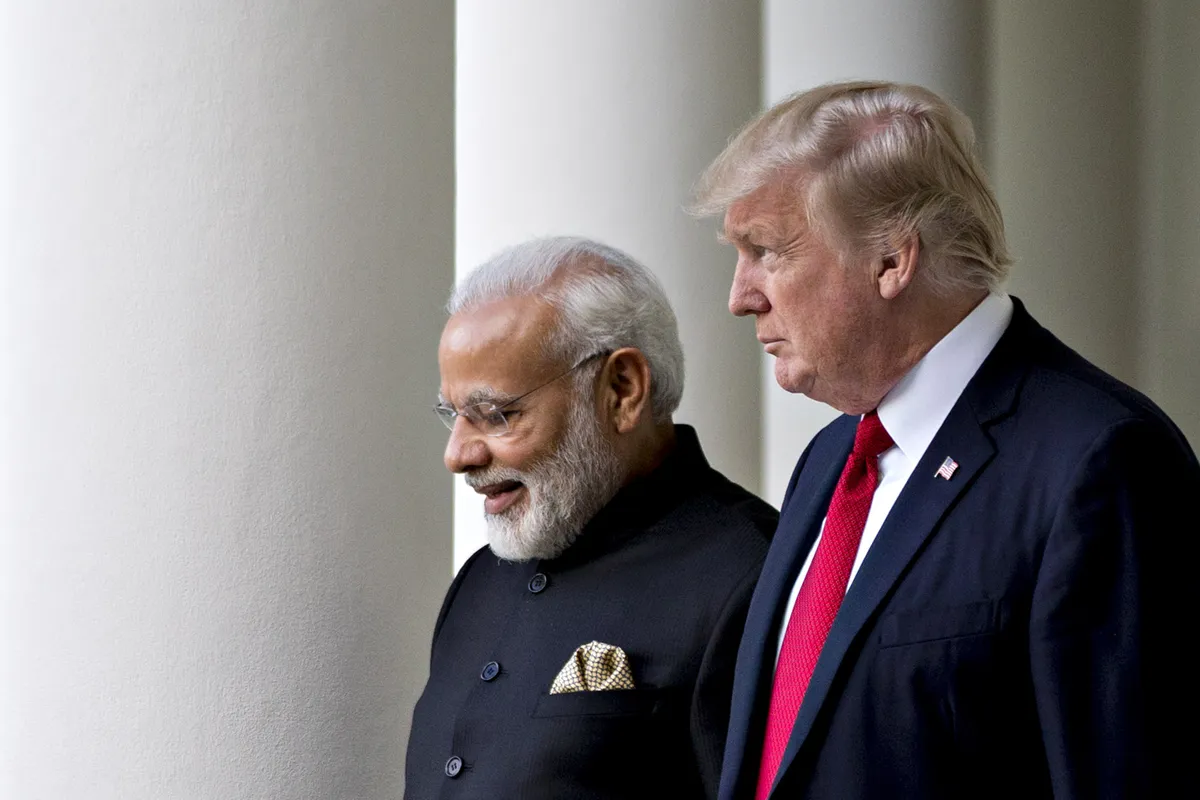
New Delhi: Even before the ink has fully dried on the proposed India–US interim trade agreement, anxiety is spreading across India’s farmlands. What is officially described as a trade facilitation measure is being viewed by many farmer organizations as a potential turning point—one that could reshape the country’s agricultural future.
Following strong objections from farmer groups, the language of a White House fact sheet reportedly underwent subtle but significant revisions. The earlier reference to “certain pulses” facing tariff reductions was removed. The word “committed” was softened to “intends,” and the explicit mention of “agricultural products” was quietly deleted. These changes suggest that the voices of Indian farmer organizations resonated beyond domestic boundaries.
Yet, critics argue that what is visible may only be a fraction of the broader negotiations.
Tariff Imbalance Raises Concerns
While the government has maintained that agriculture remains outside the scope of a full-fledged Free Trade Agreement (FTA), trade data tells a more complex story. Between January and November 2025, agricultural imports from the United States reportedly rose by 34 percent, reaching nearly $2.9 billion. In contrast, India’s agricultural exports to the US increased by just 5 percent during the same period.
Import duties on certain American agricultural goods—ranging between 30 and 150 percent earlier—have reportedly seen relaxations. Meanwhile, US tariffs on Indian goods, which were negligible in 2023–24, rose to 3 percent and in some cases up to 18 percent. Farmer bodies question whether this reflects genuine free trade or a one-sided concession.
The metaphor frequently cited by critics is stark: a race in which one competitor runs with trillion-dollar subsidies, advanced mechanization, and vast landholdings, while the other relies on small plots, manual labor, and hope.
Dairy, Pulses, and Horticulture Under the Lens
The agreement’s provision for easing non-tariff barriers has sparked apprehension, particularly in the dairy sector. In India, milk production sustains millions of small and marginal farmers. Easier entry of American dairy products, backed by large-scale industrial farming and subsidies, could disrupt rural livelihoods.
Apple growers in Himachal Pradesh have also expressed concern after import duties on American apples were reportedly reduced from 50 percent to 25 percent, with a minimum import price fixed at ₹80 per kilogram. Even at an estimated landing cost of around ₹100 per kilogram, domestic producers fear market instability, especially in premium storage segments.
Pulses remain a particularly sensitive issue. India is the world’s largest producer and consumer of pulses—central not only to rural incomes but also to national food security. The removal of the pulses reference from the revised fact sheet is widely interpreted as a response to domestic pressure, though negotiations are believed to be ongoing.

A Question of Policy Direction
The US Agriculture Secretary publicly described the agreement as beneficial for American farmers. That assertion, observers note, is expected from Washington. The deeper question in India is whether domestic agricultural interests are being adequately safeguarded.
More than 70 percent of India’s population depends directly or indirectly on agriculture. For small and marginal farmers, farming is not merely an economic activity—it is a livelihood anchor. Rising input costs, debt burdens, and volatile markets have already strained rural economies. A surge of cheaper imports could intensify those pressures.
Economists often argue that free trade works best when participants operate on relatively equal footing. The agricultural structures of India and the United States, however, are fundamentally different. Large-scale American farms benefit from heavy subsidies and technological advantages, while Indian agriculture is characterized by fragmented landholdings and limited institutional support.
Between Opportunity and Risk
Farmer organizations have called for nationwide protests, greater transparency, and meaningful participation in policy formulation. They are demanding clear disclosure of all negotiation terms and concrete safeguard mechanisms.
The government, for its part, maintains that the agreement can be transformed into an opportunity—provided strategic protections and domestic reforms accompany it. Strengthening infrastructure, enhancing productivity, and expanding export competitiveness could potentially offset vulnerabilities.
The broader debate, however, transcends trade figures. It touches on food sovereignty, rural dignity, and economic self-reliance. Trade agreements may be signed in conference rooms, but their consequences unfold in fields and village markets.
The ultimate question remains: Is this deal a gateway to global integration, or a gradual compromise of domestic agricultural resilience?
The answer will depend not only on tariff lines and clauses but on whether policy-makers can strike a balance between international engagement and the protection of India’s farmers. If transparency, safeguards, and inclusive consultation guide the process, the agreement may yet become an opportunity. If not, history may once again record a familiar pattern—development advancing on paper while farmers bear the cost on the ground.