New Delhi: Even though the formal announcement of the West Bengal Assembly elections is still awaited, the political battleground is already charged. Clear signals suggest that the upcoming contest may revolve less around competing development claims and more around identity, faith, and cultural assertion.
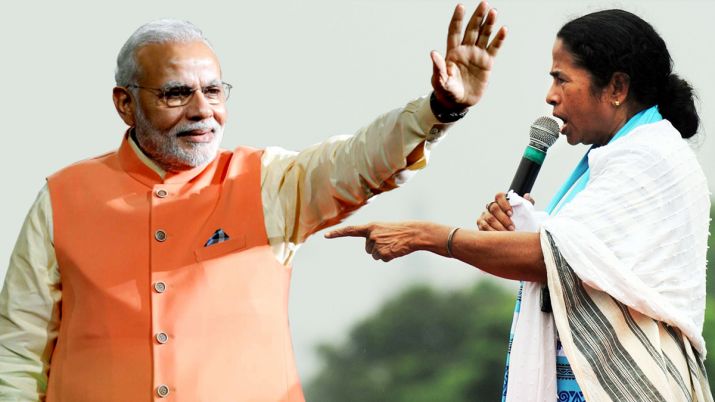
As the Rashtriya Swayamsevak Sangh marks its centenary year, statewide Hindu conventions are being seen not merely as ideological gatherings but as potential political mobilization platforms for the Bharatiya Janata Party. On the other side, Chief Minister Mamata Banerjee appears equally aware that if the electoral discourse shifts toward religion, it cannot be left uncontested. The foundation ceremony of “Durga Angan” in New Town, Kolkata, symbolically linked to Bengali identity, reflects this calibrated response.

From Class Politics to Identity Politics
For decades, Bengal’s politics revolved around class struggle and Left ideology under the leadership of the Communist Party of India (Marxist)-led Left Front. Prior to that, the Indian National Congress dominated the state’s political landscape. However, since 2011, the axis has shifted dramatically to a bipolar contest between the All India Trinamool Congress and the BJP, pushing the Left and Congress to the margins.
This polarization has sharpened identity-centric narratives. The BJP’s campaign rests on four key planks: the alleged insecurity of Hindus in Bengal, illegal immigration from Bangladesh, women’s safety, and corruption. Incidents such as the controversy surrounding R.G. Kar Medical College and Hospital and recruitment scams are projected as symbols of governance failure. The party’s broader objective appears to be consolidating the nearly 70 percent Hindu electorate around a shared perception of vulnerability.
Illegal infiltration has long been debated in border districts, but the issue is now being framed with renewed political urgency. The BJP argues that demographic shifts are affecting development and social stability.
Mamata’s Balancing Act
Mamata Banerjee faces a dual challenge: reassuring minority communities while convincing Hindu voters that their faith and identity are secure. In the 2021 election, when the BJP aggressively used the slogan “Jai Shri Ram,” Banerjee responded with cultural symbolism rooted in “Jai Maa Durga” and traditional chants. Her current strategy suggests that Bengali Hindu identity, she argues, is not the monopoly of any one party but intertwined with regional pride and pluralism.
Complicating the electoral arithmetic is emerging activity among Muslim leaders in districts like Murshidabad, which could potentially fragment minority votes. In 2021, the Trinamool secured approximately 48 percent of the vote and 223 seats, with consolidated minority support playing a decisive role. The BJP, with around 38 percent of the vote, emerged as the principal opposition with 65 seats. Even a modest shift in minority voting patterns could significantly alter seat outcomes in a tightly polarized contest.
Development in the Shadows
Beyond religious mobilization lies a deeper concern: Bengal’s stalled economic momentum. Once regarded as India’s intellectual and industrial hub, the state today grapples with incomplete infrastructure projects, industrial slowdown, and outward migration of youth. The exit of Tata’s Nano project from the state in 2011 symbolized a turning point, highlighting tensions between land politics and industrial investment.

Young Bengalis increasingly migrate to other states in search of employment, sometimes facing discrimination and identity-based slurs. Yet these economic anxieties often recede behind the louder narratives of religion and identity during election season.
Banerjee accuses the central government of financial discrimination, while the BJP accuses the state administration of corruption and appeasement. Investigations by central agencies have further intensified the political confrontation. As governance debates turn into legal and ideological battles, development risks becoming collateral damage.
The Larger Question
The fundamental question is not merely who will win but what agenda will prevail. Can religion-based polarization offer a sustainable governance model? History suggests that while religious mobilization may generate short-term electoral energy, long-term political legitimacy ultimately depends on jobs, education, healthcare, and infrastructure.
Bengal’s cultural ethos has historically embraced pluralism—from Ramakrishna Paramahamsa to Rabindranath Tagore, the state has symbolized intellectual openness and spiritual diversity. Durga Puja and Muharram have coexisted as shared social experiences. If electoral politics reduces this rich social fabric to arithmetic polarization, it risks weakening Bengal’s social cohesion.
Yet religious symbolism need not necessarily undermine progress. If integrated with a genuine commitment to development, it can reinforce cultural confidence while fostering inclusive growth. Ultimately, the maturity of democracy rests with the voter. Should the electorate prioritize employment, governance, and economic revival, political narratives may realign accordingly. If identity politics dominates, that too will shape Bengal’s trajectory.
The real test, therefore, is not the height of the religious flag but whether Bengal can reclaim its economic vitality, cultural generosity, and social harmony. The election outcome will determine the government—but the deeper verdict will define the state’s future direction.