Dhaka | With Bangladesh heading into a crucial general election, the political climate in the country has intensified sharply. The polls come at a turning point, with the Awami League barred from contesting and an interim administration led by Nobel laureate Muhammad Yunus governing since the fall of former Prime Minister Sheikh Hasina’s government in August 2024. The upcoming vote is expected to usher in a full-time prime minister after nearly 18 months of interim rule.
Main Contenders
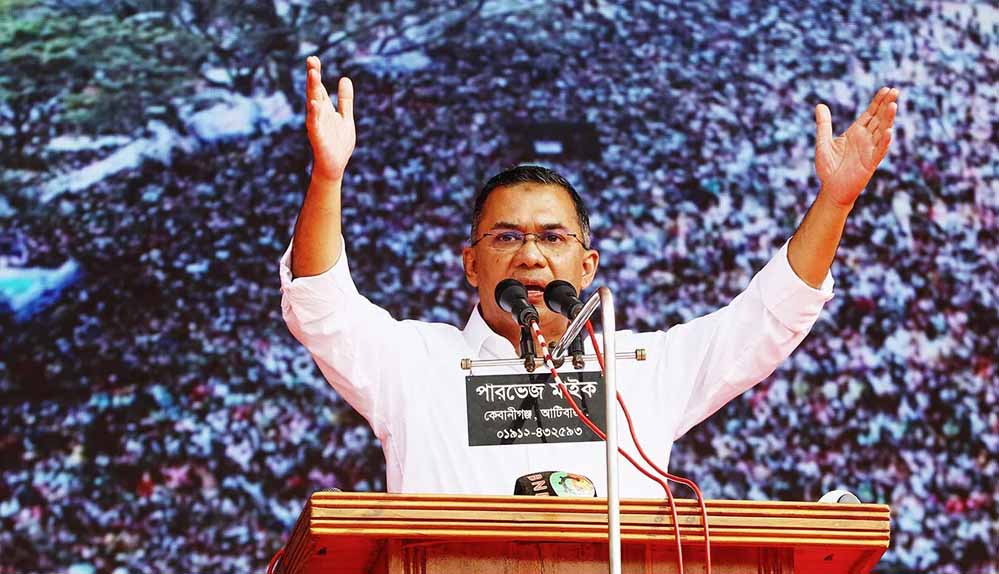
The election battle is largely centered between the Bangladesh Nationalist Party (BNP), led by Tarique Rahman, son of former prime minister Khaleda Zia, and the Jamaat-e-Islami, a hardline Islamist party traditionally known for its opposition to India and minority communities. While the BNP has also maintained a critical stance toward India, Jamaat’s campaign has been more explicitly confrontational on these issues.
What Pre-Poll Surveys Indicate
According to a pre-election survey conducted by leading Bangladeshi daily Prothom Alo, the BNP is projected to secure more than 200 seats in parliament, potentially clearing the path for Tarique Rahman to become the country’s next prime minister. Rahman recently returned to Bangladesh after spending several years in the United Kingdom.
The survey suggests that the BNP could achieve a clear majority, while Jamaat-e-Islami, contesting under the leadership of Shafiqur Rahman, may struggle to expand its footprint beyond a limited opposition role. Jamaat is estimated to win around 50 seats, with the Jatiya Party projected to secure about three. The remaining seats are expected to go to independent candidates.
Bangladesh’s parliament has a total strength of 350 seats, of which 300 are directly elected by voters, while 50 are reserved seats. Parliamentary terms run for five years, similar to India’s system.
Campaign Ends, Voting Ahead
Campaigning for the February 12 election has officially ended, with polling set to take place on 299 of the 300 constituencies; voting will not be held in one seat. Voters will also participate in a nationwide referendum alongside the general election. India has not sent election observers for the polls.
The Awami League remains barred from contesting, a move strongly opposed by Sheikh Hasina. Election campaigning began on January 22, during which 1,981 candidates entered the fray. Bangladesh has approximately 127 million registered voters.

Competing Alliances and Mixed Projections
The contest is widely seen as one between two major alliances. The BNP-led alliance is estimated to command 33–35 percent popular support, while an 11-party coalition led by Jamaat-e-Islami and the National Citizen Party (NCP) is projected to receive 30–34 percent support.
However, another survey paints a much tighter race, predicting 44.1 percent vote share for the BNP alliance and 43.9 percent for the Jamaat-led bloc. This projection estimates Jamaat’s alliance winning 105 seats and the BNP alliance securing 101 seats, suggesting a fragmented parliament. Official results are expected on February 13.
Referendum Alongside Elections
In parallel with the elections, voters will take part in a referendum on a wide-ranging reform agenda proposed by the interim government. Muhammad Yunus has urged citizens to vote in favor of the reforms, stating that public approval would help eliminate poor governance and lay the foundation for a more stable future.
The interim administration has been actively campaigning for public backing of its 84-point reform package, positioning the referendum as a key step toward long-term institutional change in Bangladesh.
As Bangladesh prepares to vote, the outcome is expected to shape not only the country’s leadership but also its political direction and regional posture in the years ahead.