New Delhi | A charged silence descended on the Rajya Sabha on February 5 when Prime Minister Narendra Modi rose to reply to the motion of thanks on the President’s Address. Speaking amid intermittent opposition protests, the Prime Minister delivered one of his most forceful parliamentary interventions in recent years, launching a direct political and moral attack on the opposition, particularly the Congress.
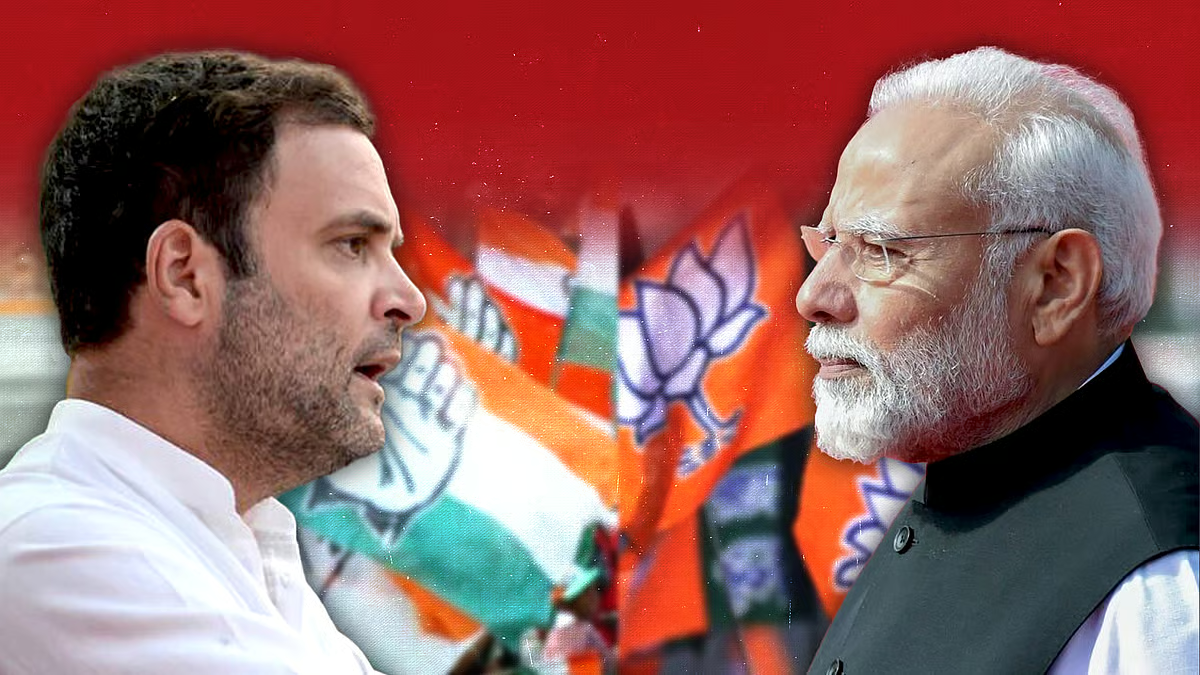
Modi’s speech went beyond a routine reply, framing the debate as a confrontation between democratic responsibility and what he described as the politics of hatred. Referring to slogans such as “mohabbat ki dukaan” (shop of love) used by opposition leaders, the Prime Minister questioned their sincerity, contrasting them with remarks like “Modi teri qabr khudegi” (Modi, your grave will be dug), which he said strike at the very foundations of democracy.
“This is not personal criticism,” Modi said, according to parliamentary sources. “This is an insult to constitutional values and the nation itself.” He reminded the House that he had endured abuse for over 25 years in public life, yet, he added, India’s development trajectory had not slowed. “The real strength of this government,” he asserted, “comes from the trust of 140 crore Indians, not from any political family’s remote control.”
Targeting Dynastic Politics
In a pointed reference to the Congress leadership, the Prime Minister said it was difficult for some to accept that the son of a tea seller could become Prime Minister. He alleged that certain leaders believed the office was their “birthright” and that electoral defeat had fuelled anger and hostility. The slogan threatening his death, Modi said, was not merely rhetoric but reflected a deeper frustration.
“Those who speak of democracy sometimes raise slogans of death,” he warned, adding that history ultimately judges such politics. His remarks prompted a walkout by sections of the opposition, but the Prime Minister continued his address, insisting that “truth does not leave the House just because some members do.”
Listing Government Achievements
Modi used the speech to highlight key decisions and achievements of his tenure. He cited the abrogation of Article 370, action against terrorism in the Northeast, surgical strikes across the border, and intensified operations against Naxalism. These steps, he argued, explained the intensity of opposition criticism.
“No matter how many slogans are raised, my grave cannot be dug,” Modi said, crediting the blessings of “mothers and sisters of this country” as his strongest shield.
He also listed welfare initiatives, including housing for the poor, toilets, electricity, LPG connections, and the Jal Jeevan Mission. According to the Prime Minister, around 25 crore people had been lifted out of poverty during his tenure. Drawing a sharp contrast, he accused the Congress of putting the nation at risk for the sake of family interests, while claiming that his government had dedicated itself to public service.

India’s Economic Trajectory
The Prime Minister also underlined India’s economic progress, noting that the country, which had slipped from being the world’s sixth-largest economy at Independence to eleventh position in later decades, was now rapidly moving toward becoming the third-largest economy globally. He referred to India’s transition from being labelled among the “Fragile Five” economies to a key global growth driver.
Modi highlighted major international trade and investment agreements, including large-scale deals with the European Union and the United States, describing them as evidence of growing global confidence in India. “These achievements are invisible to some,” he said, “which is why they resort to slogans of hatred.”
A Message to the Opposition
The Prime Minister stressed that his remarks were not limited to the Congress but addressed the broader opposition. He claimed that repeated electoral defeats had intensified political bitterness and insisted that voters were discerning and fully aware of political realities.
With a touch of humour, Modi remarked that despite hearing daily abuses, his health remained “absolutely fine,” a comment that drew applause from treasury benches. Observers noted that the remark symbolised his confidence and combative stance.
Closing Note
Concluding his address, Modi said hatred could not build a nation and warned that politics driven by animosity ultimately collapses under the weight of time. India, he said, seeks development, unity, and progress—not divisive rhetoric.
As the House gradually emptied, the Prime Minister’s words continued to resonate, leaving behind a sharp political message and a clear assertion of his government’s narrative: that public trust, governance, and development remain its core pillars.