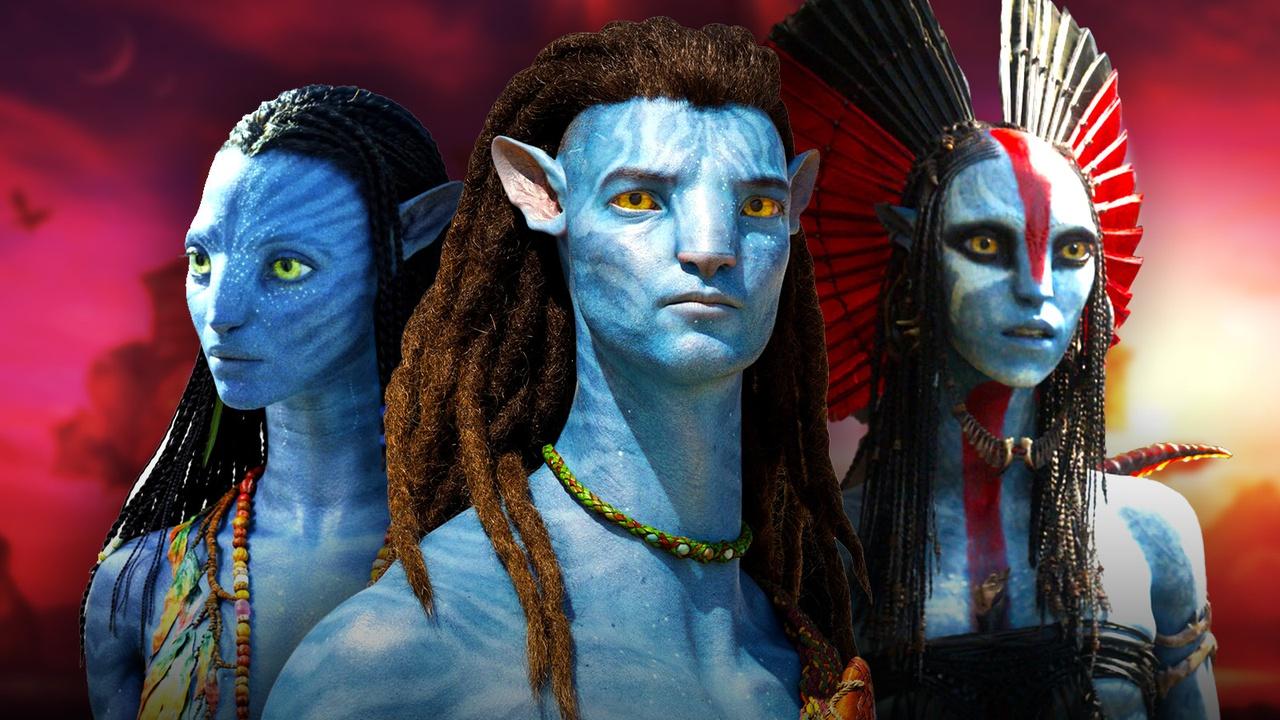
Mumbai: Released on December 19, 2025, Avatar: Fire and Ash—the official third chapter in James Cameron’s ambitious saga—marks a bold tonal shift for the franchise. Clocking in at an imposing 3 hours and 17 minutes, the film plunges audiences back into Pandora, this time trading its familiar aquatic beauty for scorched landscapes, volcanic fury, and moral ambiguity. It is the most intense and emotionally volatile Avatar film yet.
Picking up shortly after the devastating events of The Way of Water, the story finds the Sully family fractured by grief. The death of their eldest son Neteyam looms heavily over Jake Sully (Sam Worthington) and Neytiri (Zoe Saldaña), whose marriage and leadership are strained by unresolved rage and loss. While the human RDA forces return yet again—spearheaded by the relentless recombinant Colonel Miles Quaritch (Stephen Lang)—the most formidable threat comes from within Pandora itself.

The Ash People: Pandora’s Moral Reckoning
The introduction of the Mangkwan Clan, known as the Ash People, is the film’s most daring narrative move. Led by the magnetic and terrifying Varang (Oona Chaplin, in a breakout performance), this Na’vi faction rejects Eywa’s balance, embracing destruction, conquest, and survival through dominance. They are not villains in the traditional sense, but a mirror to what Pandora could become under endless war. Their presence adds a layer of moral complexity previously unseen in the franchise, challenging the simplistic nature-versus-machine dichotomy.
Technical Brilliance, Once Again
James Cameron’s technical prowess remains unmatched. The volcanic regions of Pandora—choked with ash, molten rivers, and fire-lit skies—are nothing short of awe-inspiring. The motion capture, high-frame-rate cinematography, and 3D immersion reach new heights, making aerial ikran battles, ground assaults, and creature encounters feel visceral and immediate. Every frame reinforces Cameron’s reputation as cinema’s premier world-builder.
Emotion at the Forefront
While spectacle dominates, Fire and Ash is ultimately driven by emotion. Zoe Saldaña delivers her most powerful performance yet as Neytiri, portraying a mother consumed by grief and vengeance with raw intensity. Jake, meanwhile, grapples with the weight of leadership and the consequences of endless resistance.
The younger generation steps into sharper focus. Lo’ak (Britain Dalton) continues his arc of rebellion and self-definition, Kiri (Sigourney Weaver) deepens her mysterious bond with Eywa—hinting at revelations that could redefine the saga—and Tuk brings moments of fragile innocence amid chaos. Spider (Jack Champion) remains a compelling emotional bridge between humans and Na’vi, his loyalties increasingly conflicted.
Epic Highs, Familiar Lows
The film’s action sequences are colossal, building toward a fiery, cathartic finale that ranks among the franchise’s most memorable set pieces. However, the extended runtime occasionally works against it. Some narrative beats—family in peril, RDA resurgence—echo earlier entries without sufficient reinvention. Pacing issues and familiar environmental messaging may test patience for some viewers.

Final Verdict
Despite its excesses, Avatar: Fire and Ash reaffirms James Cameron as a singular blockbuster auteur. It is darker, angrier, and more emotionally charged than its predecessors, pushing the franchise into morally complex territory while honoring its core themes of family, identity, and survival. Though it trails the box-office heights of the first two films, crossing the $1 billion worldwide mark is no small feat.
This is Avatar at its most ferocious—and most human.
Background: The Road to Fire and Ash
The saga began with Avatar (2009), which revolutionized modern cinema and became the highest-grossing film of all time. It followed ex-Marine Jake Sully as he bonded with the Na’vi and chose Pandora over humanity’s exploitation.
Avatar: The Way of Water (2022) expanded the world through oceanic biomes and the Metkayina clan, centering on family, adaptation, and devastating loss. The death of Neteyam left emotional scars that Fire and Ash now fully confronts—setting the stage for a saga that is no longer just about wonder, but consequence.
Rating: ★★★★☆ (8.5/10)
A visually transcendent, emotionally searing epic best experienced in IMAX 3D.