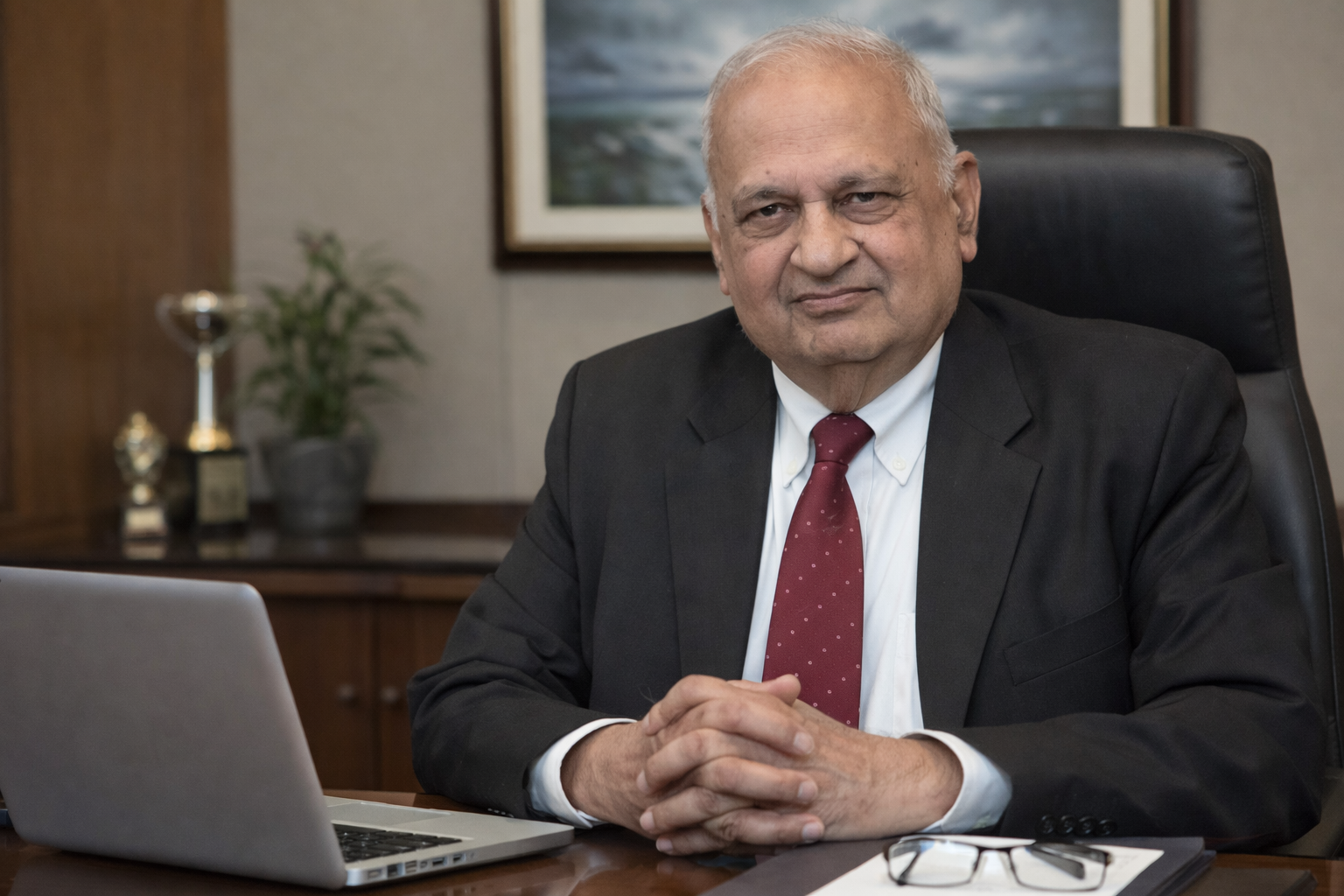

AK Mathur: Completing 50 years marks a significant milestone for any organization. For members like me, who have been associated with LMA for over 25 years, the golden jubilee is both an emotional moment and a proud opportunity to reflect on the organization’s distinguished journey.Lucknow Management Association (LMA) was founded in 1976 by the late Mr. T. N. Dhar, a deeply committed senior bureaucrat, along with a group of professionals, as a local chapter of the All India Management Association (AIMA). In its early years, LMA focused on advancing management education and training in the state by organising lecture sessions by eminent speakers and conducting Management Development Programmes, particularly for State Public Sector Undertakings.Around 2001, LMA articulated a Vision and Mission. Along with strengthening the management movement, the Association committed itself to contributing to the state’s larger development goal of making Uttar Pradesh an Uttam Pradesh. To reinforce this shared commitment, the Vision and Mission are formally recited by members at all LMA meetings, ensuring that the Association’s objectives remain central to its deliberations and activities. LMA also set an ambitious objective—to emerge as one of AIMA’s top-rated affiliates and secure representation on the AIMA Council. At that time, this goal appeared too ambitious and unrealisticas LMA was avery small body compared to much larger associations in the metro cities of the country.Through sustained effort and the dedicated work of professionals managing its affairs, this vision was realised over a decade ago. Today, LMA is a Category-I affiliate of AIMA and is ranked among the top three local management associations in the country with a seat in AIM’s Governing Council.
Q 2: What do you consider the most defining moments or achievements in LMA’s 50-year journey, particularly those that have positioned it as one of the award-winning management associations in India?
AK Mathur: Lucknow Management Association has been a vibrant and forward-looking institution since its inception, but its journey has been marked by a few truly defining milestones. The first breakthrough came in 2000, when LMA won the AIMA Best Affiliate Award based purely on performance, in Category IV, the entry-level category determined by membership size. This recognition signalled LMA’s emergence on the national management platform.The momentum continued, and a second landmark achievement followed in 2007–08, when LMA won the same prestigious award in Category II, reflecting its growing stature, professionalism, and impact. What made this phase particularly noteworthy was the consistency of excellence; LMA continued to be rated among the best AIMA affiliates for seven consecutive years, a rare accomplishment.A crowning moment came around 2009, when, in recognition of its sustained performance and leadership, LMA secured a seat on the AIMA Governing Council. This was the moment when the vision articulated nearly a decade earlier was fully realised. Since then, LMA has continued to hold its place on the AIMA Council and today proudly stands among the top three of AIMA’s 68 affiliates across India—a testament to the dedication, vision, and collective effort of its members over the years.There were several defining moments when LMA emerged as a credible and trusted institution in the domain of public policy. The first such instance was when the Chief Secretary of Uttar Pradesh entrusted LMA with conducting an evidence-based study on Ease of Doing Business in the state. This study was successfully carried out by LMA in collaboration with professors from IIM Lucknow and Jaipuria Institute of Management.Subsequently, LMA was mandated by the IIDC, Government of Uttar Pradesh, to conduct stakeholder consultations for finalizing state policies on Electric Vehicles, Warehousing and Logistics, and Pharmaceuticals, a rare instance when a body outside the Government was entrusted with such a responsibility. LMA also undertook evidence-based impact assessment studies of the ODOP initiative across select districts of the state.
Q 3: How has the establishment of IIM Lucknowinfluenced LMA’s growth, programs, and outreach in management education and professional development?
AK Mathur: Indian Institute of Management Lucknow, established in 1984, was among the earliest institutional members of the Lucknow Management Association. From the very beginning, IIM Lucknow has shared a close and enduring relationship with LMA. The Institute’s Directors and several of its faculty members continue to be actively associated with LMA’s programmes even today, contributing to their academic depth and practical relevance.Former IIM Lucknow Director Prof. Archana Shukla, along with Prof. Srinivas, were founding members of the LMA Good Governance Forum, which was constituted under the leadership of Late Justice Sudhir Verma, the then Lokayukta of Uttar Pradesh. This initiative marked an important convergence of academia, governance, and public policy. Prof Devi Singh addressed many LMA programmes. Prof Ajit Prasad, Director, served on LMA’s Executive Committee and collaborated in many LMA programmes organized in IIML, including a major event for improving the startup ecosystem in the state.Over the years, many distinguished faculty members from IIM Lucknow have enriched LMA’s programmes and left a lasting impact on participants through their management expertise. These include Prof. Subrata Chakraborty, Prof. Mohd. Akbar, Prof. Debashish Chatterjee, Prof. Jabir Ali, Prof. Bharat Bhaskar, Prof. Himanshu Rai, Prof Sanjay Singh, Prof Sabyasachi Sinha, Prof Vivek Gupta, Prof Sushil Kumar, Prof Vipul, and Prof. Kshitij Awasthi, to name only a few. Their sustained engagement has significantly strengthened the intellectual and professional foundations of LMA’s activities.
Q 4: In your long tenure as Senior Vice President, what key initiatives or programs are you most proud of that LMA has delivered—whether in leadership training, sectoral events, sustainability, startups/SMEs, or community impact?
AK Mathur: As regards my own role in LMA, I may share that over more than 25 years of association, I have had the opportunity to serve the organisation in various capacitiesranging from Executive Director and Secretary to Vice President and Senior Vice President, and at times simply as an ordinary member.There was a growth of LMA in terms of the number of programmes of all categories, from minuscule two digits to over 200 in the last 10 years. I would attribute LMA’s sustained growth and the quality of its profile primarily to the collective leadership of its office-bearers, including senior Govt functionaries – Chief Secretaries, Additional Chief Secretaries, and Principal Secretaries who chose to be associated with LMA, Executive Committee members, and the many distinguished thought leaders who have contributed to its programmes over the years. My own contribution has been only a small part of this greater collective effort, which has been driven by shared vision, teamwork, and commitment.While the range of programmes is too vast to enumerate, LMA has consistently demonstrated its commitment to capacity building and thought leadership. It has conducted hundreds of capacity-building programmes for FPOs across the state, organized numerous initiatives for startups and entrepreneurs, and facilitated high-impact interactions on public policy issues. In addition, LMA has led several forward-looking programmes on AI, environmental sustainability and governance, economic challenges, and other emerging areas of importance.
Q 5: LMA has won AIMA’s ‘Best Management Association Award’ multiple years in a row in the past. What factors have enabled this consistent excellence, and how do you sustain such recognition?
AK Mathur: The All India Management Association (AIMA) has laid down a rigorous 20-point evaluation framework for assessing the performance of its local management affiliates. This framework covers a wide range of parameters, including the number and quality of Management Development Programmes and knowledge-sharing sessions, thematic diversity—particularly in areas such as environment, artificial intelligence, governance, and social issues, which carry higher weightage, inter-institutional linkages, industry and study tours, outreach initiatives, awards, publications, research, and case studies etc To ensure objectivity and transparency, AIMA has, for several years, outsourced the evaluation of local management associations to a leading consulting firm, Deloitte, which independently assesses performance against these prescribed parameters.LMA has consistently aligned its activities with this evaluation framework while remaining firmly anchored to its own Vision and Mission. This strategic alignment has enabled LMA to remain among the top-rated AIMA affiliates for many years.Sustaining such performance over time requires institutional commitment, continuous upgradation of intellectual capabilities, and unwavering focus—principles that LMA has consciously embraced in its functioning and programme design
Q 6: Looking at recent activities (e.g., panel discussions on economic/industry topics, collaborations with universities and bodies like SMS Lucknow), how has LMA adapted to contemporary challenges like post-pandemic recovery, digital transformation, sustainability, and geopolitical uncertainties?

AK Mathur: In the post-pandemic period, LMA organised a series of panel discussions on Happiness, culminating in the publication of a monograph on Happiness as a public policy framework, along with two related research papers. These contributions advocated the inclusion of happiness and well-being as policy objectives, complementing traditional economic indicators such as GDP.LMA also conducted a high-impact programme on the post-pandemic revival of MSMEs, aligned with the World Bank–supported RAMP initiative, focusing on institutional reforms and growth-oriented interventions for the sector.In addition, LMA organised a major convention on “Creating a Trillion-Dollar Economy for Uttar Pradesh”, bringing together leading domain experts to present concrete policy prescriptions. This was followed by similarly impactful interactions on governance imperatives for economic transformation in Uttar Pradesh. In the recent past,policy-focused programmes on Green Buildings, Mitigating Road Accidents, and reducing traffic congestion were conducted. The insights and recommendations emerging from these deliberations were systematically documented, published, and disseminated among key stakeholders.Throughout this period, LMA collaborated closely with government departments, concerned non-profit organisations, industry bodies, and leading business schools, reinforcing its role as a platform for informed dialogue and evidence-based policy engagement.
Q 7: What role has LMA played in fostering management practices among SMEs, startups, entrepreneurs, and public sector professionals in Uttar Pradesh and beyond?
AK Mathur: While there are two large, dedicated associations representing MSMEs, LMA has consistently partnered with MSME associations by actively involving them and allied associationsin its programmes addressing sector-specific issues—such as budget discussions, policy dialogues, panel discussions, and seminars.As mentioned earlier, LMA organised several highly impactful programmes focusing on critical MSME challenges, including working capital constraints arising from delayed payments, access to finance, quality and technology upgradation, and improvements in internal management systems. Many of these initiatives were undertaken as part of the World Bank–funded RAMP (Raising and Accelerating MSME Performance) programme.In addition, LMA conducted a specialised workshop on the Government of India’s Lean Manufacturing scheme, followed by a five-day training programme for Lean Consultants, aimed at building long-term capacity within the MSME ecosystem.To promote entrepreneurship, LMA organised a major conference on creating a startup ecosystem in Uttar Pradesh, in collaboration with IIM Lucknow. The conference saw participation from senior officials of NITI Aayog, angel investors, and successful startup founders, fostering meaningful dialogue between policy, capital, and enterprise.As far as public sector officials are concerned, LMA has organised numerous programmes addressing critical public policy issues across multiple sectors, all aimed at supporting government departments and public sector corporations in informed decision-making and effective implementation.Under a mandate from the Government, LMA also organised two large startup conclaves, with multiple parallel sessions, where hundreds of startups from across Uttar Pradesh pitched their ideas and business plans before juries comprising angel investors and domain experts. Complementing these efforts, LMA conducted a series of workshops at business schools on business plan preparation and venture development to encourage a startup mindset among students.Further, LMA facilitated the formation of the Uttar Pradesh Angel Network, bringing together leading industrialists and entrepreneurs from Lucknow. The network was subsequently registered as a Section 8 company, providing an institutional platform for early-stage investment in the state.Through these initiatives, LMA has made a modest but meaningful contribution to strengthening the MSME sector and nurturing the startup ecosystem in Uttar Pradesh.
Q 8: As a power sector veteran yourself, how has your professional background shaped your contributions to LMA, especially in areas like infrastructure, energy, and policy discussions?
AK Mathur: I worked in the power sector for five years at a senior management level, which developed my perspective on policy issues. LMA’s engagement with the power and energy sector has been consciously designed to move beyond discussion and contribute directly to policy formulation and implementation. A flagship initiative was the convention on “Driving Uttar Pradesh’s Growth through the Power Sector”, which brought together senior decision-makers and experts from the State Government, NTPC, BHEL, regulatory authorities, State DISCOMs, private power producers, and energy professionals. The proceedings—released as a book by the Hon’ble Chief Minister—served as a policy reference document, offering actionable recommendations on capacity expansion, regulatory reform, and efficiency improvements in the sector.LMA’s collaboration with CEEW, Asia’s leading non-profit think tank in energy and climate, translated research into practice through programmes focused on industrial energy efficiency, featuring live implementation case studies and a high-level roundtable on scaling efficiency interventions. These platforms helped bridge the gap between policy intent and on-ground execution by connecting regulators, industry leaders, and technical experts.LMA further strengthened the policy ecosystem by contributing a chapter on “Affordable and Clean Energy” to the Uttar Pradesh Sustainable Development Report, a government publication that brings out long-term planning. Complementing this, LMA published a peer-reviewed research paper titled “Leveraging PPP and ESCO Models for Energy Savings for High Energy Consumers, with Special Reference to Uttar Pradesh.” The study outlined practical financing and implementation pathways—through public–private partnerships and energy service company (ESCO) models—to accelerate adoption of energy-efficiency projects at scale. Together, these initiatives positioned LMA as a facilitator of evidence-based policy design and real-world implementation in the state’s energy transition.
Q 9: What have been some of the biggest challenges LMA has faced over the decades, and how were they overcome to reach this golden milestone?
AK Mathur: Most AIMA affiliates are in cities with a strong industrial and corporate base. Associations in centres such as Ahmedabad, Mumbai, Chennai, Baroda, and Delhi benefit from the presence of large enterprises, and even Noida and Ghaziabad Management Associations have good industry connections. This naturally creates sustained demand for Management Development Programmes in these areas. Lucknow’s ecosystem has historically been different, with a relatively limited corporate presence. As a result, the local demand for structured MDPs has been modest, and many MSMEs—being owner-driven—often operate with limited bandwidth to absorb new management practices and techniques.However, this landscape is gradually changing. With Uttar Pradesh’s accelerated development agenda, new industrial clusters are emerging in and around Lucknow. In the coming years, this expansion is expected to create fresh opportunities for LMA to engage with industry through targeted, sector-focused programmes and partnerships.A related challenge has been the limited availability of sponsorship support. LMA has traditionally relied on modest membership contributions, which naturally constrain programme budgets. Despite these financial limitations, the Association has continued to deliver high-quality knowledge platforms through prudent resource management and strong voluntary commitment from its members—an approach that reflects its institutional resilience and dedication to its mission.
Q 10: What is your vision for LMA in the next decade? Are there any exciting upcoming initiatives, expansions, or focus areas (e.g., youth leadership, innovation, NEP alignment, or global collaborations) to mark the post-50-year phase?
AK Mathur: The way forward for the incoming leadership can be structured around a few clear priorities. First, LMA must deepen its engagement with emerging public policy domains such as labour productivity, manufacturing competitiveness, artificial intelligence, environment and climate change, digital transformation, and fintech—areas that will increasingly shape Uttar Pradesh’s development trajectory.Second, LMA should continue to strengthen its role as a knowledge-driven think tank through structured programmes with domain experts and influencers, research, policy briefs, and evidence-based case studies. This will require systematically leveraging the Association’s multidisciplinary individual and institutional membership, which represents a rich reservoir of professional and academic expertise.A third important agenda is to contribute more actively to the industry–academia interface. By creating structured platforms for collaboration between business schools, universities, industry leaders, and policymakers, LMA can help translate academic insight into practical solutions while preparing young professionals for real-world challenges.Finally, the new leadership taking charge next week will also need to focus on expanding membership and diversifying and improving income streams. Strengthening the financial base is essential to sustain a larger and more ambitious programme agenda and to scale LMA’s impact in the years ahead.
Q 11: Any special message or appeal to LMA members, young professionals, aspiring managers, and the Lucknow/UP business community on this historic occasion?
AK Mathur: My message to LMA members, especially to young management professionals, is to engage more actively with the Association’s agenda, use its programmes as platforms for their continuous professional growth, and position themselves as catalysts in the development of the state. LMA offers not just learning opportunities, but a professional body where ideas, leadership, and public purpose come together.