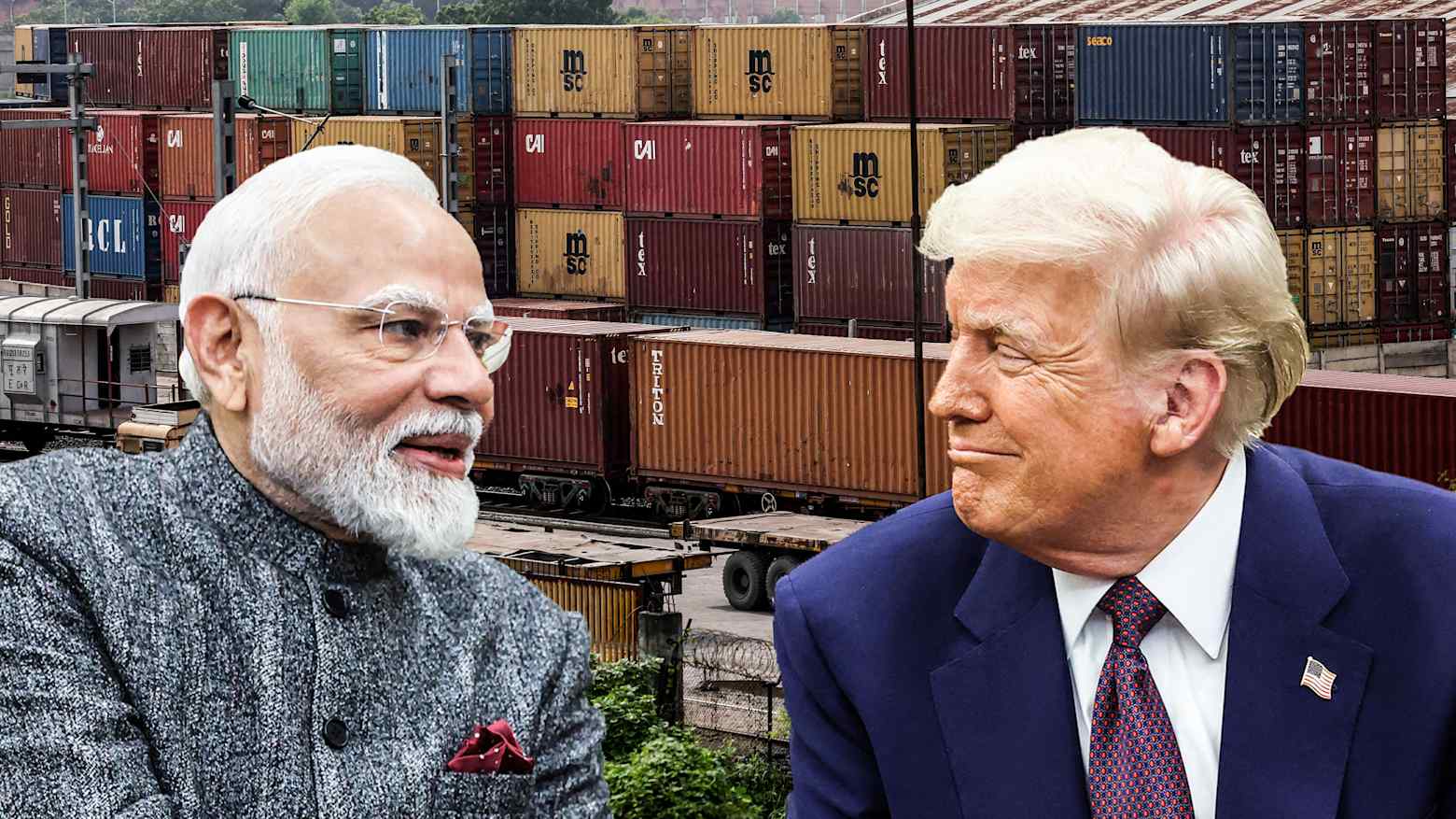
Washington / New Delhi: The trade agreement between India and the United States announced in February 2026 is being projected as a landmark achievement, yet the absence of transparency and conflicting claims from Washington and New Delhi have raised serious doubts about its true nature. Rather than a clear-cut “historic breakthrough,” many observers see the deal as a political signal or a confidence-building gesture, wrapped in ambiguity.
At the heart of the controversy is the lack of publicly available documentation. The Indian government has not released the full text, written terms, or specific clauses of the agreement. This opacity has triggered concerns over its potential impact on Indian agriculture, dairy sectors, and the country’s long-cherished strategic autonomy. While the US has claimed tariff reductions of up to 18 percent, the broader implications remain unclear without an official, detailed framework.

One of the most contentious claims came from former US President Donald Trump, who asserted that India had agreed to stop importing Russian crude oil. This assertion has not been confirmed by the Indian side, leaving a significant question mark over India’s energy policy. Oil procurement, experts note, is governed by long-term contracts and complex pricing structures. Russian crude, which India has been purchasing at discounts of up to $10 per barrel, is also lighter and easier to refine than alternatives such as Venezuelan oil. Abruptly halting such imports could involve penalties and compensation, making the claim appear impractical without formal negotiations.
Agriculture and dairy have emerged as another flashpoint. Opposition parties fear that Indian markets may be opened to US agricultural and dairy products, potentially harming domestic farmers. Although Commerce Minister Piyush Goyal has assured that Indian interests will not be compromised, skepticism persists due to the absence of concrete safeguards in the public domain.
There is also a stark divergence in the economic projections put forward by the two sides. Washington has claimed that India will purchase more than $500 billion worth of US goods. India, however, has focused primarily on tariff adjustments rather than large-scale purchase commitments. Currently, bilateral trade stands at around $410 billion, rising to approximately $800 billion when services are included. Critics argue that scaling this up to $500 billion in goods purchases alone appears unrealistic, even over multiple years.
Further confusion surrounds tariff structures. Trump and US officials have suggested that India will impose zero tariffs on American goods while Indian exports to the US will face an 18 percent duty. Trade experts dismiss this as implausible. India currently levies a minimum import duty of around 16 percent on products from even “special status” countries, with agricultural tariffs ranging from 36.8 percent to over 64 percent in some categories. Removing these protections entirely would severely undercut domestic producers.

The ambiguity was reinforced in Washington when White House Press Secretary Karoline Leavitt reiterated Trump’s claims during a press briefing, signaling that the US administration is treating the announcement seriously. Yet, these statements have only deepened uncertainty in India. Markets reflected this unease as well: a surge following the announcement was followed by volatility the very next day, suggesting investor doubts about the gap between expectations and reality.
Think tanks have also urged caution. The Global Trade Research Initiative (GTRI), an Indian organization led by a former senior official, stated that the agreement has “not yet been crystallized.” It warned against celebrating social media announcements without substantive details, emphasizing that potential economic gains must be evaluated with careful analysis rather than optimism alone.
Comparisons have also been drawn with similar unilateral announcements by Trump in the past, including an attempted deal with Canada that ultimately collapsed after resistance from Canadian leadership. Critics argue that without mutual consent, documented clauses, and parliamentary scrutiny, such declarations amount more to political messaging than binding agreements.
In sum, while trade and industry generally welcome improved India–US economic engagement, the February 2026 announcement remains shrouded in mystery. Until the full details are made public and clarified by both governments, the so-called trade deal appears less like a historic milestone and more like a strategic signal—one that demands rigorous scrutiny before celebration.







 ---------------------------------------------------------------------------------------------------