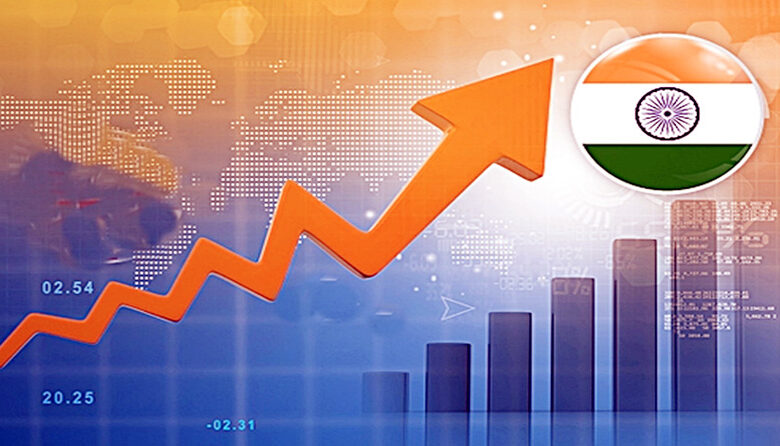
New Delhi: India’s economic journey is no longer defined merely by numbers and budget announcements; it reflects the story of a nation steadily strengthening its global standing through resilience, innovation and self-confidence. The Economic Survey 2025–26, presented by the Ministry of Finance, offers a comprehensive assessment of the country’s current economic health while clearly outlining future opportunities, challenges and the roadmap ahead.
The Survey highlights that despite global uncertainties, geopolitical tensions and lingering impacts of past crises, India has maintained remarkable economic stability. It underlines that the country is no longer just an emerging economy but is fast becoming a key driver of global growth.

According to the Survey and the first advance estimates of the Statistics Ministry, India’s real GDP growth for 2025–26 is projected at around 7.4%, higher than many earlier international estimates. This growth places India among the fastest-growing major economies in the world, supported by strong domestic consumption, rising investment, and robust performance across key sectors.
The services sector remains the backbone of the economy, recording an impressive growth of nearly 9.9%, driven by financial services, real estate, professional services, trade, transport and communication. The Survey notes that strong consumer demand and rapid digital adoption have further strengthened this sector. India’s digital economy, powered by UPI, digital payments, e-governance and a thriving startup ecosystem, has emerged as a new pillar of economic strength, extending even into rural areas.
The manufacturing and construction sectors together posted growth of around 7%, reflecting the positive impact of initiatives such as Make in India and Production-Linked Incentive (PLI) schemes. These measures have enhanced domestic manufacturing competitiveness and strengthened India’s position in global supply chains. Infrastructure expansion—covering housing, smart cities, highways and railways—has not only attracted investment but also generated large-scale employment.

Agriculture, described as the backbone of the Indian economy, registered a stable growth of about 3.1% in 2025–26. While its GDP share is relatively lower, its role in sustaining rural demand, food security and livelihoods remains crucial. Government efforts to boost farm incomes, expand irrigation and promote agri-technology are expected to further strengthen the sector.
The Survey also points to encouraging trends in capital expenditure, which has increased nearly 4.2 times since 2018, significantly improving logistics efficiency and long-term productivity. Inflation remained largely under control at around 4.9%, close to the RBI’s target range, indicating macroeconomic stability.
While acknowledging risks from global market volatility, energy price fluctuations and geopolitical tensions, the Survey emphasizes that sustained policy reforms, investment-friendly measures and market strengthening initiatives are helping mitigate these challenges.
In essence, the Economic Survey 2025–26 presents a confident picture of India’s growth trajectory—marked by strong GDP expansion, resilient sectors, rising investment and infrastructure development. More than a compilation of data, it serves as a strategic guide for policymaking and nation-building, reinforcing the vision of an Aatmanirbhar, progressive and globally competitive India.




 ---------------------------------------------------------------------------------------------------