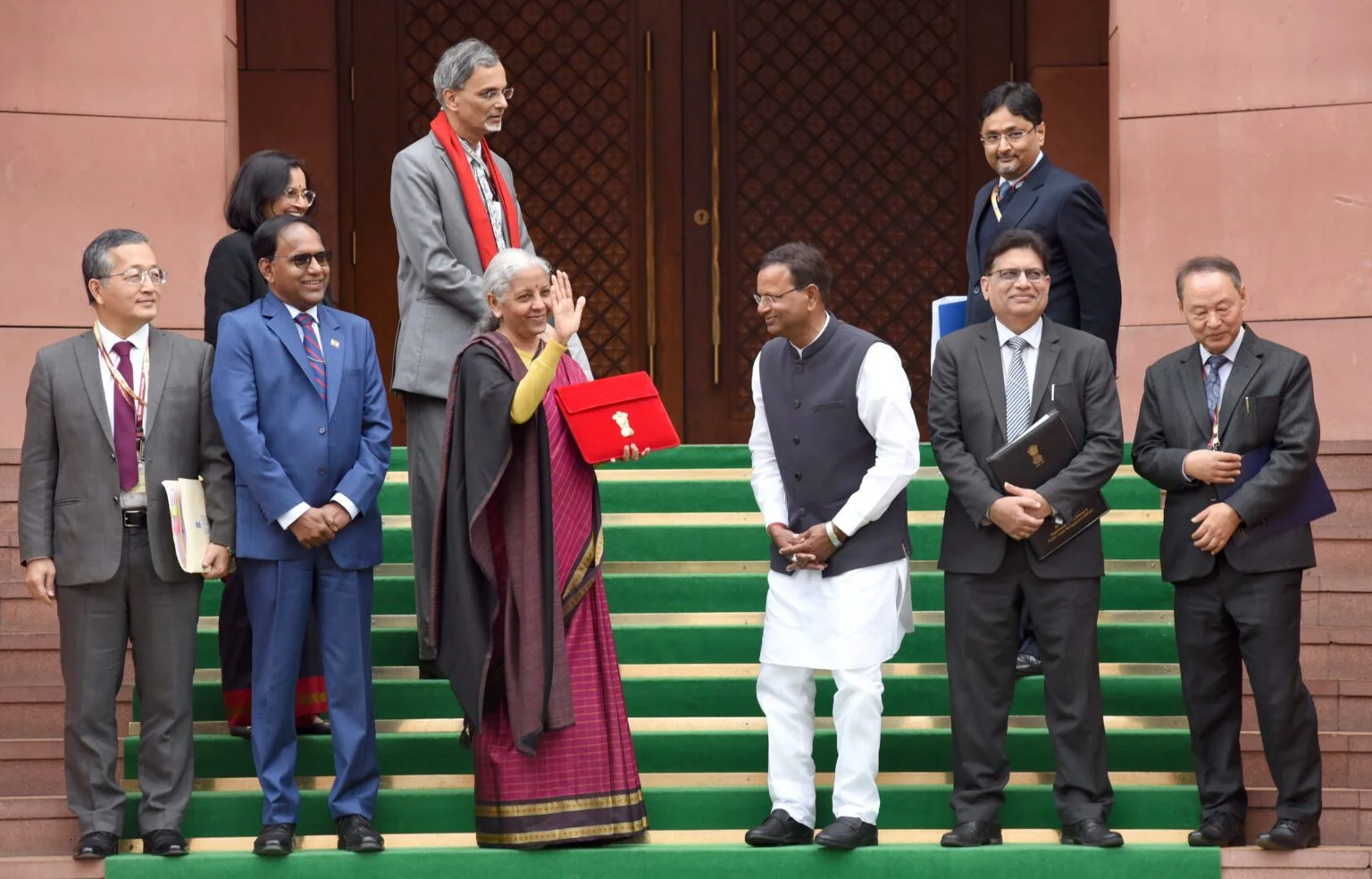
Varanasi: The Union Budget for 2026–27, presented by Finance Minister Nirmala Sitharaman in Parliament, has evoked mixed reactions in the religious city of Varanasi. Traders, bank officials, advocates and professionals largely welcomed the focus on MSMEs, infrastructure development, tourism and employment generation, while also expressing concern over the lack of sector-specific relief for furniture makers, weavers and small traders.
Many speakers described the budget as balanced and aligned with the long-term vision of a “Viksit Bharat 2047.” However, they pointed out that expectations from certain traditional and small-scale sectors remained unfulfilled.

Rajesh Kumar Sinha, Assistant General Manager at Punjab National Bank, said the budget strengthens the goal of a self-reliant India. He highlighted the strong emphasis on infrastructure development and a shift in employment thinking, aimed at transforming youth from job seekers into job creators. According to him, the ₹10,000 crore MSME fund and announcements related to rail corridors and a shipyard for Kashi could open new industrial and employment opportunities in the region.
Chartered Accountant Mudit Agrawal noted that while the manufacturing sector did not receive major direct incentives, the service sector gained some relief. He termed the proposal to train 10,000 tourist guides as a positive step toward employment generation. However, he added that with no major changes in income tax slabs, the middle class received only limited relief.
Advocate Shashank Tripathi described the budget as agriculture- and tourism-oriented, stating that efforts have been made to link small industries with agriculture. He said the tourism-related provisions would strengthen the concept of “Ek Bharat, Shreshtha Bharat” and boost regional economies, including that of eastern Uttar Pradesh.

Haji Shahid Qureshi, President of the Minority Traders’ Cell, said that weavers had high expectations from the budget, but apart from the rail corridor, Kashi did not receive any major direct relief. He described the budget as average for small traders. PNB Manager Jake Verma, meanwhile, said that investments in small industries and railways would create new employment opportunities.
The Varanasi Furniture and Furnishing Traders’ Association also shared its response. Association President Ajay Gupta welcomed the focus on MSMEs and manufacturing, stating that measures such as the ₹10,000 crore SME Growth Fund, enhancement of the credit guarantee limit from ₹5 crore to ₹10 crore, and mandatory integration of TReDS with GeM would improve cash flow and indirectly benefit the furniture industry. However, he expressed concern over the absence of a direct package for the furniture sector and no reduction in the 18% GST rate. He also warned that unchanged import duties on furniture could increase pressure on small traders’ margins.
On the taxation front, traders termed the income tax relief of exemption up to ₹12 lakh and a standard deduction of ₹75,000 as modest, while the lack of GST rate cuts means input costs are unlikely to reduce significantly. Concerns were also raised over stricter penalties for misreporting, calling for greater caution in compliance.
Overall, Varanasi’s business and professional community sees the budget as a step forward but believes that targeted sector-specific support, GST rationalisation and stricter control on imports are essential to ensure faster and more inclusive growth for small traders and traditional industries.












 https://www.youtube.com/watch?si=RtToJsBhYBatUrym&v=mOuYNSdhjHA&feature=youtu.be