Lucknow: Union Finance Minister Nirmala Sitharaman, while presenting the Union Budget 2026–27 in Parliament, announced the development of Uttar Pradesh’s renowned archaeological sites—Sarnath and Hastinapur—as global tourism destinations. The move is expected to significantly strengthen tourism, employment, and investment in both eastern and western parts of the state.
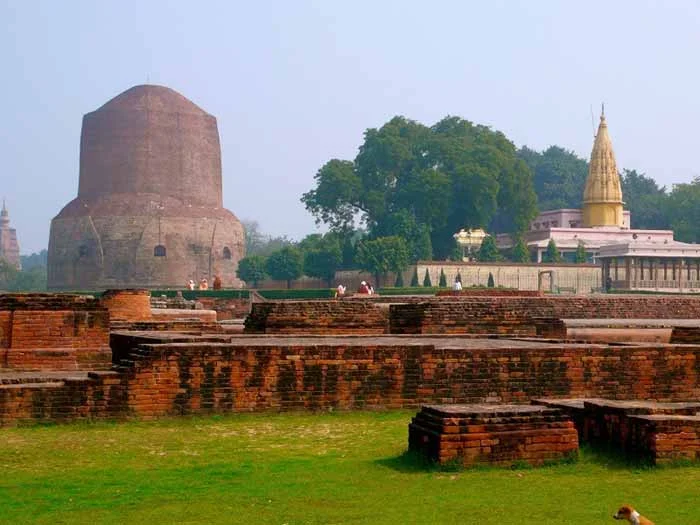
Under the budget proposals, 15 major archaeological sites across the country will be developed as experience-based global tourism centres, with Sarnath and Hastinapur among the selected locations. Sarnath, located near Varanasi, holds immense importance as one of the holiest sites of Buddhism, where Lord Buddha delivered his first sermon. The site is home to iconic monuments such as the Dhamek Stupa, Chaukhandi Stupa, and the Ashokan Lion Capital, which forms India’s national emblem. Archaeological findings from the Maurya, Gupta, and Pala periods, including Buddhist monasteries and sculptures, further add to its historical significance.
Hastinapur, situated in Meerut district, is a prominent site associated with the Mahabharata era. Excavations in the region have revealed archaeological remains from the Mahabharata and Harappan periods, including ancient pottery. Key landmarks such as Pandav Tila and the Karna Temple underline its cultural and historical importance. Developing these sites as global tourism hubs is expected to boost tourism in eastern Uttar Pradesh around Varanasi, as well as in western Uttar Pradesh across the Mathura–Meerut region.
The budget also places strong emphasis on skill development and employment generation in the tourism sector. A major announcement includes the training of 10,000 tourist guides in collaboration with Indian Institutes of Management (IIMs). A pilot programme will be launched at 20 iconic tourist destinations, focusing on professional skills, language proficiency, and in-depth destination knowledge. For a tourism-rich state like Uttar Pradesh, this initiative is expected to open new employment avenues for thousands of youth.

In addition, the budget proposes the creation of a National Destination Digital Knowledge Grid to digitally document India’s cultural, spiritual, and historical heritage sites, enhancing accessibility and global outreach. The establishment of tourism training centres and the upgradation of the National Institute of Hospitality have also been announced to strengthen skill development in hospitality, travel management, and related services.
Experts believe that these comprehensive measures will not only elevate Uttar Pradesh’s global cultural profile but also create sustained economic opportunities by boosting tourism infrastructure, services, and employment across the state.