Lucknow — The third day of the 17th Mahindra Sanatkada Lucknow Festival (MSLF) 2026 unfolded like a carefully woven tapestry at the extended Qaiser Bagh Complex, where craft, cuisine, music, conversation, and performance continued to explore the festival’s theme, “Raabta: Lucknow Calcutta Ka.” Across venues including Safed Baradari, Raja Ram Pal Singh Park, Amir-ud-Daula Library, and Qaiser Bagh, the city witnessed a day steeped in continuity, connection, and lived heritage.
Crafts Bazaar: Where Traditions Breathe
At Safed Baradari, the Crafts Bazaar came alive with demonstrations and stories that placed artisans and traditions at the heart of cultural exchange. A standout moment was the Kantha embroidery demonstration by Shantanu Guha, which drew an attentive audience of craft lovers, many witnessing the meditative rhythm of Kantha stitching at close quarters for the first time.
Among the notable participants was Dhalapathar Parada Producer Company Ltd, a handloom-based initiative from Khorda district, Odisha, led by Debraj Sahoo. Rooted in the late 19th century, Dhalapathara Parda is a rare textile tradition of the Rangani community, known for its vibrant curtains and sarees woven from hand-spun cotton and coloured with natural dyes extracted from fruits such as mango and jamun. Once popular bridal wear, the craft continues as a living tradition and received the GI tag in 2012. The organisation’s presence highlighted sustained efforts to support weavers and preserve indigenous textile knowledge.
Adding a sensory contrast was Wildrift, an artisanal food collective from the Kumaon region. Their stall showcased forest-inspired jams, marmalades, chutneys, juices, and pantry goods, all made using wild-foraged and locally sourced ingredients. Rooted in purity and sustainability, Wildrift’s offerings carried not just flavour, but the livelihoods of mountain farmers and foragers.
Bawarchi Tola: Food as Memory and Migration
At Raja Ram Pal Singh Park, the Sunday Home Cooked Food Festival transformed Bawarchi Tola into a space where food narrated stories of inheritance, movement, and belonging. Celebrating recipes that live within homes rather than restaurants, the festival brought together dishes passed down across generations and geographies.
The menu reflected a rich culinary dialogue — from boti kabab, murgh kofte ka salan, murgh zafrani, murgh chatkhara, kayasthana gosht, lal mirch ka keema, to Calcutta fish curry. Vegetarian visitors explored Awadhi, Lucknawi, Punjabi, Marwari, and dehaati thaalis, while desserts such as shahi tukda completed the experience.
Calling it the most exciting day of the month, chef Sheeba Iqbal shared, “I was delighted to be here with my co-chefs. I served qeema biryani and mutton korma—dishes that truly belong to the home.”
Emphasising the cultural role of cuisine, Manzilat Fatima noted, “Bringing the Lucknow–Calcutta connection before people through food is a very important thing.” A visitor, Shahpar Kidwai, echoed the sentiment, saying, “I finally managed to acquire the famous lal mirch ka keema, and I hoped it was worth the wait.”
In keeping with the festival’s theme, Manzilat Fatima presented her celebrated Mutton Rezala, reinforcing how recipes carry memory across cities. Owner of Kolkata’s acclaimed rooftop restaurant Manzilat’s, she is known for preserving 167-year-old Awadhi royal recipes and traces her lineage to Awadh royalty through King Birjis Qudr and Begum Hazrat Mahal.
Here, food became more than nourishment — it became shared history on a plate.
Seher: A Dawn Steeped in Riyaaz
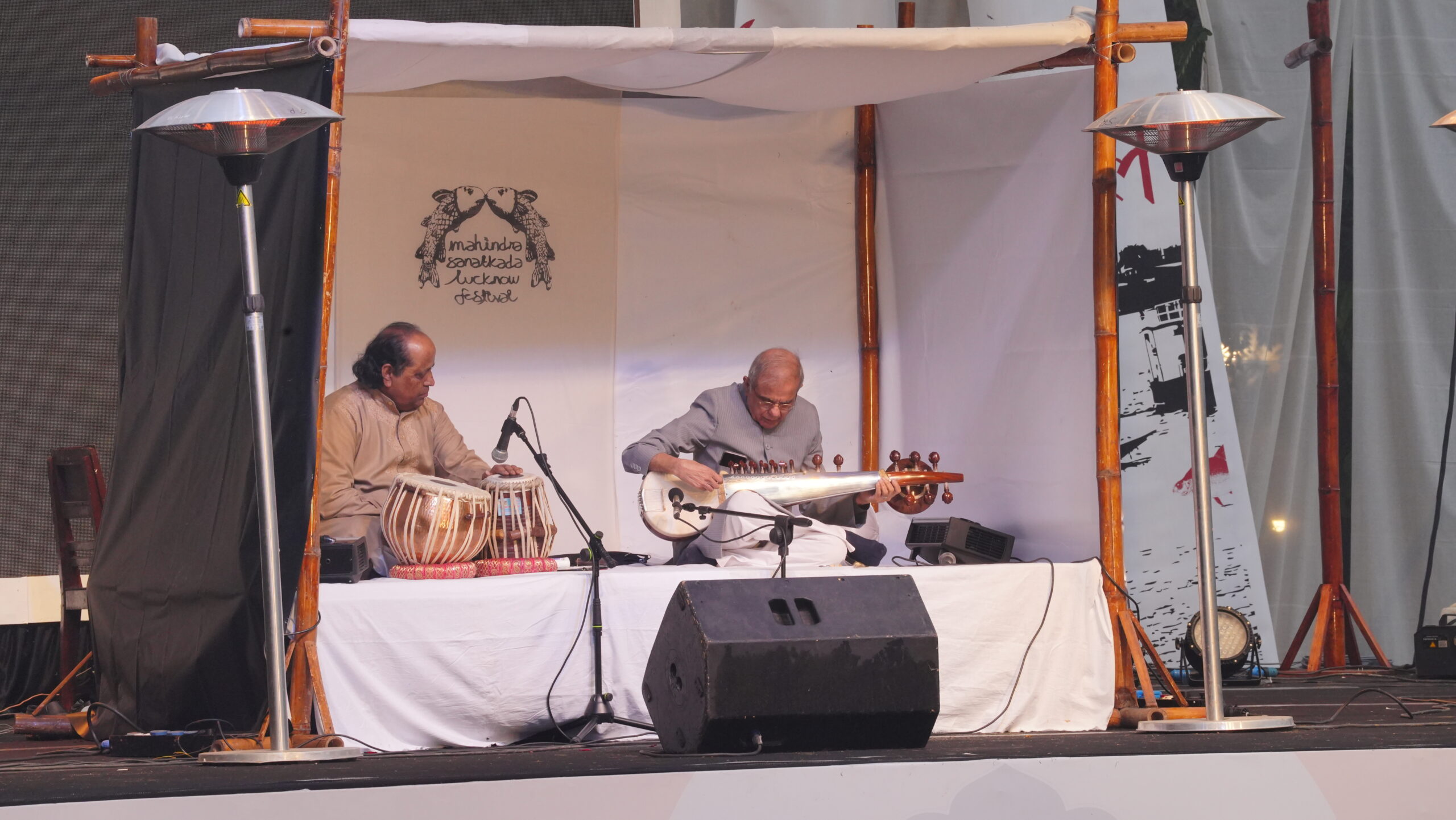
The day began with Seher, the festival’s much-awaited dawn concert at the Amrit Lal Nagar Takht. This year’s morning unfolded with a refined jugalbandi by Ustad Irfan Md. Khan, the revered sarod exponent of the Lucknow-Shahjahanpur Gharana, joined by Ustad Ilmas Husain Khan on tabla. The performance, marked by restraint and depth, reaffirmed Seher’s place as one of MSLF’s most contemplative rituals.

Theme Film: Cities Living Inside Each Other
The screening of the theme film “Raabta: Lucknow Calcutta Ka”, directed by Apurva Shah and Aisha Khatoon, offered a cinematic pause for reflection. Developed over a year, the documentary follows two parallel journeys — photographer Tasveer Hasan searching for Calcutta in Lucknow, and visual artist Soumvadeep Roy tracing Lucknow in Calcutta.
Resisting narration and explanation, the film relied on image, texture, and silence to evoke recognition, revealing how cities continue to inhabit one another across memory and movement.
DOP and Editor: Prakhar Khare
Research Team: Tasveer Hasan, Soumyadeep Roy, Ayan Bose, Sandali Sinha
Ek Khaas Mulaqaat: Lives Between Two Cities
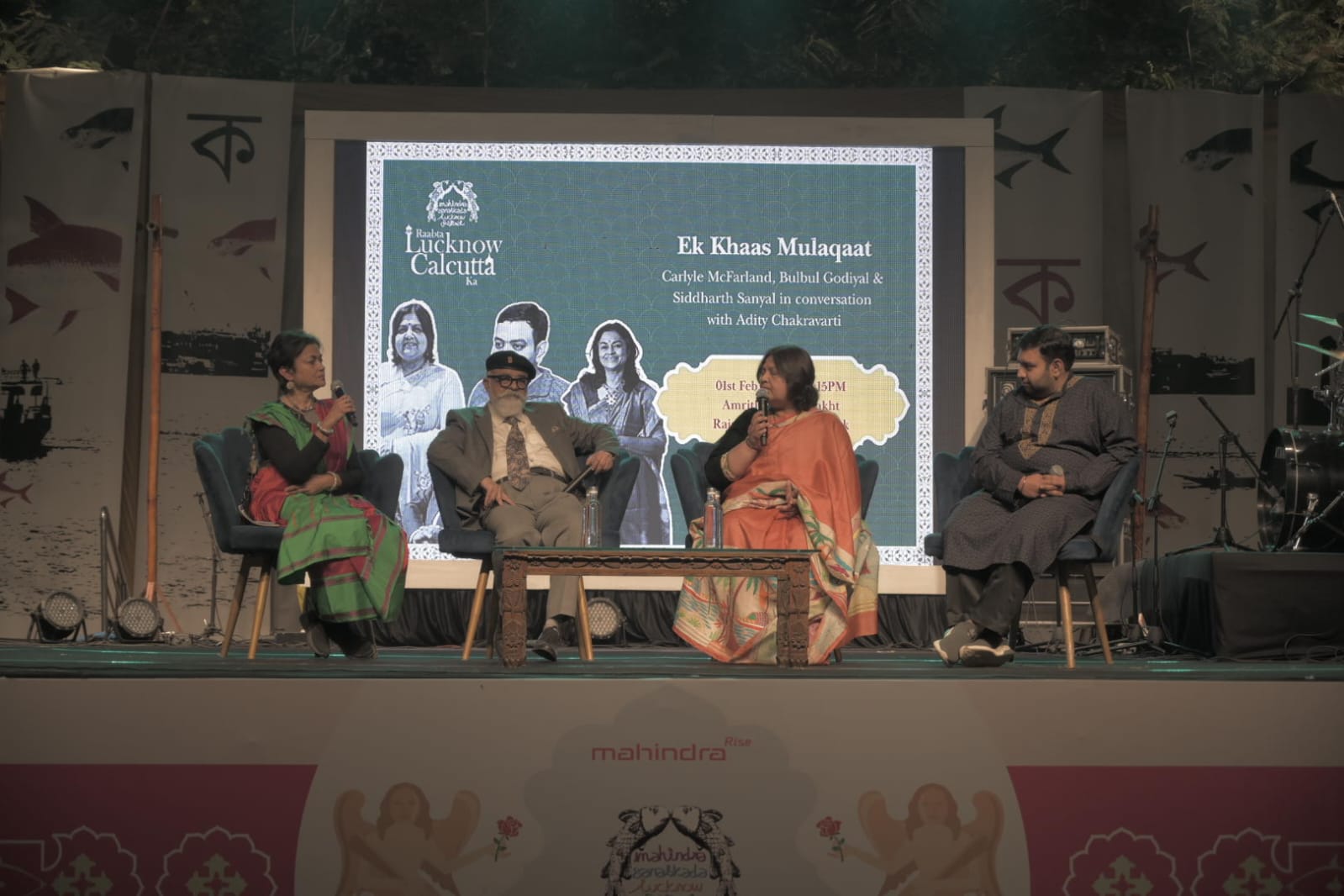
Ek Khaas Mulaqaat, a special conversation moderated by Adity Chakravarti, brought together Carlyle McFarland, Bulbul Godiyal, and Siddharth Sanyal — voices deeply embedded in the research of the festival theme.
Sharing historical insights, Bulbul Godiyal remarked, “Atul Prasad Sen was known as the Tagore of Lucknow because he was very well known in the circle.”
Siddharth Sanyal reflected, “My great-great-grandfather came to Lucknow as the labour contractor for the Charbagh Railway Station.”
Summing up the universality of the connection, Carlyle McFarland observed, “It’s very interesting to note that every Indian somehow has a connection to Calcutta—and this is never true with any other city.”
Baitbaazi: Poetry as Play
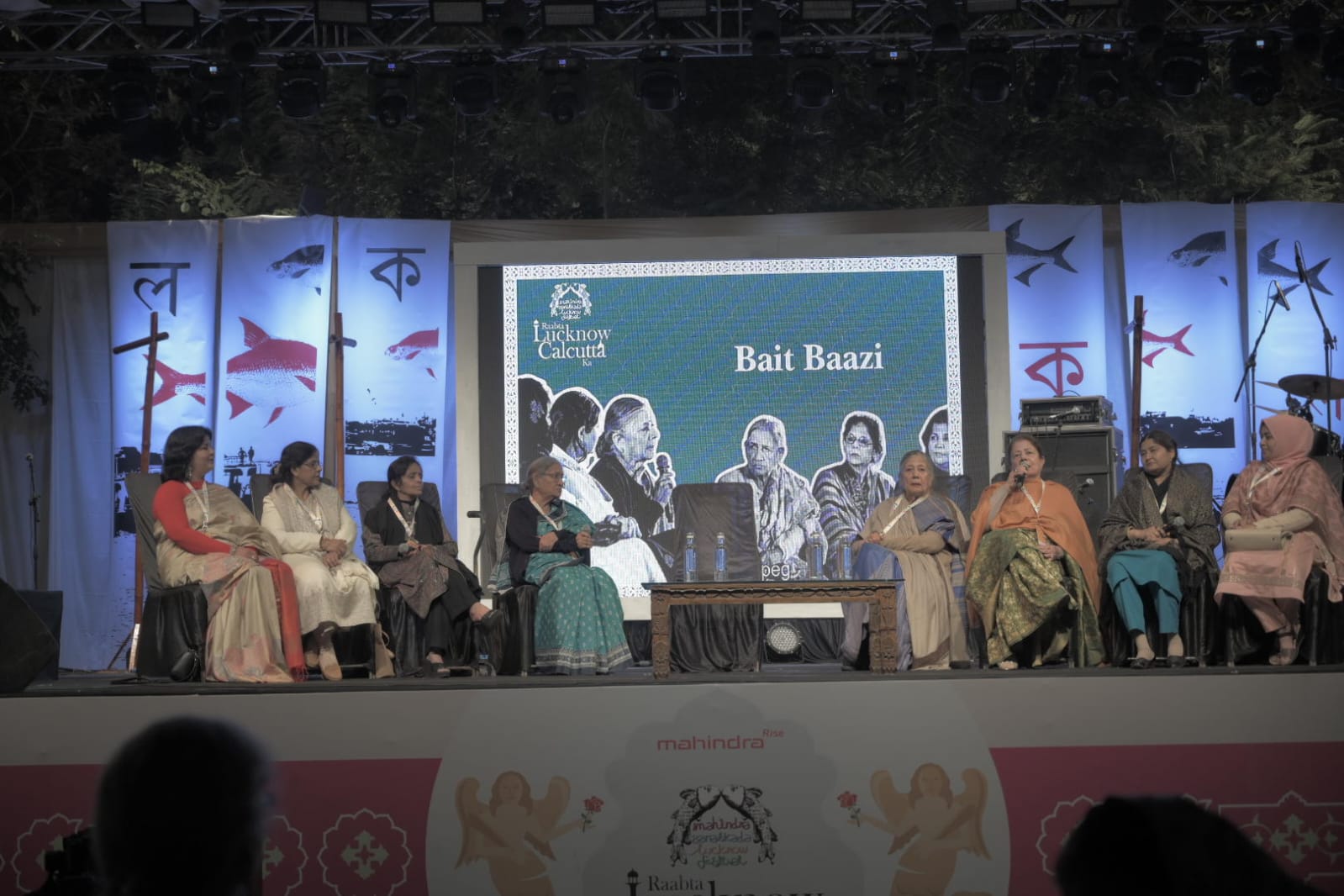
A cherished MSLF tradition, Baitbaazi returned as a spirited competition among women deeply versed in Urdu poetry. Reciting shers instead of songs, the event blended tafreeh with scholarship, celebrating memory, wit, and linguistic elegance.
Participants included Ayesha Siddiqui, Parveen Shuhaat, Reshma Parveen, Najma Noorani, Qamar Rehman, Rehana Ali, Meena Irfan, and Atiya Bi, with Dr. Fatima Rizvi and Prof. Qamar Jahan serving as judges.
Prof. Jahan summed up the spirit of the moment, saying, “Urdu doesn’t belong to any one religion. It belongs to India, and that is enough.”
Borno Anonyo: Sound Beyond Borders
The evening resonated with Borno Anonyo (A Colour Like No Other), an interdisciplinary ensemble that moved fluidly across Rabindra Sangeet, Baul-Fakir traditions, Hindustani and Western classical music, jazz, pop, and rock. Through poetry, sound, and image, the performance explored devotion, separation, and longing, dissolving rigid ideas of musical fusion.
Naseem Iqtidar Literary Guftugu: City as Archive
At the Amir-ud-Daula Library, Dilnavaz Mehta, art historian and founder of Rare Finds Hindoostan Revisited, led a compelling session titled “City as Impression: Art, Archive and Lucknow.” Drawing from her collection of Lucknow lithographs, she treated the archive as a living space, tracing how the city was visually imagined before the advent of photography.
“These lithographs are from before the advent of a camera,” she noted, pointing out how images of the Residency and cityscapes reveal layers of history that words alone cannot capture.
A Day That Lingered
By the close of Day 3, Mahindra Sanatkada Lucknow Festival 2026 once again reaffirmed its essence — not as a spectacle, but as a slow, thoughtful conversation between cities, disciplines, and generations. In craft, food, music, memory, and dialogue, raabta was not merely discussed; it was lived.