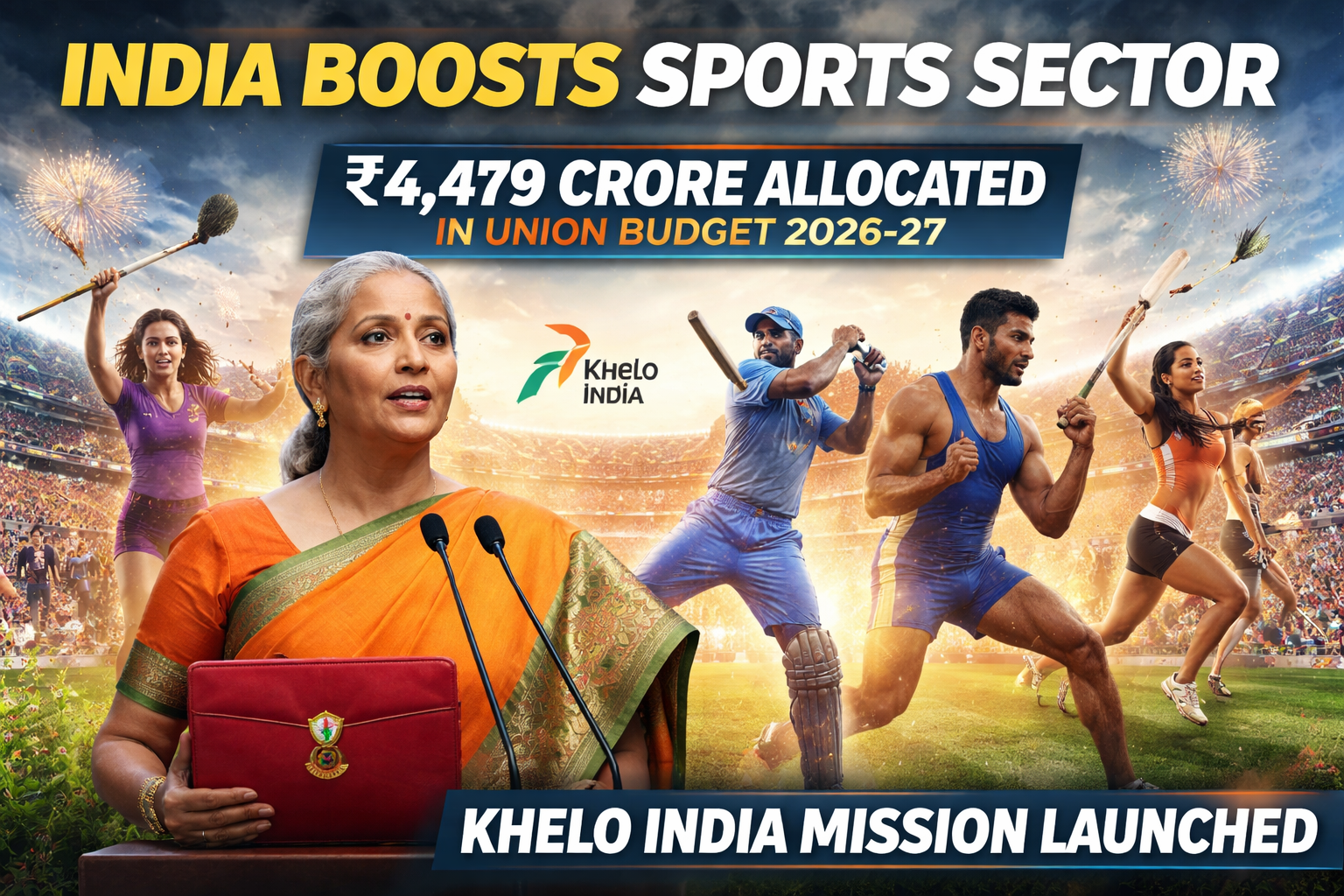
New Delhi— In a decisive push to elevate India’s standing in global sport, Finance Minister Nirmala Sitharaman on Saturday unveiled a significantly enhanced allocation for the sports sector in the Union Budget 2026–27, coupled with the launch of the ambitious Khelo India Mission. The Ministry of Youth Affairs and Sports has been allotted ₹4,479.88 crore for the coming fiscal year, marking a substantial increase of nearly ₹1,133 crore over the revised estimate of ₹3,346.54 crore in 2025–26.
The enhanced outlay underscores the government’s long-term vision of positioning India among the top 10 sporting nations by 2036 and within the top five by 2047, aligning sports development with the broader national aspiration of a Viksit Bharat. The budget places strong emphasis on grassroots talent identification, elite athlete preparation, sports science integration, infrastructure development, and the emergence of India as a global hub for sports goods manufacturing.

Historic Launch of the Khelo India Mission
The centrepiece of the budget’s sports announcements is the formal launch of the Khelo India Mission, which the Finance Minister described as a transformative, decade-long framework aimed at overhauling India’s sporting ecosystem. While the Khelo India programme, introduced in 2017, focused primarily on identifying and nurturing talent through national-level competitions, the new mission adopts a far more holistic and structured approach.
Presenting the Budget in Parliament, Sitharaman outlined the mission’s core pillars, which include the creation of integrated talent development pathways supported by tiered training centres at foundational, intermediate, and elite levels. The mission also prioritises the systematic development of coaches and support staff, with proposals to extend Target Olympic Podium Scheme (TOPS)-style financial backing to coaches, similar to the support extended to elite athletes.
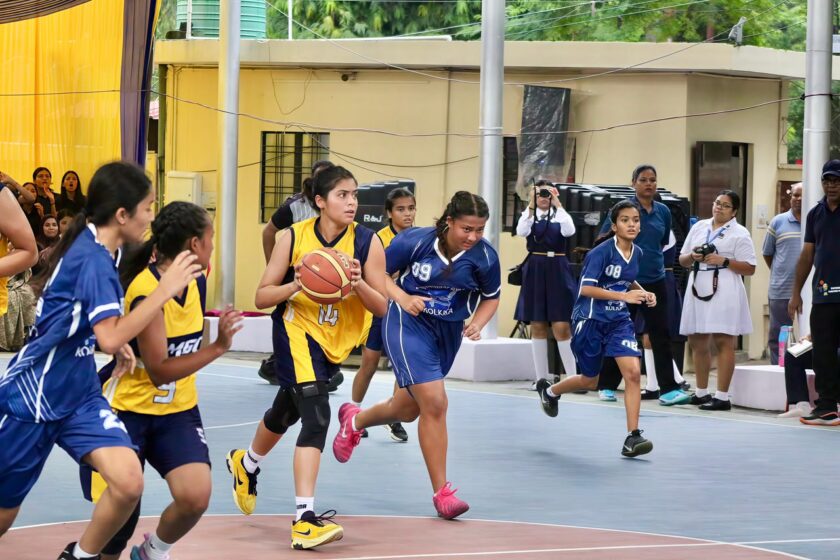
Another key pillar is the integration of sports science and modern technology to enhance athlete performance, improve recovery, and reduce injury risks. The mission also aims to strengthen the domestic competitive ecosystem by promoting leagues and regular competitions, thereby providing athletes with sustained exposure and high-quality match experience. Complementing these efforts is a renewed focus on the development of sports infrastructure, not only for training but also for hosting national and international events.
“The sports sector provides multiple means of employment, skilling and job opportunities,” Sitharaman said in her speech, highlighting the sector’s potential contribution to youth empowerment, health, and economic growth. Officials indicated that the mission is expected to create new career avenues for coaches, physiotherapists, sports scientists, event managers, and technical officials.
From Short-Term Gains to Long-Term Ecosystem Building
Experts see the Khelo India Mission as a strategic evolution from earlier, more fragmented approaches to sports development. Rather than concentrating solely on medal prospects for individual events, the mission seeks to build a sustainable pipeline that connects school- and community-level participation to international podium success.
This shift comes at a time when India’s performance in global competitions has shown a steady upward trend. Strong showings in recent Asian Games and Commonwealth Games, along with growing success in disciplines such as athletics, shooting, wrestling, boxing, and badminton, have fuelled optimism about India’s potential on the world stage.
Sports administrators believe that a structured pathway, combined with consistent funding, could help address long-standing gaps between talent identification and elite performance. “The mission recognises that medals are the outcome of systems, not isolated efforts,” said a former national coach. “If implemented effectively, it could fundamentally change how India prepares its athletes.”
₹500 Crore Push for Sports Goods Manufacturing
In a first-of-its-kind move, the government has earmarked ₹500 crore specifically for the Promotion of Sports Goods Manufacturing. The initiative aims to strengthen domestic production capabilities, encourage research and innovation in equipment design, and support advancements in material sciences.
Highlighting India’s untapped potential in this space, Sitharaman said the country could emerge as a global hub for high-quality, affordable sports equipment. The allocation is expected to reduce import dependence, boost exports, and generate employment, particularly in traditional manufacturing clusters such as Meerut and Jalandhar, which are known for producing cricket, hockey, and other sporting goods.

The proposal includes incentives for research and development, support for modernisation of existing clusters, and encouragement of public–private partnerships to produce world-class equipment, including cricket bats, hockey sticks, badminton rackets, and protective gear. Industry stakeholders have welcomed the move, noting that global demand for sports goods is rising alongside increased participation and professionalisation of sport worldwide.
Enhanced Support for Sports Authority of India
The Sports Authority of India (SAI), the nodal agency responsible for elite athlete training and national camps, has also received a higher allocation. Its budget has been increased to ₹917.38 crore, up from approximately ₹880 crore in the previous year. The additional funds are expected to strengthen centralised training programmes, enhance foreign exposure opportunities, and improve logistical support for athletes participating in international competitions.
Other components of the ministry’s budget will continue to support athlete incentives, assistance to national sports federations, and youth engagement initiatives, including programmes aimed at increasing participation at the school and university levels.
Reactions from the Sports Community
The significant hike in the sports budget has been widely welcomed by athletes, administrators, and analysts. Some estimates suggest the allocation represents an 18 per cent increase over certain baseline figures, making it one of the more notable rises for the sector in recent years.
“This is not just about money — it’s about vision,” said a senior SAI official. “By professionalising coaching, investing in technology, and linking grassroots programmes to elite performance, the Khelo India Mission could finally bridge the gap between discovery and podium success.”
Former athletes have also lauded the focus on coaches and support staff, long considered a weak link in India’s sports ecosystem. However, they cautioned that execution will be critical. Past budgets have sometimes seen delays in infrastructure projects, uneven fund utilisation, and disparities across disciplines.
Critics have emphasised the need for transparency, timely disbursal of funds, and inclusive planning that adequately addresses women’s sports and para-sports. Ensuring that smaller and less-commercial disciplines benefit alongside marquee sports will be essential to achieving balanced growth.
Sports as a Driver of Social and Economic Progress
The broader Union Budget 2026–27 continues to prioritise infrastructure, manufacturing, and youth skilling, with sports increasingly positioned as a contributor to both economic and social development. Beyond medals and international prestige, policymakers see sports as a means to promote fitness, discipline, and community engagement, while also generating jobs and entrepreneurial opportunities.
As India sets its sights on hosting major international events and potentially bidding for future Olympic Games, the announcements made on Saturday signal a renewed and more comprehensive commitment to sports. Whether this financial momentum translates into sustained success on the field will depend on effective implementation, coordination among stakeholders, and the ability to turn policy intent into measurable outcomes.
For now, the Union Budget 2026–27 marks a significant milestone, reflecting growing recognition of sport as a strategic national priority — one capable of shaping India’s global image, empowering its youth, and fostering a vibrant sporting culture across the country.


 ---------------------------------------------------------------------------------------------------