Lucknow: Lucknow, the historic capital of Uttar Pradesh, is experiencing a significant transformation in its hospitality landscape. Once known primarily for its Nawabi culture, refined etiquette and architectural grandeur, the city is now emerging as a dynamic hospitality hub, driven by rising tourism, corporate movement and proactive government policies. The Uttar Pradesh Tourism Policy 2022 has played a catalytic role in attracting large-scale investments, positioning Lucknow as a key contributor to India’s estimated $50 billion hospitality industry.
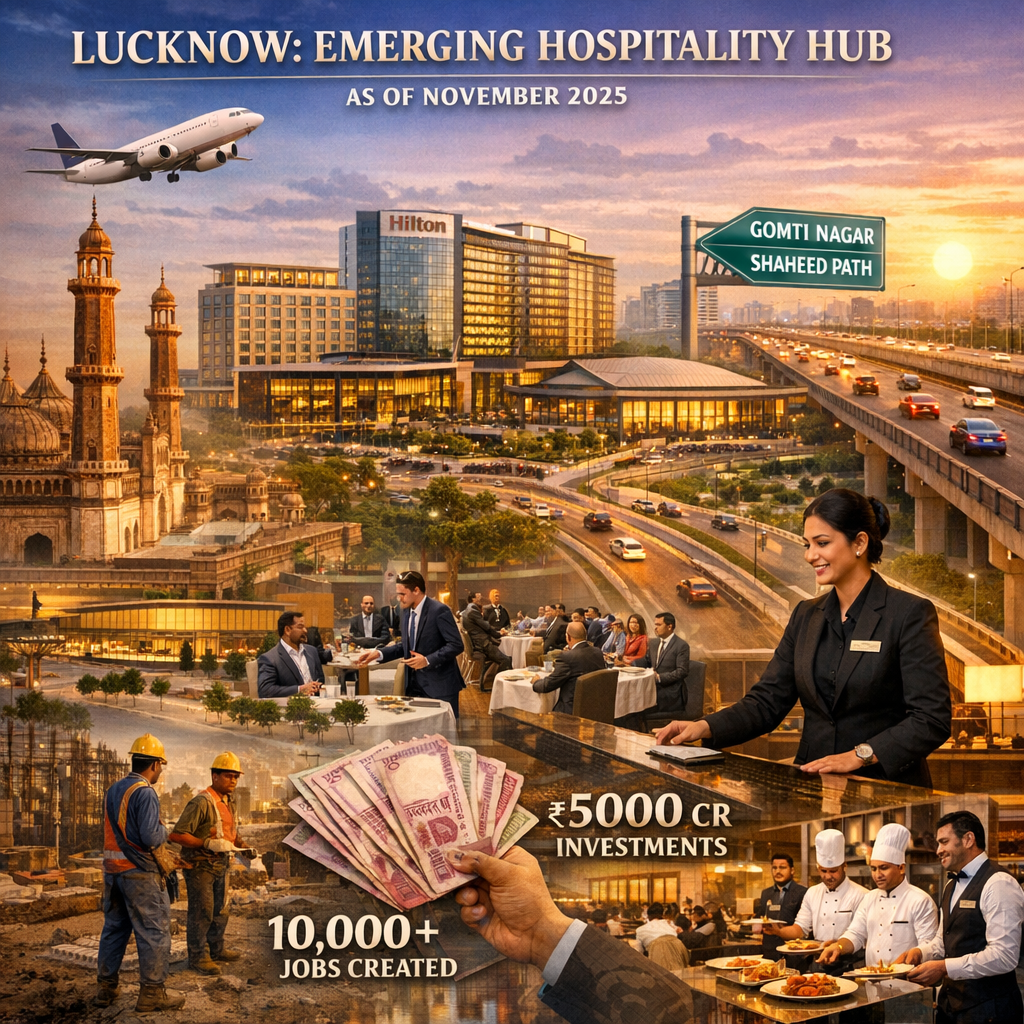
With domestic tourist arrivals in Uttar Pradesh crossing 200 million annually, Lucknow has become a strategic focal point. Improved air connectivity, the growth of Gomti Nagar and Shaheed Path as commercial corridors, and the rise of MICE tourism have addressed the long-standing supply-demand gap in quality accommodation. As of November 2025, investments exceeding ₹5,000 crore have flowed into the sector, generating over 10,000 direct and indirect jobs in the past year alone, spanning hotel operations, food services, logistics and event management.

Hotel Boom: Global Brands, Local Character
The hotel segment has witnessed the most visible expansion. International chains are rapidly scaling up their presence. In May 2025, IHG Hotels & Resorts marked a milestone with the opening of Crowne Plaza Lucknow in Gomti Nagar, its 50th property in India. The 200-room upscale hotel features contemporary interiors, multiple dining options and expansive banquet facilities capable of hosting events for over 1,000 guests, strengthening Lucknow’s appeal for conferences and large social gatherings.
Radisson Hotel Group reinforced Uttar Pradesh’s momentum with the launch of Park Inn by Radisson Lucknow Vikas Nagar, a 150-room property catering to budget-conscious business and leisure travellers, complete with rooftop dining and smart meeting spaces. This was followed by further regional expansions, underscoring investor confidence in the state.
Heritage luxury has also been redefined. The iconic Taj Mahal Hotel, a landmark since the 1920s, unveiled a 96-room expansion in September 2025. Spread over nearly 100,000 square feet, the new wing blends quiet luxury with Awadhi design elements while incorporating sustainable technologies such as solar energy and water-efficient systems. Other prominent players include Hyatt Regency Lucknow Gomti Nagar, known for its luxury spa and infinity pool; Renaissance Lucknow Hotel with its popular rooftop bar; and Fairfield by Marriott, which caters to the city’s growing corporate clientele.
Mid-range and business hotels such as Mercure Lucknow Gomti Nagar and Golden Tulip have filled an important gap, offering quality stays in the ₹4,000–₹8,000 range. With MICE tourism accounting for nearly 60 percent of hotel demand, Lucknow’s branded room inventory is expected to double by 2030, supported by strong pipelines from major hospitality groups.
Culinary Renaissance: From Awadhi Classics to Global Fusion
Parallel to hotel growth is a vibrant expansion of Lucknow’s restaurant and dining scene. The city’s legendary Awadhi cuisine remains at the core, with fine-dining destinations elevating traditional flavours. Oudhyana at the Taj Mahal Hotel offers refined interpretations of galouti kebabs, dum biryanis and slow-cooked curries in a garden setting, while Falaknuma at Clarks Avadh serves Mughlai specialities against panoramic city views.

Heritage favourites such as Royal Cafe continue to draw patrons with dishes like nalli nihari and mutton korma, while Moti Mahal and Punjab Grill provide classic North Indian and Punjabi indulgence. Street-food icons like Tunday Kababi and Idrees Biryani retain cult status, even as they expand into modern outlets within shopping malls and high-street locations.
At the same time, newer concepts are reshaping tastes. Indo-Arabic grills at Barkaas, Indo-Asian fusion at Kava, and international menus at rooftop venues like The Urban Terrace reflect diversification. According to food delivery platforms, Lucknow recorded a 25 percent rise in dine-out orders in 2025, highlighting a growing appetite for experiential dining.
Resorts and Leisure: Weekend Escapes Around the City
Beyond urban hotels, resorts around Lucknow are emerging as popular leisure destinations. Properties such as Chinmay Hotel & Resort on Deva Road, The Revanta on Sultanpur Road and Blue Orchid Resort offer pools, spas, adventure activities and banquet facilities, catering to families, corporate offsites and destination weddings. Theme-based resorts like Palette-Nilansh and expansive properties such as Golden Blossom Imperial Resorts further enrich the leisure segment. With room rates starting around ₹5,000 per night, these resorts attract weekend travellers from Delhi and neighbouring cities.
The hospitality boom has firmly positioned Lucknow as Uttar Pradesh’s hospitality nerve centre, seamlessly blending tradition with modernity. While challenges such as traffic congestion and infrastructure strain remain, sustained policy support and private investment continue to strengthen the sector. For travellers, investors and professionals alike, Lucknow today offers not just a stay, but an experience—where Nawabi elegance meets contemporary comfort, inviting the world to rediscover the City of Nawabs.