Lucknow: As India approaches its centenary of independence in 2047, the nation’s youth—comprising around 65% of the population under 35—represent both a massive opportunity and a pressing challenge. With the Union Budget 2026–27 on the horizon, young Indians—students, fresh graduates, early-career professionals, and aspiring entrepreneurs—are vocal about what they need: affordable education, real-world skills, job creation, and support for innovation in an AI-driven world.
This generation faces high youth unemployment, rising education costs, and a technology-transformed job market. Their demand is clear: budgets that prioritize education reform, large-scale skilling, employment creation, and startup support, turning potential into productivity.
Education: Affordable, Accessible, and Future-Ready
Education remains the top priority. Many students express frustration over rising costs and commercialization. A student noted in pre-budget discussions: “Education is becoming commercialized every day… education is becoming expensive.”
Experts echo these concerns. Prateek Maheshwari, Co-Founder of PhysicsWallah, advocates: “100% GST exemption on educational expenses, including test-prep courses and job-oriented skill programs, for students from Below Poverty Line (BPL) and Low-Income Group (LIG) families. The 18% tax slab on higher and online education is excessive… India should take inspiration and make learning more accessible.”
Students also want technology integration: “Investing in AI, STEM, and robotics labs in schools will support hands-on learning and innovation,” as expressed in discussions with school and college students. Mridu Andotra, Founder & CEO of GeniusMentor, emphasizes: “A significant increase in AI funding is necessary to match the ambitious goals outlined in NEP 2020… prioritizing high-speed internet access, advanced digital tools, and dedicated AI labs.”
Other student expectations include additional seats in premier institutions like IITs and medical colleges, timely scholarships, and affordable loans with interest subsidies, all aimed at increasing the Gross Enrollment Ratio (GER) to 50% by 2035.
Quality Improvements and Teacher Empowerment
Students also demand better learning outcomes and empowered teachers. A young voice highlighted: “After COVID there is a huge gap in learning of students especially those in primary level… if you go and ask a seventh standard student a question of fourth level math, they would not answer.”
They advocate for continuous teacher training, modernized classrooms, labs, and experiential learning from early stages. School students stress digital upskilling for teachers, viewing them as the backbone of high-performing systems.
Skilling and Future-Ready Jobs
With employability hovering around 50–56% for graduates, youth are demanding job-oriented skills over rote learning. A college student emphasized: “Greater emphasis on job creation & apprenticeships, not just skilling… stronger push towards new-age sectors—AI, digital, green energy.”
They call for early exposure to vocational training, expansion of Atal Tinkering Labs, and industry-linked programs for hands-on experience. Apprenticeships are viewed as “learning by doing,” creating socio-economic mobility. Incentives for MSMEs and women in skill programs are seen as critical.
Employment and Job Creation
Unemployment is a burning issue. Students and young professionals seek schemes generating large-scale jobs in labor-intensive sectors like textiles, tourism, and construction, as well as emerging ones such as energy and the digital economy.
One analysis stressed: “To unlock the potential of India’s demographic dividend, Budget must focus on boosting private investment, enhancing skills development, and advancing education reforms.”
They also look for tax reforms to ease middle-class burdens, targeted sector support, and expansion of internships and employment-linked incentives, particularly in labor-absorbing sectors like footwear, leather, and food processing.
Startup Ecosystem and Entrepreneurship
Aspiring entrepreneurs demand easier access to funding, simplified regulations, and innovation support. A student shared: “The government should further promote startups. The more startups there are in India, the more new ideas will emerge, and employment opportunities will increase.”

Support for first-time entrepreneurs, including term loans up to ₹2 crore for five lakh individuals, including women and SC/ST, along with revamped schemes like PM SVANidhi, resonate strongly with young founders.
Digital Inclusion, Mental Health, and Inclusivity
Youth are also concerned with holistic development, equity, and mental well-being. School students highlight the need for mental health support, well-being initiatives, and reduced dropout pressures. College students advocate scholarships for first-generation learners, women in STEM, and underrepresented groups.
A student emphasized: “India’s youth need more than degrees; they need a cohesive ecosystem that empowers them to become industry leaders from day one.”
Investments in digital inclusion—broadband, AI labs, and devices—are particularly critical for rural and Tier-2/3 areas. Students seek a future-ready infrastructure that enables hands-on, experiential, and technologically enriched learning.
Voices from the Ground
Direct student perspectives reveal the urgency of these demands:
-
On education spending: “The first thing that I expect from this budget is to hit that ballpark figure of 6% of the total GDP being spent on education.”
-
On affordability and GST: “My expectation for the budget is to make education affordable and accountable. I want to see a reduction in the GST on educational services. The current 18% rate is a burden.”
-
On employability: “India’s youth need more than degrees; they need a cohesive ecosystem that empowers them to become industry leaders from day one.”
-
On digital learning: “Investing in AI, STEM, and robotics labs in schools will support hands-on learning and innovation.”
Transformative Budgets for a Youthful Nation
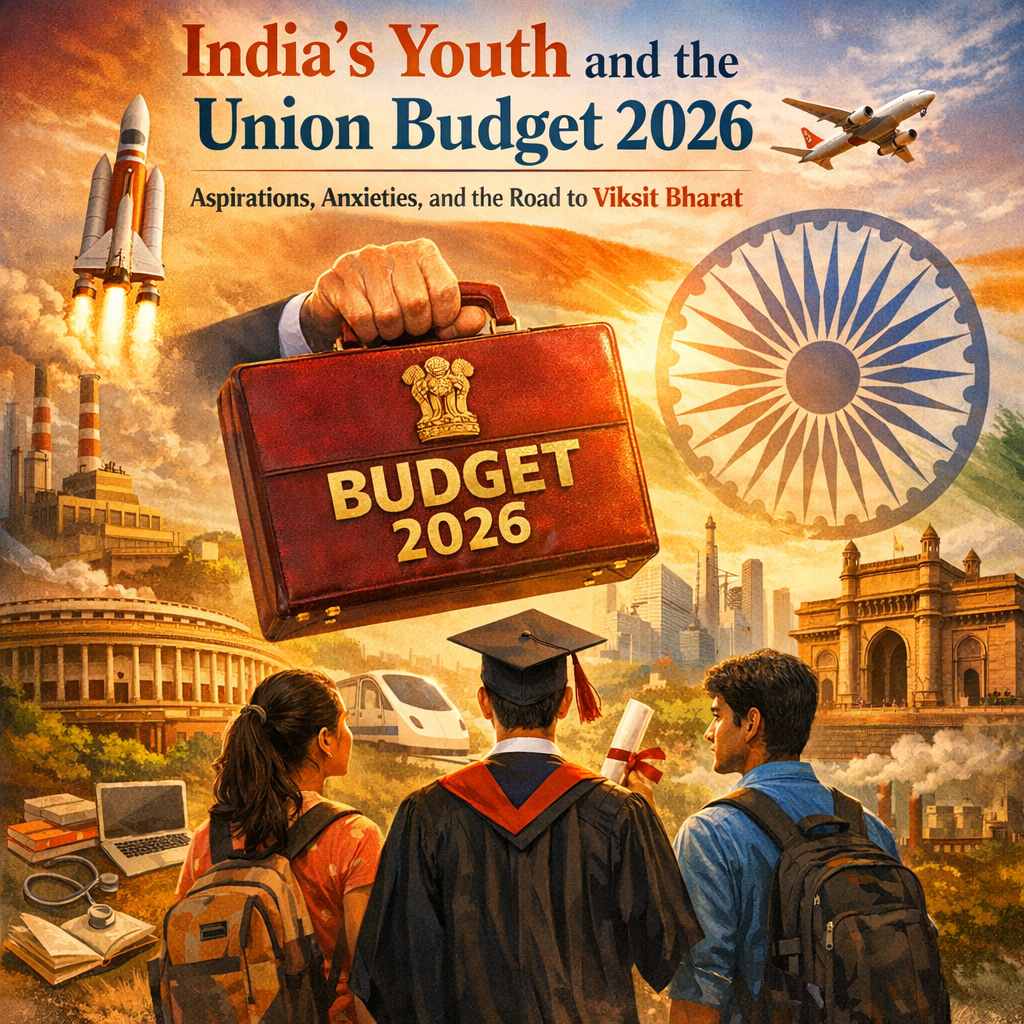
India’s youth are not seeking handouts—they want opportunity, fairness, and empowerment. The Union Budget 2026 is seen as a critical instrument to bridge the gap between education, skills, and employment.
As one student aptly summarized: “The budget must address critical gaps… empower India’s youth to thrive in an evolving global job market.”
If the government delivers on affordability, quality, skills, and innovation, India’s 950 million young citizens can transform the nation’s demographic dividend into sustained growth, making the dream of Viksit Bharat by 2047 a reality.