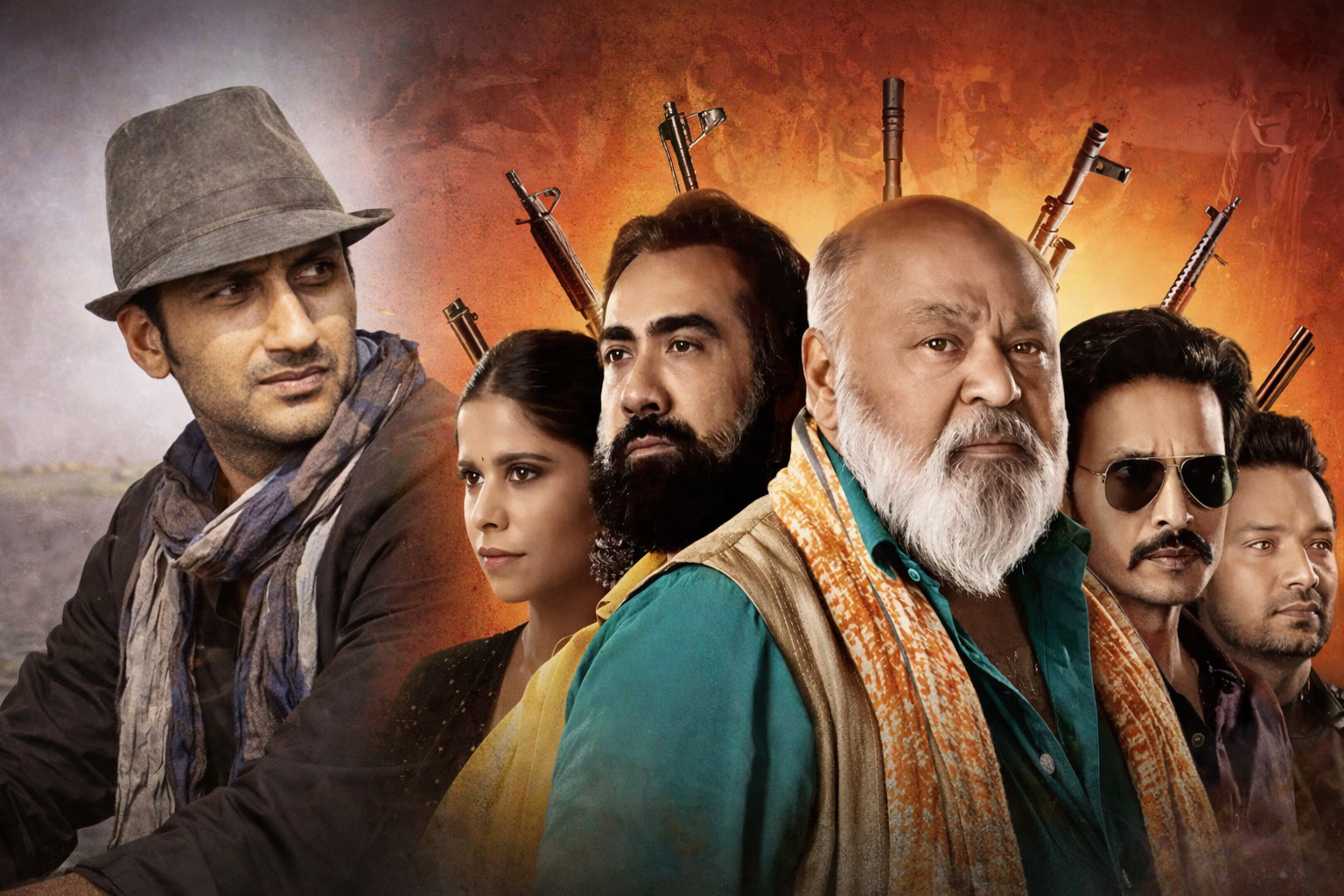
Mumbai: The chaotic, razor-sharp world of Bindiya Ke Bahubali is back—and this time, the gloves are off. Having returned on January 21, 2026, on Amazon Prime Video and Amazon MX Player, Bindiya Ke Bahubali – Season 2 plunges deeper into the fictional town of Bindiya, where power is inherited, loyalty is fragile, and family ties are as dangerous as political rivalries.
Directed by Raj Amit Kumar, the new season transforms an already volatile political landscape into a brutal internal war. What began as a power struggle in Season 1 now erupts into an all-consuming father–son conflict between Bade Davan and Chhote Davan, with shifting alliances, betrayals, and consequences that leave no character unscathed. Darker, more intense, and emotionally raw, Season 2 sharpens its focus on legacy, ambition, and the corrosive nature of power.

Anchored by a formidable ensemble—Ranvir Shorey, Saurabh Shukla, Seema Biswas, Sai Tamhankar, Tanishtha Chatterjee, Kranti Prakash Jha, Dibyendu Bhattacharya, and Sheeba Chaddha—the series continues to balance absurd humor with tragic inevitability.
In this candid conversation, Raj Amit Kumar speaks about the evolution of the show, the philosophy behind its violence and comedy, the emotional core of the Davan family war, and why Bindiya Ke Bahubali is ultimately less about politics—and more about the wars we carry within.
Season 2 of Bindiya Ke Bahubali premiered on January 21, 2026. What makes this the right moment for its return, and how does it build on Season 1’s explosive ending?
We don’t really decide the timing—that’s for the platform. But if Season 1 felt explosive, Season 2 is an explosion from start to finish. The characters’ deepest emotions finally erupt in a full-scale war of desires, egos, and unresolved wounds.
The series blends crime, dark comedy, family drama, and political intrigue. How did you evolve this mix to make Season 2 darker and more personal?
There was no conscious effort to darken anything. It’s simply a natural progression—comedy turning into tragedy. That’s how life works. We constantly float between the two, and the show reflects that reality.
The political struggle escalates into a brutal father–son war between Bade Davan and Chhote Davan. What inspired this shift?
At its core, the show is a dysfunctional family drama. It’s about the war within—love and hate coexisting in the same relationships. Politics is just the surface; the emotional substance lies in these deeply fractured bonds.
The trailer suggests that the biggest threats now come from within the family. How did you push characters to their breaking points while retaining the show’s absurdity?
Absurdity is everywhere in the world we’ve created. The real question for a director is whether to look at it through that lens or not. I don’t think I can ever abandon that lens for this show.
Themes of legacy, betrayal, and ambition run deep. How does Season 2 explore the idea that power corrupts personal relationships?
Power corrupts everything—and power exists everywhere. Perhaps everything is always corrupt to some degree. The real question is how much corruption we’re willing to accept within ourselves. That’s why every character takes a different path.

As both writer and director, how did you sharpen the writing and dialogue this season?
You write. And then you rewrite. And then you rewrite again—until you finally feel settled.
You’re working with a stellar ensemble cast. How did you push them to deliver even more layered performances?
You don’t challenge actors like this—you trust them. They come to set wanting to give their best. My job is simply to bring them back to the right musical note if things go slightly off balance.
Bade Davan seeks peace from jail, while Chhote Davan chooses open war. What new dimensions did you discover in these characters?
It’s a clash of philosophies. A father who believes violence is the only way to protect self-respect, and a son who wants social recognition beyond the label of a gunda. That tension defines their conflict.
Did any character arc surprise you during Season 2?
No. I created them. Surprises are for the audience.
How did you maintain dark humor amid escalating violence, especially in Chhote Davan’s journey?
Humor is often the only way humans survive tragedy. Actors understand that instinctively—it’s not something that needs to be forced.
Bindiya reflects broader small-town Indian realities. What does Season 2 say about India today?
Bindiya is a microcosm of India. The commentary is everywhere in Season 2—but I’d rather audiences discover it themselves. I can talk about context, not the text.
What do you want audiences to take away from Season 2?
I don’t approach filmmaking that way. People will take whatever they want to take.
Finally, without spoilers—what can fans expect next?
If they start watching, I hope they’ll crave to finish it in one go.












 https://www.youtube.com/watch?si=RtToJsBhYBatUrym&v=mOuYNSdhjHA&feature=youtu.be