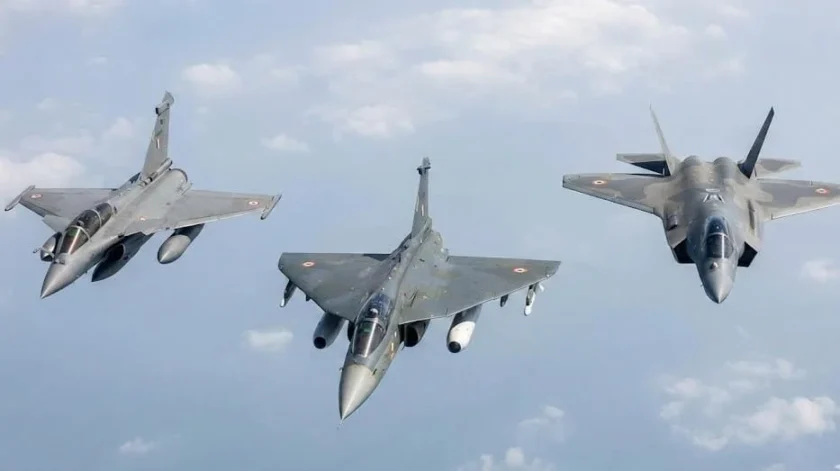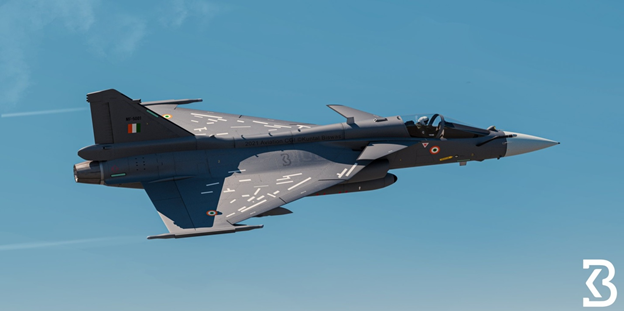
New Delhi: India’s indigenous fighter aircraft programme marked a major milestone with the successful rollout of the TEJAS MK-2, officially moving the Medium Weight Fighter (MWF) into the crucial pre-flight testing phase. The development reflects steady progress in India’s push towards self-reliance in advanced military aviation.
With the rollout completed, the aircraft is now being prepared for its maiden flight, which is scheduled for June 2026. Hindustan Aeronautics Limited (HAL), in collaboration with the Aeronautical Development Agency (ADA), has reiterated its commitment to maintaining strict timelines for the programme.

Before taking to the skies, the TEJAS MK-2 will undergo extensive ground evaluations conducted by the Centre for Military Airworthiness and Certification (CEMILAC). These tests include engine ground runs, flight control system validation, emergency system checks, and both low-speed and high-speed taxi trials to assess stability and performance on the runway.
CEMILAC will grant First Flight Clearance (FFC) only after all safety and performance parameters are met. The certification process draws on operational insights from earlier TEJAS variants, ensuring improved reliability and risk mitigation.
The first prototype is powered by the General Electric F414 engine, capable of generating 98 kilonewtons of thrust. Eight such engines have already been delivered to HAL for integration and testing. This powerplant serves as an interim solution while India continues work on an indigenous engine.
With a maximum take-off weight of 17.5 tonnes, the TEJAS MK-2 falls squarely in the medium-weight fighter category. Compared to the MK-1A, it offers increased internal fuel capacity and higher payload capability, enabling longer endurance and greater operational flexibility.
The fighter is equipped with advanced avionics, including an Active Electronically Scanned Array (AESA) radar, infrared search and track (IRST) systems, and a modern glass cockpit featuring a wide-area display and HOTAS controls. These enhancements significantly improve pilot awareness and mission effectiveness.

Weapon integration has also been expanded. The aircraft is designed to carry beyond-visual-range missiles such as the Astra MK-2, along with precision-guided munitions and the BrahMos-NG. This allows the MK-2 to perform air superiority, ground attack, and maritime strike missions with equal effectiveness.
Strategically, the TEJAS MK-2 bridges the gap between the existing TEJAS fleet and the upcoming Advanced Medium Combat Aircraft (AMCA). It addresses a critical shortfall in the Indian Air Force’s squadron strength while reinforcing the objectives of the ‘Make in India’ initiative.
The programme reflects close coordination between HAL, ADA, and multiple DRDO laboratories. Key systems, including fly-by-wire controls and automated flight management, have already undergone successful ground validation.
The anticipated first flight in June 2026 is expected to be a defining moment for India’s aerospace sector. Subject to successful trials, the Indian Air Force is expected to induct between 110 and 120 aircraft in the initial phase.
Despite ongoing challenges such as engine indigenisation and supply-chain robustness, the TEJAS MK-2 programme continues to build confidence. Once operational, the aircraft is expected to significantly enhance the Indian Air Force’s combat readiness in an evolving regional security environment.