New Delhi – India is taking a major step toward self-reliance in aviation with the launch of a homegrown regional transport aircraft program. The government has set up a Special Purpose Vehicle (SPV) to oversee the project, which is currently in advanced stages of formation. The initiative is aligned with the Make in India campaign and aims to strengthen domestic aerospace manufacturing capabilities.
Civil Aviation Minister K. Rammohan Naidu expressed confidence in India’s engineering expertise, noting that the country now has the skills to design, build, and maintain aircraft independently, reducing reliance on foreign imports.
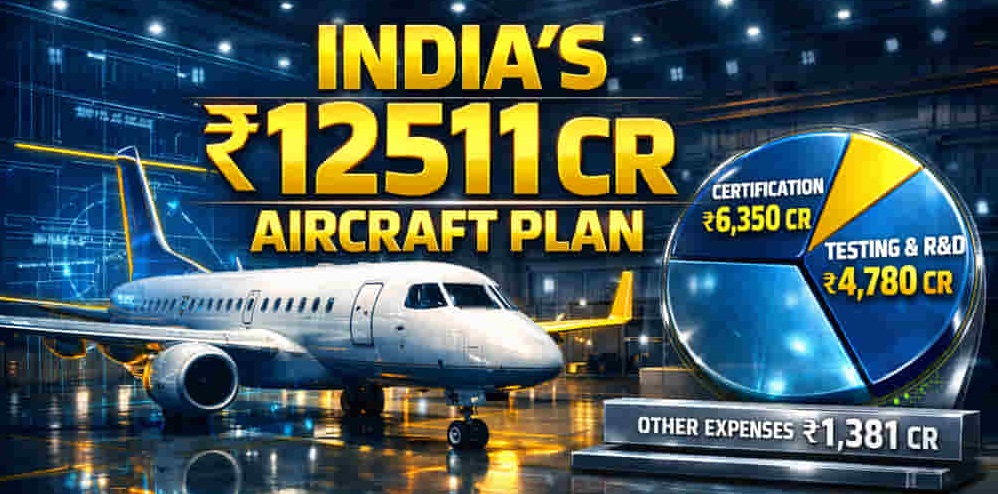
The project carries a significant budget of ₹12,511 crore, intended to support design finalization, prototyping, certification, testing, and infrastructure development, including manufacturing facilities and test sites. A key upcoming decision for the SPV is whether to adopt the 90-seater RTA-90 design, building on the earlier SARAS program, or pursue an entirely new configuration incorporating advanced technologies suited for regional connectivity.
Domestic airlines have placed orders for over 1,500 aircraft in recent years, highlighting growing passenger demand and the expansion of regional routes. Currently, India depends heavily on imports from Boeing and Airbus. A homegrown regional jet could offer cost-effective, efficient aircraft optimized for tier-2 and tier-3 airports, while also generating high-skill jobs in design, production, and maintenance.
The project is expected to leverage expertise from organisations such as HAL and DRDO, with potential benefits for ancillary industries like avionics, composites, and engine manufacturing. By reducing import dependency, India could save billions in foreign exchange and emerge as a regional aircraft exporter to South Asia, Africa, and Southeast Asia.

Challenges remain, particularly regarding certification by the DGCA and international aviation authorities, supply chain integration, talent retention, and technology transfers. Previous delays in projects like the TEJAS fighter jet underscore the importance of sustained funding and streamlined procedures.
Strategically, the initiative enhances India’s autonomy in aerospace production, offering resilience against global supply chain disruptions and export restrictions. If successful, it could usher in a new era of Indian aerospace innovation, connecting remote regions more efficiently and positioning India among global aviation leaders.
All eyes are now on the SPV’s first milestones, including design finalization and the maiden flight, as the nation prepares for a transformative step in civil aviation.