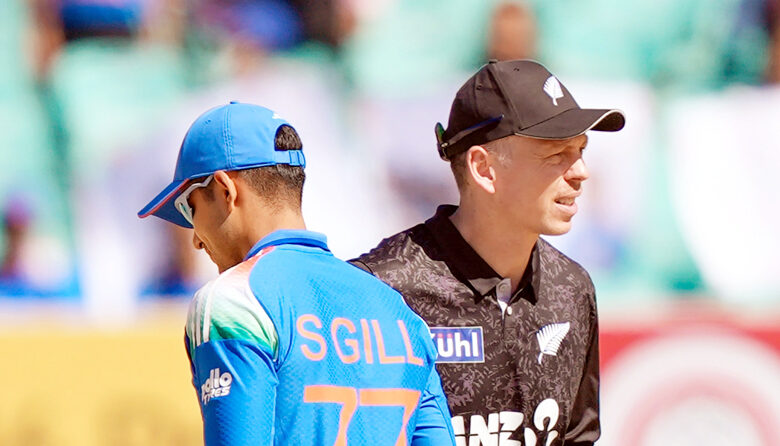
New Delhi | Despite a magnificent century by Virat Kohli, the Shubman Gill-led Indian team suffered a 41-run defeat in the third and final ODI at Indore, losing the three-match series 1–2 to New Zealand. This marked India’s first home ODI series loss to New Zealand in 37 years, inevitably drawing criticism of the team management and head coach Gautam Gambhir.
Virat Kohli’s classy 124-run knock, his 54th ODI century, went in vain as India failed to chase down the target. A lack of support from the top order proved costly, as a single substantial partnership alongside Kohli could have tilted the match and the series in India’s favour.
India’s defeat against what was considered a relatively inexperienced New Zealand side was largely attributed to multiple experiments made by the team management, described as part of a “process.” Ahead of the decider, captain Shubman Gill had stressed the importance of taking wickets in the middle overs, warning that failure to do so could put the team under pressure. Unfortunately for India, ineffective middle-overs bowling proved decisive in both the second and third ODIs.
Senior spinners Kuldeep Yadav and Ravindra Jadeja struggled to make an impact. In the final ODI, India conceded 191 runs between the 11th and 40th overs while picking up just one wicket. Across the entire series, India managed only eight wickets in the middle overs. Jadeja went wicketless throughout the series, while Kuldeep claimed just three.
With the upcoming ICC T20 World Cup in mind, India rested key players Jasprit Bumrah and Hardik Pandya for the ODI series. Off-spin all-rounder Washington Sundar was ruled out after the second ODI due to injury and will also miss the upcoming T20I series against New Zealand.
Following the series defeat, Gill refused to offer excuses. “We were strong enough to win this ODI series. New Zealand outplayed us in bowling, batting and fielding. We are disappointed with our performance and need significant improvement,” Gill said. He added that Kohli’s innings and Harshit Rana’s all-round contributions in the third ODI were major positives. “Our fast bowlers performed well. Keeping the World Cup in mind, we wanted to give Nitish Reddy opportunities,” he explained.

Gill also acknowledged India’s poor fielding as a key factor. “We dropped several crucial catches. On such pitches, if you miss chances, it becomes very difficult for bowlers to create wicket-taking opportunities. Fielding was the biggest difference between the two teams. New Zealand saved 15–20 runs through sharp fielding, which made a huge impact,” he said.
Young pacer Harshit Rana emerged as a bright spot for India, scoring 83 runs and taking six wickets in the series. His half-century in the opening ODI and a composed knock in the final match impressed the team management. Gill praised the youngster, saying, “Batting at number eight in ODIs is not easy. Harshit is constantly improving his batting. If he continues like this, he can become a genuine all-rounder. Players who can bowl at 140 kmph and contribute with the bat are extremely valuable.”
Gill also pointed out that while Hardik Pandya remains India’s premier all-rounder, his recurring fitness issues remain a concern.
The series loss has raised questions about India’s middle-overs bowling and fielding standards, areas the team will look to address quickly as preparations intensify for the upcoming World Cup.