New Delhi | India is on the brink of a major breakthrough in defence self-reliance with the proposed Safran–Gas Turbine Research Establishment (GTRE) joint engine development programme for the Advanced Medium Combat Aircraft (AMCA). With the proposal now placed before the Cabinet Committee on Security (CCS), the initiative has cleared all key institutional and strategic evaluations, marking a decisive step toward indigenous high-performance fighter engine capability.
Once formally approved by the CCS, the programme will move from policy intent to execution, launching one of India’s most ambitious defence technology collaborations to date. The estimated investment of over ₹30,000 crore underlines the long-term and strategic nature of the project, aimed not at procurement but at building core national capability in fighter propulsion.
The project has already received clearance from the Defence Ministry following a high-level review, endorsement from the National Security Council, and approval from the Finance Ministry’s Expenditure Department. This rare convergence of strategic, financial, and bureaucratic consensus highlights the importance accorded to indigenous engine development as a critical pillar of India’s future air power.
The CCS, chaired by the Prime Minister, will assess not only costs and timelines but also the broader industrial, strategic, and geopolitical implications. The programme aligns closely with the objectives of Atmanirbhar Bharat, seeking to close a long-standing gap in India’s defence ecosystem—dependence on foreign suppliers for fighter aircraft engines.
Safran emerged as India’s preferred partner after extensive evaluations involving global engine manufacturers from the United States, the United Kingdom, and Russia. The French company’s proposal reportedly stood out for its commitment to deep technology transfer, co-development, shared intellectual property rights, and manufacturing within India. These elements directly address India’s long-standing concerns about limited access to core technologies in previous collaborations.
Unlike conventional licensed production models, the Safran–GTRE programme emphasizes joint development. The arrangement is expected to include full transfer of critical design data, manufacturing processes, and engineering know-how, along with shared ownership of intellectual property. This framework will enable India to independently manufacture, support, and further evolve the engine for future platforms.
The industrial impact of the programme is expected to be substantial. Establishing a complete fighter engine manufacturing ecosystem will require a robust supplier network covering high-temperature alloys, advanced composites, precision machining, and digital control systems. This is likely to generate spillover benefits for civil aerospace, power generation, and high-end manufacturing sectors, while integrating Indian firms into global aerospace supply chains.

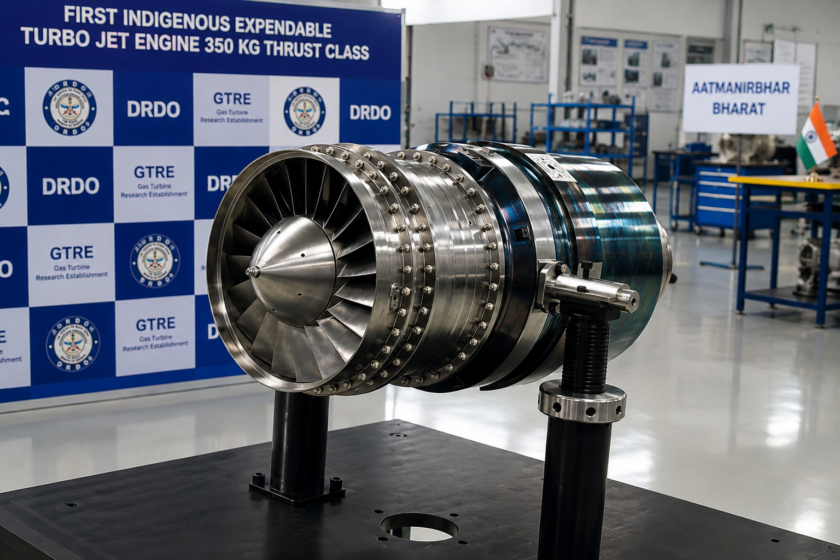
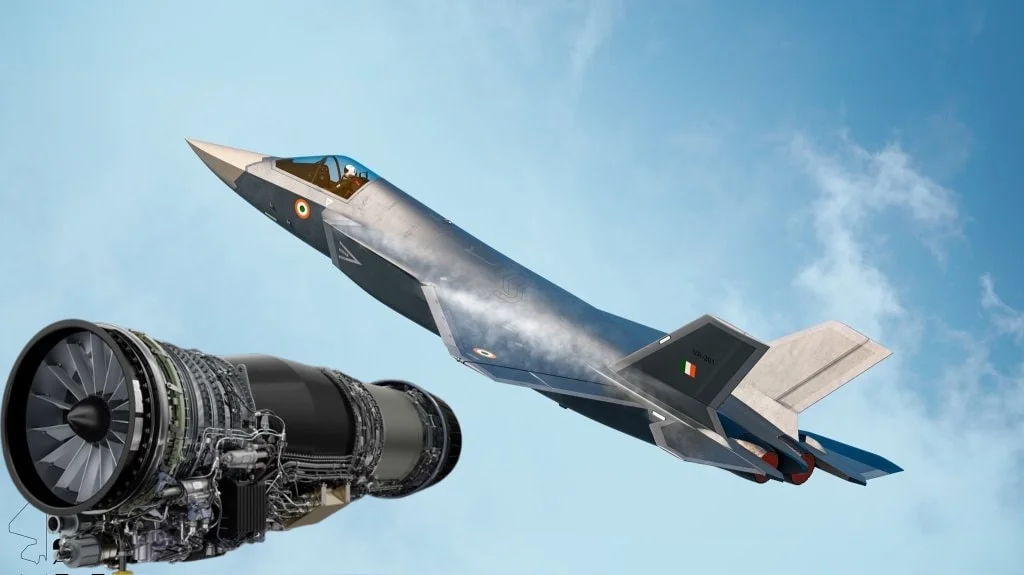
The collaboration aims to develop a high-thrust turbofan engine in the 110–120 kilonewton class, suitable for fifth-generation and advanced 4.5-generation fighters. This engine is intended for the AMCA Mk-2 variant, which will feature enhanced stealth, greater internal fuel capacity, and increased weapons payload, along with supercruise capability for sustained supersonic flight without afterburners.
Under the AMCA roadmap, the initial Mk-1 aircraft will use the GE F414 engine to ensure timely induction, while the indigenous Safran–GTRE engine will power the Mk-2 once development and certification are complete. This phased approach reduces risk while allowing parallel progress in airframe and engine development.
Technologically, the programme targets some of the most sensitive and tightly controlled areas of jet engine design, including single-crystal turbine blades, ceramic matrix composites, and advanced Full Authority Digital Engine Control (FADEC) systems. Mastery of these technologies would place India among a select group of nations with end-to-end fighter engine capability.
Beyond the AMCA, the propulsion technology developed under this programme could support future unmanned combat aerial vehicles, naval fighters, and other advanced aerospace platforms. Strategically, indigenous engine capability will reduce India’s exposure to sanctions, export restrictions, and geopolitical uncertainties, enhancing long-term operational autonomy.
The proposed engine partnership also reflects deepening strategic ties between India and France, building on cooperation in fighters, submarines, space, and maritime security. If approved and successfully executed, the Safran–GTRE AMCA engine programme could mark a historic turning point in India’s quest for true aerospace and defence self-reliance.