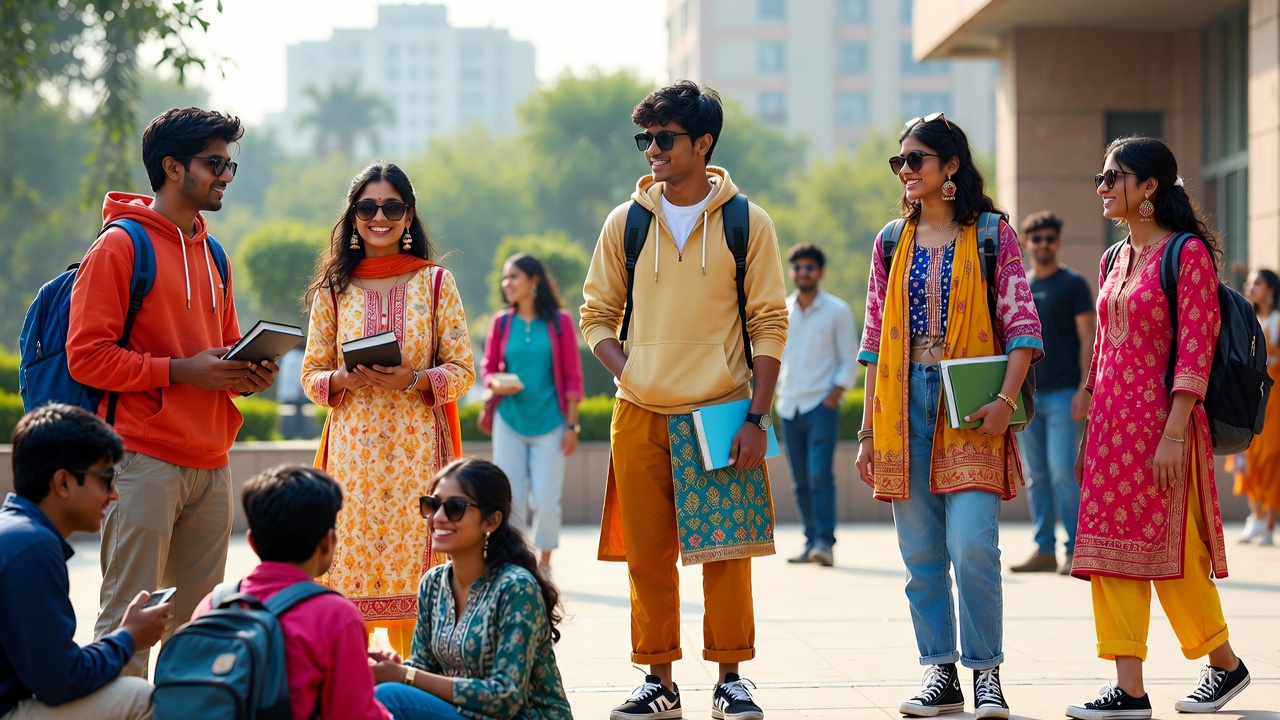
New Delhi: Indian fashion has undergone a seismic shift, evolving from a runway-driven industry into a youth-powered cultural phenomenon. With more than 380 million digitally native young Indians, fashion is no longer about copying luxury labels or seasonal trends. It has become a language of identity, sustainability, comfort, cultural pride, and creativity, shaped daily by Gen Z and young millennials across campuses, cafés, co-working spaces, and social media feeds.
From Delhi University’s North Campus to Mumbai’s Bandra streets, from Bengaluru’s tech corridors to tier-2 cities like Indore, Jaipur, and Kochi, Indian youth are remixing global aesthetics with desi roots. The result is a fashion revolution that is personal, conscious, and unapologetically expressive.
“For us, fashion isn’t about impressing others anymore,” says Aanya Mehra, a 21-year-old sociology student at Delhi University. “It’s about feeling comfortable in who we are — mentally, culturally, and ethically.”
Why Fashion Has Become a Youth Obsession
For India’s Gen Z, clothing is no longer occasional self-expression — it is a daily ritual. Morning outfit planning, scrolling Instagram Reels for inspiration, weekend thrifting, and experimenting with silhouettes have become second nature.
According to a 2025 youth consumption survey by a Mumbai-based research firm, over 68% of urban Indian youth said sustainability influences their fashion choices, while 72% prioritise comfort over brand labels.
“We grew up watching climate change, body shaming, and unrealistic beauty standards,” explains Kabir Malhotra, a fashion content creator from Gurugram. “So naturally, we reject fast fashion and rigid definitions of style.”
Rising disposable incomes, D2C brands, and easy online access have also enabled experimentation. But the biggest accelerant is social media, where micro-trends can explode overnight and fade just as quickly — leaving behind lasting core aesthetics like thrift-core, oversized fits, and Indo-Western fusion.
Indo-Western Fusion: The Defining Look of a Generation
If one trend defines Indian youth fashion in 2025–2026, it is Indo-Western fusion. Sarees worn with sneakers and corset blouses, kurtas layered over cargo pants, dupattas styled as tops, and lehengas paired with denim jackets are now everyday sights.
“Fusion fashion lets us honour tradition without feeling trapped by it,” says Rhea Kulkarni, a 24-year-old architect from Pune. “I can attend a family function and then head straight to a café without changing.”
Designers like Masaba Gupta, Anamika Khanna, and GenNext creators showcased at Lakmé Fashion Week x FDCI 2025 have amplified this aesthetic, but its real power lies on the streets. College fests, reels, and thrift pop-ups are where heritage textiles truly come alive.
Regional interpretations add further depth. In Rajasthan, bandhani and ajrakh meet Western silhouettes. In Chennai, khadi minimalism blends with clean tailoring. In Bengaluru, eco-activewear incorporates handloom panels.
Sustainability and Thrifting: Conscious Is the New Cool
For Indian youth, sustainability is no longer optional — it is a baseline. Thrifting, upcycling, and pre-loved fashion have become symbols of awareness and creativity rather than compromise.
Cities like Bengaluru, Chandigarh, and Ahmedabad host student-run thrift pop-ups where old sarees become crop tops, vintage denim transforms into patchwork jackets, and discarded fabrics find new life.
“Buying new clothes every month just feels irresponsible now,” says Neha Jain, who runs a thrift page with 60,000 followers. “Upcycling lets me create something unique without harming the planet.”
The phrase “therapy repeats” — proudly wearing favourite outfits multiple times — has gone viral, challenging outdated ideas of outfit repetition. Brands are responding too, with circular fashion programs and repair-friendly designs.
Athleisure, Oversized Fits, and Streetwear Take Over
India’s hybrid youth lifestyle — juggling classes, internships, side hustles, and social life — demands comfort. Athleisure and oversized silhouettes dominate wardrobes across genders.

Matching jogger sets, biker shorts, ribbed tanks, hoodies, baggy tees, and cargo pants are staples, often styled with statement sneakers or ethnic accessories. Y2K nostalgia adds sparkles, chokers, and low-rise details, while “quiet luxury” neutrals appeal to minimalist tastes.
“Oversized clothes feel freeing,” says Zoya Khan, a media student from Mumbai. “They don’t judge your body, your mood, or your day.”
Homegrown streetwear brands like Jaywalking, Blr Wear, and indie Instagram labels blend global hype with Indian storytelling — mythology graphics, hand-dyed fabrics, and gender-neutral designs.
Digital Influence: Reels, Influencers, and Youth Power
Social media is not just reflecting trends — it is creating them. Instagram Reels and short-form videos have turned everyday students into tastemakers.
Creators like Nancy Tyagi, celebrated for transforming affordable fabrics into couture-like outfits, and Sakshi Sindwani, a powerful voice for size inclusivity, have redefined influence by prioritising authenticity over polish.
“Fashion should work for real bodies and real lives,” Sindwani said during a 2025 panel discussion. “Representation isn’t a trend — it’s a necessity.”
Events like Lakmé Fashion Week’s GenNext program and college fashion societies now spotlight sustainable innovation, while pop-ups and D2C brands thrive on Instagram aesthetics and community engagement.
Fashion as a Values-Driven Movement
What makes this youth fashion craze different is its intentionality. Today’s young Indians are choosing timeless pieces over trend cycles, personal ethics over mass approval, and cultural pride over imitation.
Gender-fluid silhouettes, inclusive sizing, regional craftsmanship, and DIY personalization are becoming the norm rather than the exception.
“Wearing handloom feels like wearing history,” says Arjun Rao, a Bengaluru-based product designer. “It connects me to my roots while still feeling modern.”
This movement is reshaping India’s fashion industry — boosting D2C growth, empowering artisans, and putting “Made in India” aesthetics on global radars.
The Future of Indian Youth Fashion
As 2026 unfolds, Indian youth fashion continues to evolve — but its core remains unchanged: authenticity, sustainability, and self-expression. Expect modular wardrobes, thrift-first mindsets, and even stronger blends of tradition and innovation.
This is not a fleeting trend. It is a cultural shift driven by a generation that refuses to separate style from values.
From thrift hauls and fusion reels to campus corridors and global runways, India’s youth aren’t just wearing fashion — they are living it, shaping it, and redefining it.
And this time, the runway is everywhere.


 ---------------------------------------------------------------------------------------------------