New Delhi: India’s college campuses have quietly become some of the most exciting fashion laboratories in the country. Gen Z students are no longer content with merely following trends dictated by global runways or fast-fashion giants. Instead, they are actively reshaping style through sustainability, cultural pride, comfort-first dressing, and radical self-expression.
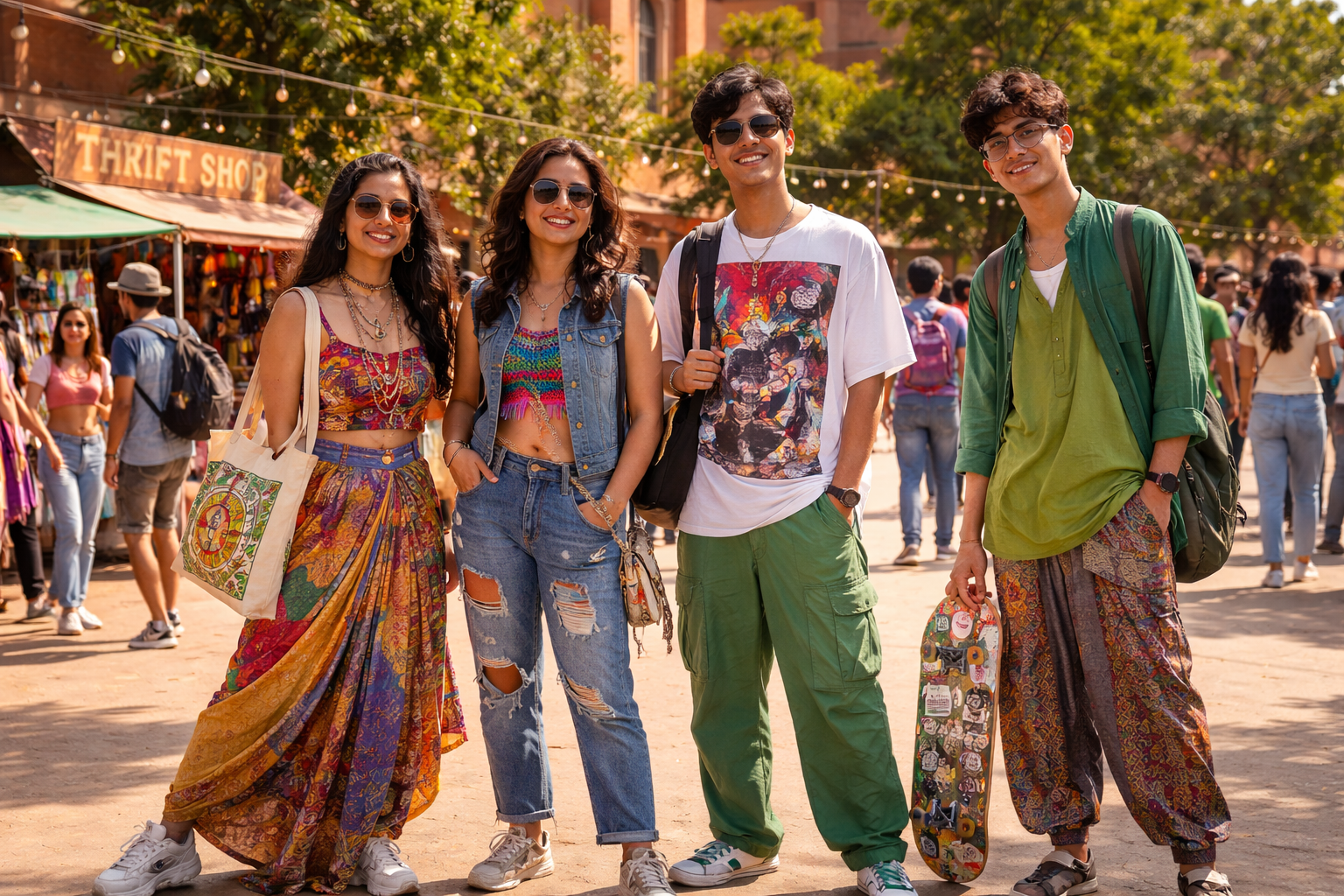
From Delhi University’s North Campus lanes to Bengaluru’s tech-driven colleges and Mumbai’s creative hubs, young Indians are building wardrobes that reflect who they are and what they stand for. Thrifted jeans sit alongside heirloom dupattas, sneakers replace stilettos, and identity matters more than labels. Fashion, for this generation, is not just about looking good — it’s about making sense.

Thrift Is the New Cool: Sustainability at the Core
For Gen Z, sustainability isn’t a buzzword — it’s a lifestyle choice. With rising awareness about the environmental cost of fast fashion, students are consciously rejecting overconsumption. Thrifting, upcycling, and reworking old clothes have moved from the margins to the mainstream.
“I don’t remember the last time I bought something brand new,” says Ananya Verma, a sociology student at Delhi University’s Miranda House. “Most of my outfits are thrifted or borrowed from my mom’s old wardrobe. It feels good to wear something that already has a story.”
Across campuses, student-run thrift pop-ups have mushroomed. In cities like Chandigarh, Pune, and Bengaluru, weekend flea markets curated by college collectives sell reworked sarees, cropped kurtas, denim jackets stitched from scraps, and patchwork trousers. Instagram pages such as @ThriftedByCampus and @ReWearIndia regularly showcase “dream thrift finds,” driving online demand.
For hostel students, thrift-core makes practical sense. It’s affordable, durable, and expressive. “When you’re living on a tight budget, thrifting teaches you creativity,” explains Rohan Malhotra, an economics student at St. Stephen’s College. “You stop chasing trends and start building a personal style.”
Upcycling as Expression, Not Compromise
Upcycling has emerged as a creative outlet rather than a compromise. Old sarees become wrap skirts, faded jeans turn into tote bags, and leftover fabric becomes statement accessories. DIY tutorials dominate Instagram Reels, with students sharing step-by-step transformations.
“Upcycling makes fashion democratic,” says Neha Kulkarni, a fashion communication student at NIFT Bengaluru. “You don’t need money — you need imagination.”
This circular approach extends garment lifecycles and challenges the idea that fashion must constantly be new. In many ways, Gen Z is normalizing repetition, repair, and reinvention — values long embedded in Indian households but forgotten in the fast-fashion era.
Indo-Western Fusion: Where Heritage Meets Streetwear
Perhaps the most defining trend on Indian campuses is Indo-Western fusion. Gen Z students are reimagining traditional clothing through a modern, wearable lens.
On campuses, it’s common to see sarees styled with corset blouses and sneakers, kurtas layered over cargo pants, or dupattas worn as tops with graphic tees. The aim is not to modernize tradition, but to make it functional for daily life.
“I love wearing Indian clothes, but I don’t want to feel restricted,” says Mehak Arora, a literature student at Lady Shri Ram College. “So I’ll wear my nani’s saree with a belt and boots. It feels powerful.”
Regional identities add depth to this fusion. In Bengaluru, students lean toward eco-activewear paired with handloom jackets. Chennai campuses favor khadi co-ords and minimalist silhouettes, while Delhi experiments boldly with Phulkari leggings, Bandhani overlays, and Madhubani prints on mesh tops.
Oversized silhouettes, co-ord sets, and cargo details dominate, making outfits adaptable from lectures to cafés to late-night study sessions.
Athleisure and the Comfort-First Revolution
India’s campus fashion has also undergone a comfort revolution. Athleisure has become the unofficial uniform — joggers, ribbed tops, oversized hoodies, and chunky sneakers rule the scene.
“Comfort is non-negotiable,” says Aman Sheikh, a computer science student in Bengaluru. “You’re commuting, coding, attending classes, and meeting friends. Why would you wear something uncomfortable?”

Global trends like Y2K fashion — low-rise jeans, baby tees, chokers — have been adapted for Indian weather and sensibilities. Breathable fabrics, loose fits, and layered looks ensure functionality in humid summers and crowded metros.
Gender-neutral fashion plays a major role here. Unisex hoodies, oversized shirts, and relaxed silhouettes allow students to express themselves without rigid labels.
DIY, Micro-Trends, and Digital Influence
Social media is the accelerator behind this fashion evolution. Instagram Reels and YouTube Shorts have replaced magazines as the primary trendsetters, but Gen Z consumes content critically.
“Trends come and go every week online,” notes Simran Kaur, a media student at Mumbai University. “But we only keep what feels authentic.”
DIY personalization is central to campus style. Hand-painted sneakers, embroidered denim, custom patches, and reworked jewelry allow students to stand out without buying more.
Micro-trends spread quickly — crochet tops, cargo skirts, scarf styling — but core themes remain consistent: sustainability, oversized fits, and thrift-first thinking.
Many campus influencers are students themselves, offering styling hacks rather than luxury hauls. Their appeal lies in relatability, humor, and transparency.
Fashion as Identity and Values
Beyond aesthetics, Gen Z fashion reflects deeper social values. Inclusivity, cultural pride, and environmental responsibility shape choices more than brand prestige.
“Fashion is how we communicate who we are without speaking,” says Dr. Ritu Mehra, a fashion sociologist based in Delhi. “This generation uses clothing to express ethics — anti-waste, pro-diversity, pro-self.”
Gender-neutral ethnic wear, size-inclusive styling, and body-positive representation are becoming common on campuses. Students reject rigid beauty standards and embrace individuality.
What Lies Ahead: Intentional Style in 2026
As 2026 unfolds, experts predict refinement rather than excess. Timeless pieces, modular wardrobes, and intentional buying will define the next phase.
“You’ll see fewer impulse buys and more thoughtful collections,” says Kunal Shah, founder of a sustainable fashion startup. “Gen Z is shaping the future consumer mindset.”
India’s college students are not waiting for the fashion industry to change — they are forcing it to. By blending tradition with streetwear, comfort with creativity, and ethics with expression, they are setting the pace for a more conscious industry.
On campuses across the country, Gen Z is proving that fashion can be sustainable, expressive, and deeply personal. They aren’t following the runway anymore.
They are building one — from hostel rooms, thrift racks, and Instagram feeds — one outfit at a time.





 ---------------------------------------------------------------------------------------------------