Dras: When shells rained over Kargil in the summer of 1999, the war wasn’t just being fought on icy ridgelines. It was being fought in the air—on radio frequencies where truth, fear, and propaganda collided. And at the centre of that invisible front stood one woman, a microphone, and a stubborn refusal to go silent.
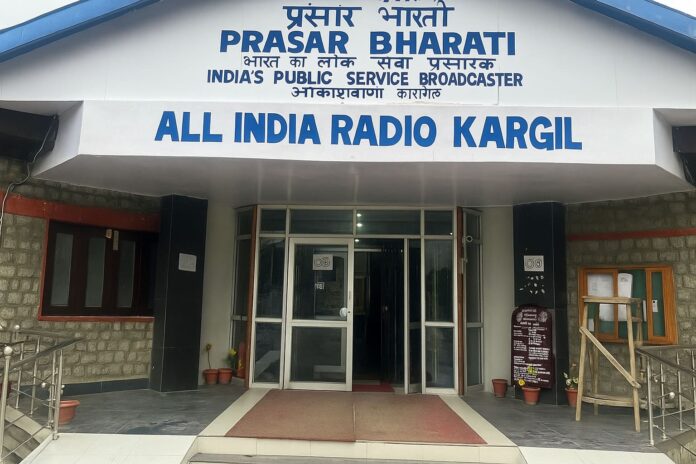
As Pakistani artillery pounded the town, engineers and technicians fled the All India Radio (AIR) Kargil station. Walls cracked, transmitters faltered, and evacuation orders loomed. Tsering Angmo Shunu, station director of AIR Leh and Kargil, could have left too. Instead, she ordered the generator restarted. The broadcast would not die on her watch.
What Angmo understood—instinctively and absolutely—was that silence is a weapon. Radio Pakistan was flooding the region with false claims: Indian positions collapsing, helicopters shot down, morale broken. In a war where information could save or cost lives, AIR Kargil became a frontline bunker. Angmo became its sole sentry.
Every bulletin she aired was an act of defiance. Every sentence was a counterstrike. She broadcast verified updates, morale-boosting messages for soldiers on the heights, and reassurances for terrified civilians in the valleys below. While shells shook the studio and glass littered the floors, her voice carried one unwavering message: India is standing. India is speaking.
On June 6, 1999, Angmo went further. At the Indian Army’s request, she issued an on-air call for local porters to support frontline logistics. “The Indian Army needs porters,” she announced. “Please come forward.” It was not rhetoric. It was mobilisation.
The response was electric. Ladakhi youth—already acclimatised to brutal altitudes—volunteered in droves. Even Angmo’s 18-year-old son stepped forward first. Within days, hundreds had signed up. They hauled 30-kilogram loads along near-vertical trails to Batalik, Yaldor, and Chorbat La. Some carried wounded soldiers back. Many refused compensation later. The radio had spoken. That was enough.

The shelling never stopped. At times, nearly 300 shells fell in a single day. AIR Kargil’s hostel was destroyed. The station became a clear target. Teams slept in nearby villages, on bare floors, wrapped in woollens, only to return the moment firing paused. When civilian engineers refused to come back, Angmo approached the Army directly. Military technicians rewired transmitters under fire, keeping the signal alive.
This was not headline heroism. There were no medals, no victory parades. But AIR Kargil did what guns alone could not: it held morale together, disrupted enemy narratives, and anchored truth in a fog of war.
By the time Vijay Diwas arrived on July 26, 1999, India had reclaimed its heights. The nation celebrated its soldiers—and rightly so. Yet somewhere in the rubble of a battered radio station was another victory, quieter but no less decisive. A one-woman army had refused to let the enemy own the narrative.
Tsering Angmo Shunu didn’t fire a shot. She fired signals. And in a war where propaganda was as lethal as artillery, that made all the difference.
Her story is a reminder: wars are not only won by those who charge uphill with rifles, but also by those who hold the line when the world tells them to go silent—and they choose to speak.