Lucknow: In a significant step towards strengthening social health security and promoting preventive healthcare, the Department of Hospital Administration, Sanjay Gandhi Postgraduate Institute of Medical Sciences (SGPGIMS), Lucknow, in collaboration with the Office of the Chief Medical Officer, Employees’ State Insurance Scheme (ESIS), Lucknow Zone, successfully organised an ESIS Awareness Session and Health Screening Camp at the H.G. Khurana Auditorium, Central Library campus of SGPGIMS.
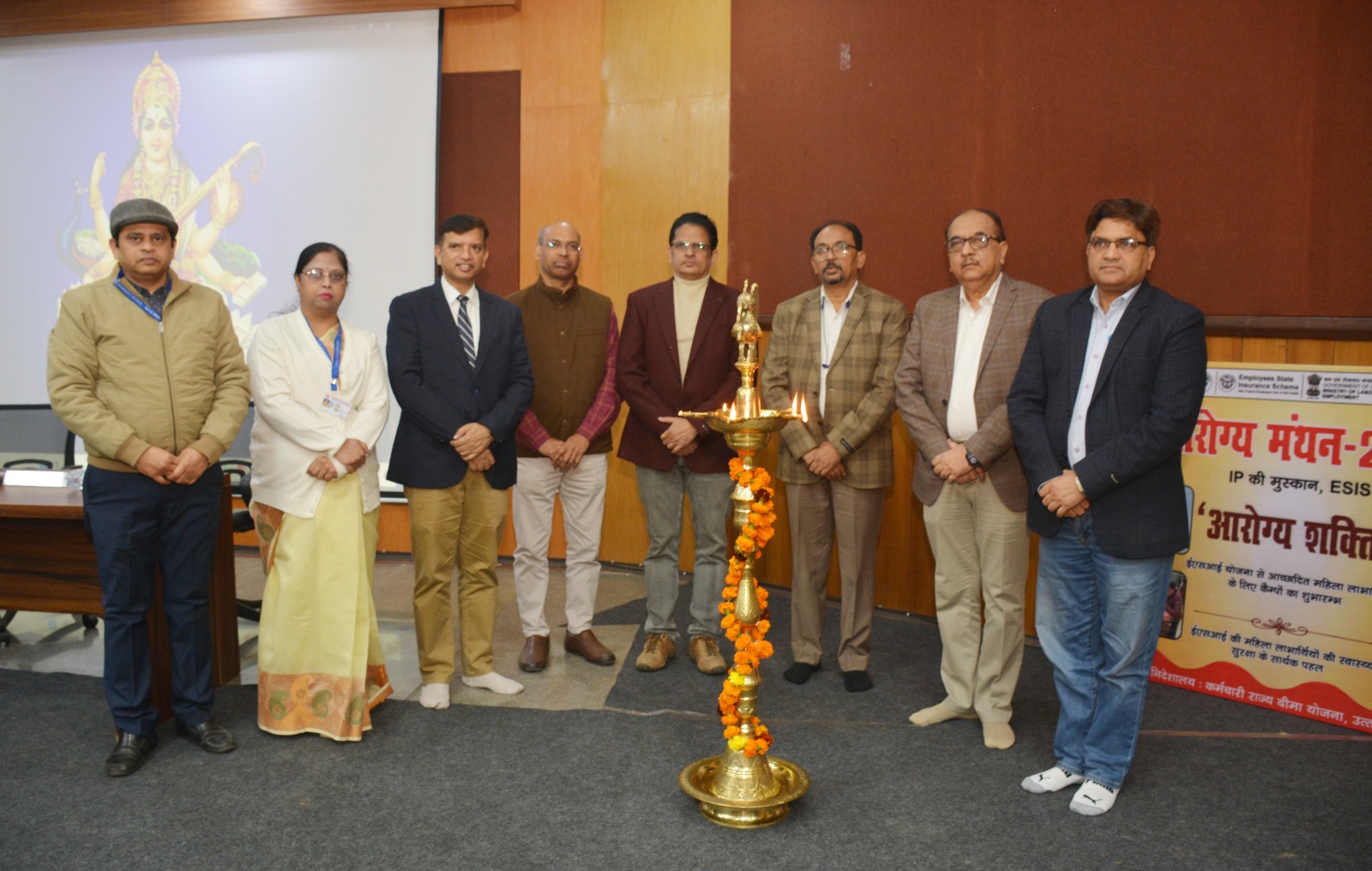
The day-long programme, held from 9:00 am to 4:00 pm, brought together health administrators, medical experts and ESIS beneficiaries with the shared objective of enhancing awareness about social health security and encouraging preventive healthcare practices. The event commenced with a traditional floral tribute and lamp-lighting ceremony, followed by the inaugural address by Dr Gaurav Kumar Jha, Organising Secretary from SGPGIMS.

Several distinguished speakers addressed the inaugural session. Dr Rajesh Kumar, Chief Medical Officer, ESIS Lucknow Zone, highlighted the critical role of social security in preventive healthcare. Dr R. Harshvardhan, Medical Superintendent, SGPGIMS and Organising Chairperson, spoke on pressing issues such as the hardships faced by ESIS workers and the lack of awareness among beneficiaries and ESIS healthcare personnel, which often leads to increased out-of-pocket expenditure. Chief Medical Superintendent Dr Devendra Gupta emphasised the need for optimal utilisation of ESIS services, while SGPGIMS Director Dr R. K. Dhiman drew attention to the mental health and workplace well-being of ESIS workers. He also stressed exploring the possibility of establishing an ESIS dispensary within the SGPGIMS campus.
During the scientific session, participants were provided comprehensive information on the medical and cash benefits available under the ESIS scheme. Practical guidance was offered on e-identity cards, claim reimbursement procedures, identification of nearby ESIS dispensaries and hospitals, and beneficiary-related processes. An interactive question-and-answer session helped address doubts and dispel common misconceptions surrounding the scheme.
Key discussions focused on types of benefits, reimbursement mechanisms, grievance redressal and the importance of ESIS awareness. Participants were informed that discrepancies in ESIS cards must be corrected through employers, and detailed procedural advice was shared to ensure timely medical reimbursement. Representatives from the Piramal Foundation played a crucial role in explaining the broad coverage of ESIS, including cashless medical care, maternity benefits, dependent support and long-term social security, while emphasising the need for awareness and timely card issuance.

The discussions highlighted serious concerns regarding the underutilisation of ESIS benefits despite regular salary deductions. This issue was found to be particularly acute among outsourced and contractual workers due to lack of awareness and procedural barriers. Alarmingly, nearly 80 per cent of eligible workers were found to be without ESIS cards, largely because of insufficient information, significantly limiting their access to essential healthcare services and undermining the objectives of the scheme.
In response to queries raised by Dr Shalini Trivedi from the Hospital Infection Committee regarding needle-stick injury coverage for contractual employees, clarifications were provided stating that medical benefits for contractual staff are fully covered under ESIC. Dr Amit Prakash and Dr Salam Ahmed outlined the care pathway, explaining that initial consultation and prescriptions could be obtained at SGPGIMS, followed by treatment at designated ESIS dispensaries for medicines, post-exposure prophylaxis and continued care.
From 12:00 noon to 4:00 pm, beneficiaries availed themselves of comprehensive health check-ups, including oral examinations conducted by a dental team from KGMU and specialised care by obstetrics and gynaecology experts. The health camp also provided physiotherapy services, ECGs, basic laboratory tests and medicines, reinforcing the programme’s focus on early disease detection, diagnosis, treatment, rehabilitation and health promotion.
The successful execution of this initiative underscores SGPGIMS’ unwavering commitment to strengthening social health security, enhancing awareness, improving preventive healthcare delivery and ensuring equitable access to tertiary care services for ESIS beneficiaries across Uttar Pradesh. This landmark collaboration between SGPGIMS and ESIS sets a progressive benchmark for future public health initiatives, demonstrating how informed communities can bridge the gap between policy and practice to build healthier and more dignified societies.