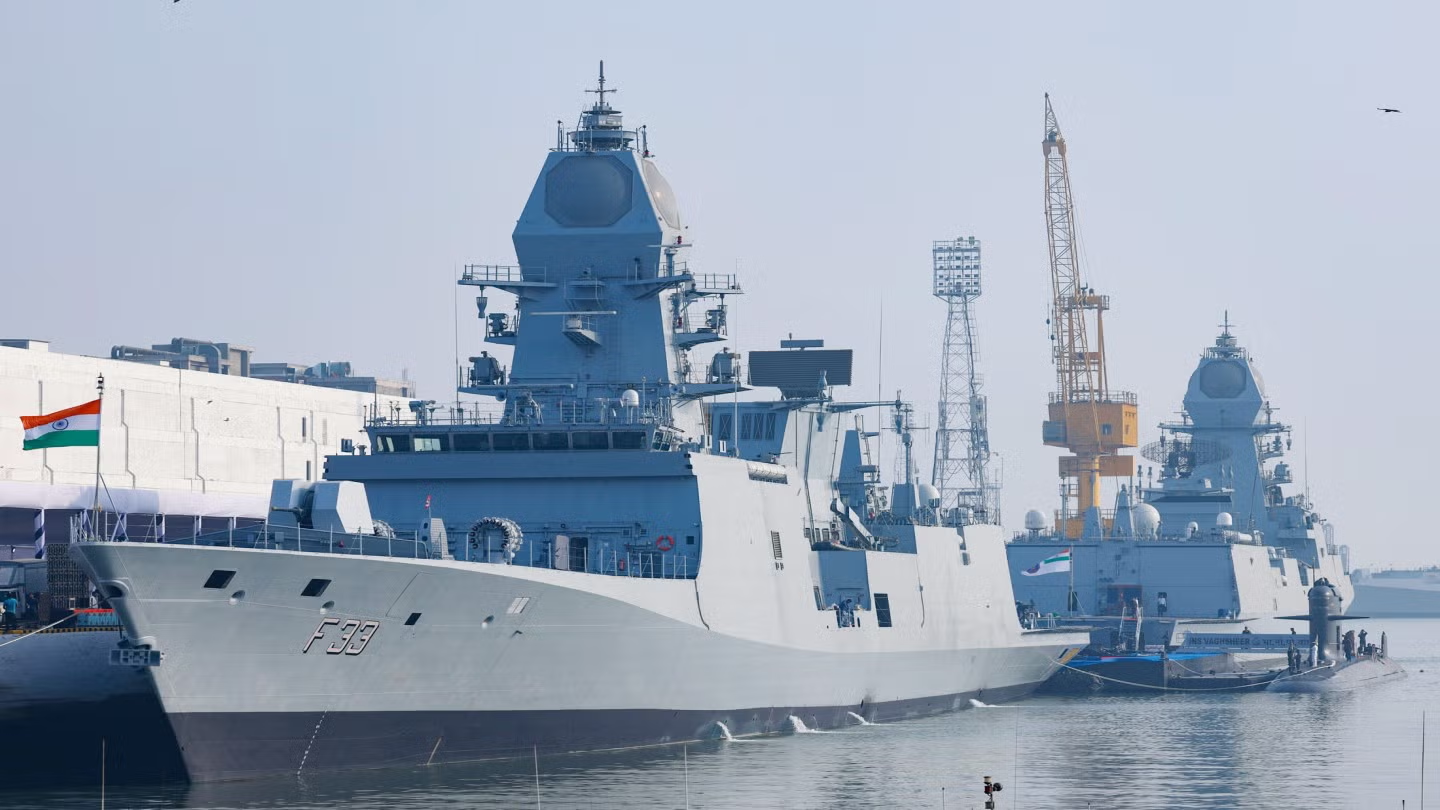
New Delhi | The Indian Navy is set to achieve a historic milestone in 2026 with the commissioning of 19 new warships, representing the largest single-year force accretion in its history. The move underscores India’s accelerating push towards maritime self-reliance and a stronger blue-water navy amid evolving security challenges in the Indo-Pacific region.
This unprecedented expansion reflects the growing maturity of India’s indigenous shipbuilding ecosystem. Once hampered by import dependence and lengthy construction cycles, domestic shipyards have significantly enhanced efficiency, enabling faster delivery of technologically advanced platforms aligned with the Navy’s long-term modernisation roadmap.
A major highlight of the 2026 inductions will be the Nilgiri-class stealth frigates. These modern 7,400-tonne warships are equipped with advanced stealth features, reduced radar signatures, and integrated sensor and weapon systems, significantly enhancing the Navy’s surface combat and anti-submarine warfare capabilities across the Indian Ocean Region.
Construction timelines for frontline warships have been reduced to around six years, compared to eight to nine years earlier. This improvement has been driven by the adoption of integrated construction techniques, digital design tools, and advanced project management systems. Indian shipyards are increasingly leveraging virtual simulations, modular construction, and precision engineering to streamline production and reduce delays.
Shipyards such as Mazagon Dock Shipbuilders Limited (MDL) and Garden Reach Shipbuilders & Engineers (GRSE) have played a pivotal role in this transformation. The use of large prefabricated hull blocks, robotic welding, and computer-controlled machining has improved build quality while cutting labour intensity and costs.

Beyond frigates, the commissioning programme includes next-generation destroyers, corvettes, and offshore patrol vessels. Advanced destroyers under Project 15B are equipped with vertical launch systems capable of firing BrahMos supersonic cruise missiles and other advanced munitions, significantly boosting India’s maritime strike reach. Anti-submarine platforms featuring indigenous sonar systems will further strengthen undersea warfare capabilities.
The expansion has also delivered substantial economic benefits. Naval shipbuilding activity across Mumbai, Kolkata, and Visakhapatnam has generated employment for tens of thousands and stimulated growth in ancillary sectors such as electronics, propulsion systems, and advanced materials. Collaboration between public sector shipyards and private industry has deepened, reinforcing India’s defence manufacturing base.
Strategically, the accelerated induction of warships comes at a critical time. China’s rapidly expanding naval presence and growing influence across key sea lanes have heightened the importance of maritime deterrence. The Indian Navy’s strengthened fleet will enhance its ability to safeguard vital chokepoints, protect trade routes, and maintain stability in the Indian Ocean Region.
While challenges remain—ranging from manpower constraints to maintenance demands—the 2026 commissioning programme represents a decisive step forward. Supported by sustained investment and technological innovation, the Indian Navy’s growing fleet signals New Delhi’s determination to secure its maritime interests and assert its role as a major naval power in the region.