Washington: By early January 2026, the geopolitical map of the Western Hemisphere had been violently redrawn.
In the predawn darkness of January 3, the United States executed one of the most audacious military operations of the 21st century. Codenamed Operation Absolute Resolve, the mission culminated in the capture of Venezuelan President Nicolás Maduro and his wife, Cilia Flores—an unprecedented act that signaled a dramatic escalation in U.S. foreign policy under President Donald Trump.

Framed by Washington as a decisive blow against narco-terrorism, the operation saw elite American forces penetrate the heart of Caracas, dismantle Venezuelan air defenses, and extract a sitting head of state—all within a matter of hours. Maduro, indicted by the U.S. Department of Justice in 2020 for allegedly conspiring to flood American streets with cocaine, was swiftly extradited to New York to face trial.
What unfolded was not an impulsive strike, but the culmination of months of meticulous intelligence work, legal maneuvering, and military rehearsal.
The Buildup: Spies, Drones, and a Replica Compound
The foundations of Operation Absolute Resolve were laid quietly in mid-2025. With the U.S. embassy in Caracas long shuttered, CIA operatives entered Venezuela without diplomatic cover, embedding themselves deep within the capital. Their task was exhaustive surveillance—charting Maduro’s movements, security patterns, preferred residences, and even personal routines.
Human intelligence proved decisive. A high-ranking source close to Maduro reportedly provided granular insights into his daily life, confirming that the Venezuelan leader rotated between six to eight secure locations. This on-the-ground intelligence was paired with stealth drones that slipped undetected through Venezuelan airspace, feeding real-time imagery back to U.S. planners.
Thousands of miles away, at a secure facility in Kentucky, Joint Special Operations Command built a full-scale replica of Maduro’s primary compound. Delta Force operators rehearsed relentlessly—breaching steel-reinforced doors, navigating narrow corridors, and timing each movement to the second. Speed was everything: the goal was to seize the target within minutes and vanish before organized resistance could form.
Crucially, the operation was framed not as regime change, but as a law-enforcement action. Maduro’s standing U.S. indictment for narco-terrorism provided the legal scaffolding—though critics would later argue that the distinction existed more on paper than in reality.
Diplomacy flickered briefly. In late December 2025, back-channel talks hinted that Maduro might accept exile in Turkey in exchange for access to Venezuela’s oil reserves. The proposal collapsed, and by Christmas, President Trump had quietly authorized the mission, delaying execution only due to weather concerns.
The timing was deliberate. The holiday season had thinned Venezuela’s military readiness, with senior officials traveling and rank-and-file soldiers on leave.
The Launch: Darkness Over Caracas
The operation began on the evening of January 2.
At approximately 4:30 p.m. Eastern Time, a vast armada stirred into motion. More than 150 U.S. aircraft—fighter jets, bombers, drones, and helicopters—lifted off from over 20 bases and naval platforms across the region. Electronic warfare planes took the lead, crippling Venezuelan communications, while cyber units struck next.
Caracas went dark.
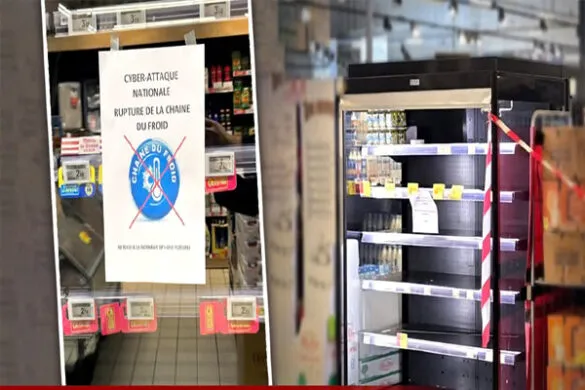
A coordinated cyberattack disrupted the capital’s power grid, plunging large sections of the city into blackout and blinding radar systems. Under this electronic cover, U.S. warplanes surged forward, systematically destroying radar installations, anti-aircraft batteries, and command-and-control nodes.
For nearly two and a half hours, the night sky over Venezuela flashed with explosions. Social media videos captured the chaos, though U.S. officials later insisted the strikes focused on infrastructure, not population centers.
The human cost, however, was real. At least 40 Venezuelans—military personnel and civilians—were reported killed. American losses were minimal, though one helicopter sustained damage from ground fire, injuring several soldiers.
By the time the bombing subsided, Venezuelan air defenses had effectively ceased to exist.

The Insertion: Six Minutes That Changed History
At 2:01 a.m. local time, the final phase began.
MH-60 and MH-47 helicopters from the legendary 160th Special Operations Aviation Regiment, the “Night Stalkers,” skimmed low over Caracas, slipping through the shattered defenses. Under sporadic fire, they landed Delta Force commandos inside a fortified military compound where intelligence confirmed Maduro was present.
Explosives shattered reinforced doors. Rooms were cleared with ruthless efficiency.
Maduro and Flores reportedly attempted to retreat into a steel-lined safe room, but they never made it. Within minutes, Delta Force intercepted them. An FBI hostage negotiator was on standby, but resistance was negligible—surprise, confusion, and possible quiet acquiescence from elements of Venezuela’s military ensured the mission unfolded with startling speed.
By 2:06 a.m., Nicolás Maduro was in U.S. custody.
Extraction was immediate. Helicopters lifted off before dawn, carrying the detainees to the USS Iwo Jima, positioned off Venezuela’s coast. From there, the couple was flown to Guantánamo Bay, then onward to a secure military airfield near New York.
President Trump watched the operation unfold live from Mar-a-Lago. Later, he likened it to “watching a television show,” lauding the precision and discipline of the forces involved.
The Aftermath: Shockwaves Across the World
On January 5, Maduro appeared in a New York courtroom under heavy guard, facing charges that could see him imprisoned for life. President Trump declared that the United States was now “in charge” of stabilizing Venezuela, promising to revive its oil infrastructure and oversee a political transition.
In Caracas, Vice President Delcy Rodríguez was sworn in as interim leader, though Washington issued stark warnings about cooperation.
The global response was swift and furious. Russia denounced the operation as “criminal.” Germany urged respect for international law. The United Nations Security Council questioned the legality of abducting a sitting head of state under the banner of counter-narcotics enforcement.
At home, constitutional debates erupted over the absence of congressional authorization. The administration countered that executive powers related to drug trafficking and national security were sufficient.
Markets reacted instantly. Oil prices dipped as traders speculated that Venezuelan production—long crippled—might rebound under U.S. influence. Regionally, tensions spiked, with leaders like Colombia’s President Gustavo Petro warning of armed resistance if sovereignty was threatened.
A Defining Moment
Operation Absolute Resolve showcased the full spectrum of modern American power: human intelligence, cyber warfare, air dominance, and elite special operations working in ruthless harmony. Yet it also reopened fundamental questions—about sovereignty, intervention, and the long shadow of U.S. involvement in Latin America.
For Venezuela, the future is uncertain. For the world, the message was unmistakable: the rules of engagement have shifted.
Whether this bold gambit ushers in stability—or ignites deeper chaos—remains the defining question of 2026.