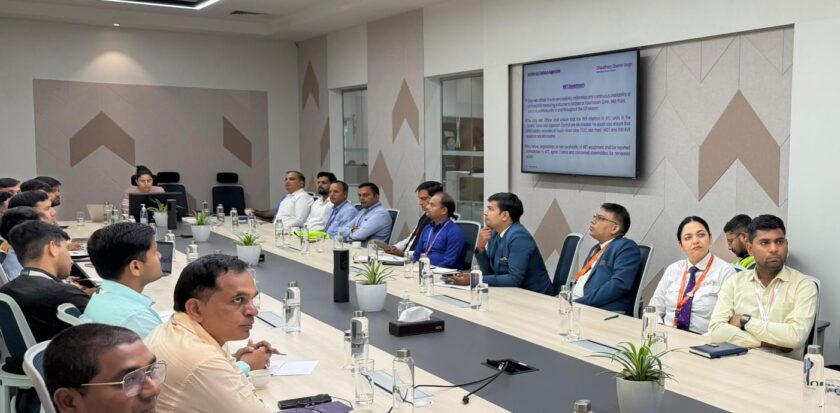
Lucknow: A national seminar on the theme ‘Indian Languages: The Foundation of National Unity and Cultural Identity’ was organized at Babasaheb Bhimrao Ambedkar University on the occasion of ‘Bhartiya Bhasha Diwas’ on December 11. The event was conducted jointly under the aegis of the Hindi Cell, BBAU, and Akhil Bharatiya Sahitya Parishad, Avadh Prant. The program was chaired by the University Vice-Chancellor, Prof. Raj Kumar Mittal. Dr. Pawanputra Badal, Rashtriya Maha Mantri of Akhil Bharatiya Sahitya Parishad, graced the event as the Chief Guest.
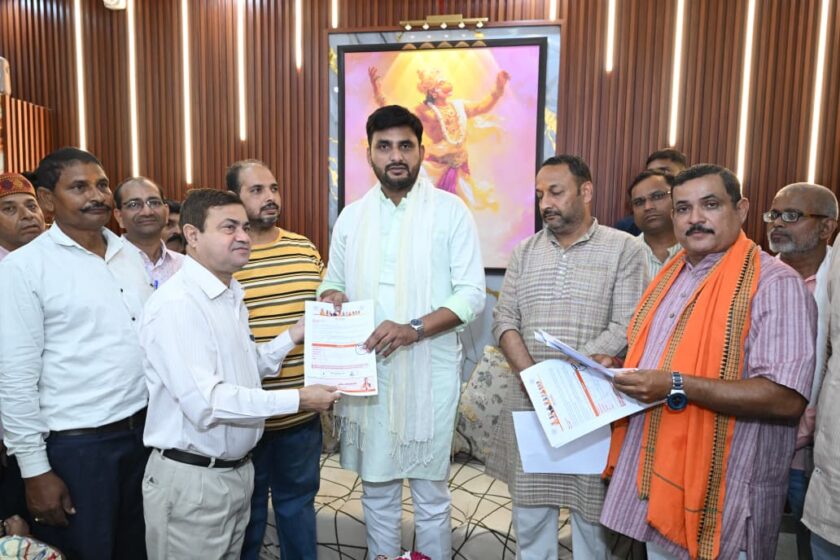
In addition, Prof. Harish Kumar Sharma, former Dean, Faculty of Arts, Siddharth University, Kapilvastu, Prof. Rita Tiwari, Head, Department of Sanskrit, Navyug Kanya Mahavidyalaya, Prof. Rampal Gangwar, Head, Department of Hindi, BBAU and Dr. Baljeet Kumar Srivastava, the program convenor were present on this occasion. The event commenced with the lighting of the ceremonial lamp and floral tribute to Babasaheb Ambedkar. After the university anthem, the organizing committee expressed gratitude by presenting flower bouquets, shawls, and books to the invited guests and faculty members.

Dr. Baljeet Kumar Srivastava delivered the welcome address and introduced the objectives and outline of the program. The stage proceedings were conducted by Dr. Ramesh Chandra Nainwal. Vice-Chancellor Prof. Raj Kumar Mittal, while addressing the gathering, stated that it is the need of the hour to reintegrate the Indian knowledge tradition into the education system, as Indian culture and civilization have always been rooted in ideals, values, an environment-friendly outlook, and social harmony.
He emphasized the crucial role of speech and language at the core of these aspects, stating that a nation progresses genuinely only when it functions in its mother tongue. Explaining the difference between Western and Indian thought, he mentioned that while Western ideology often promotes consumerism, materialism, and individualism, Indian thought values harmony, balance, compassion, and holistic development. There was a time when India was known as the “Golden Bird” because society placed its culture, civilization, and language above all.
He urged everyone that if India is to become self-reliant and developed again, we must return to Indian knowledge, spirituality, philosophy, and values. Only by choosing introspection, wisdom, moral conduct, compassion, and the path of Panchakosha instead of material attraction can we pave the way for true development and global peace. Chief Guest and Rashtriya Maha Mantri of Akhil Bharatiya Sahitya Parishad, Dr. Pawanputra Badal, expressed that Sanatan is not merely a cultural symbol but the world’s oldest and most expansive school of thought.
India’s great tradition of ‘Vasudhaiva Kutumbakam’ proves that humanity has always been viewed as one family here. Referring to ancient literature, he said that it provides deep insights into history, philosophy, society, and traditions. He discussed important works such as Panch Kavya, Saket, Anand Math, Godaan, and Dnyaneshwari, explaining how they serve as invaluable sources to understand Indian thought, cultural values, ethics, and social consciousness. He added that Indian languages inherently encourage learning and the pursuit of knowledge. The literature of each language is rich and diverse, broadening one’s thinking and positively influencing worldview, conduct, and personality.

Language not only serves as a powerful medium of learning but also plays a vital role in preserving and passing on cultural heritage, historical legacy, and social values to future generations. Thus, Indian languages have always been pillars of intellectual and cultural development. Prof. Rita Tiwari, Head of the Sanskrit Department, Navyug Kanya Mahavidyalaya, stated that Sanskrit is regarded as the mother of all languages and is considered the world’s oldest language. She said that the Vedas, Puranas, Upanishads, Mahabharata, Ramayana, etc., are not only sources of knowledge and faith but also reflect Indian culture, values, and distinctive identity.
Emphasizing the importance of grammar, she mentioned that even a minor grammatical error can change the meaning or synonym of a word, hence linguistic accuracy is crucial. She also stressed the significance of vani (speech), stating that a person with a gentle and pleasant speech becomes respected and loved in society. Therefore, attention must be given to language, grammar, and speech equally. Prof. Harish Kumar Sharma, former Dean, Faculty of Arts, Siddharth University, highlighted the unique diversity of India where language and dialect change every few kilometers, yet unity and integrity remain intact.
He stated that Indian languages never foster hatred because they are inherently rooted in harmony, goodwill, and human values. He spoke about renowned authors such as Sumitranandan Pant, Mahadevi Verma, Jaishankar Prasad, and Munshi Premchand, acknowledging their remarkable contributions. He also presented interesting insights into the linguistic traditions, grammar, and dialects of various tribes from South to North India. Prof. Sharma stated that the works of ancient poets are not just literature but living repositories of history, geography, and culture, and it is our responsibility to preserve and pass this rich heritage on to the coming generations.
Prof. Rampal Gangwar, Head, Department of Hindi, BBAU, stated that every language must be respected because languages are not merely means of communication but custodians of culture and knowledge. He added that digital and modern tools today make it easier to explore and learn about ancient languages. He emphasized that poets and literary figures act as a bridge between an ideology and the common masses, providing new direction and sensitivity to society. He also presented detailed information about various eras of Hindi literature, related literary figures, and their major works, offering students a comprehensive understanding of Hindi’s rich and diverse tradition. Dr. Namita Jaisal, other faculty members, research scholars, and students remained present.