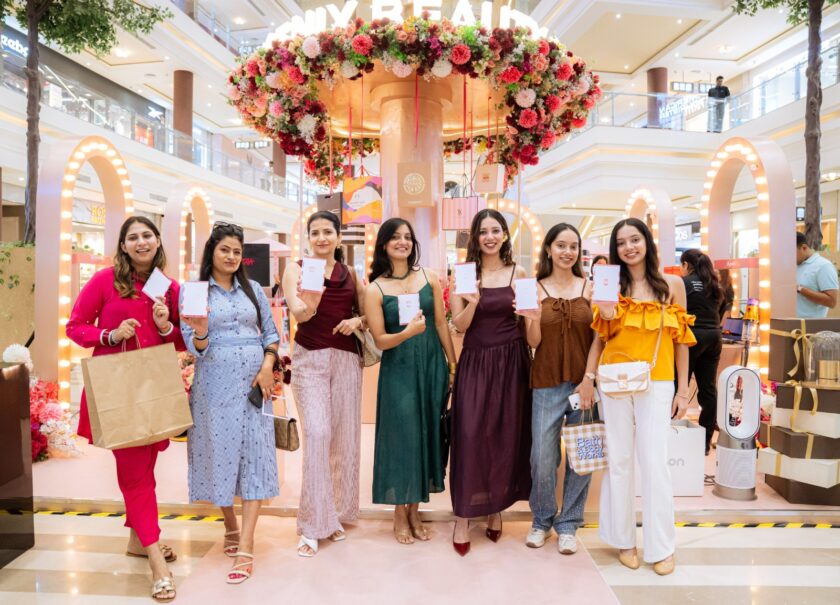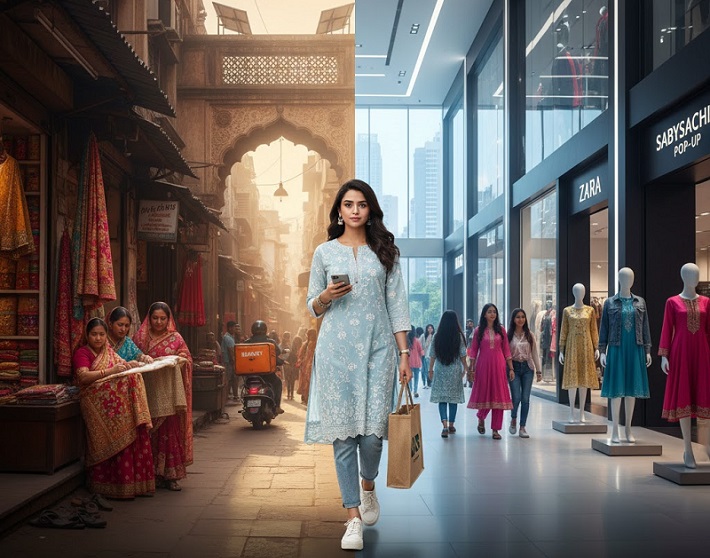
Lucknow: Lucknow, the city of nawabs and intricate chikankari, has long been synonymous with refined elegance, but in the modern day—spanning the post-pandemic surge from 2021 to 2025—it has emerged as a vibrant fusion of heritage and hype. Here, fashion isn’t just about clothes; it’s a dialogue between tradition and trend, where small, artisanal shops in labyrinthine bazaars coexist with gleaming malls housing global giants. Together, these forces—humble darzis stitching bespoke kurtas in Chowk and behemoths like Zara or Sabyasachi dropping collections in Phoenix Palassio—are redefining the city’s sartorial soul.
As the Indian apparel market balloons to $59.3 billion by 2025, with Lucknow’s chikankari and zardozi clusters contributing over ₹4,800 crore annually, locals aren’t just dressing up; they’re curating identities that blend Awadhi grace with Gen-Z swagger. “In Lucknow, fashion is tehzeeb on your sleeve—small shops give it heart, big brands give it scale,” says designer Farah Ansari of House of Kari.
This evolution reflects broader shifts: e-commerce penetration hitting 14.2% in 2025, quick commerce platforms like Blinkit delivering trendy fits in under 30 minutes, and a young demographic (over 50% under 30) craving sustainable, inclusive wardrobes. Small shops, often family-run boutiques employing 4.5 lakh artisans, preserve the tactile intimacy of handcrafts, while big brands inject global gloss, democratizing luxury and fueling aspirational consumption. Together, they’re elevating Lucknow’s fashion sense from ceremonial to casual, turning everyday Lucknowites into unwitting trendsetters.
The Quiet Revolution of Small Shops: Roots and Resilience
At the heart of Lucknow’s fashion ecosystem are its small shops—those unassuming ateliers in Hazratganj, Aminabad, and Chowk where the air hums with the whir of sewing machines and the scent of attar. These aren’t faceless outlets; they’re living archives of Awadhi craft, run by generations of karigars who’ve weathered lockdowns and tariffs.
Take Pearls Boutique in Gomti Nagar, a 17-year-old haven founded by Rizwana Husain, specializing in ghararas and gowns that fuse Mughal motifs with millennial minimalism. “We don’t chase seasons; we stitch stories— a bride’s first dance, a daughter’s farewell,” Husain shares. In 2023 alone, such boutiques saw a 25% uptick in sales via Instagram, as young professionals sought personalized pieces amid the fast-fashion fatigue.
These shops add to the fashion sense by anchoring it in authenticity and accessibility. In Aminabad’s warren of stalls, vendors like those at Vazire Boutique hawk chikankari kurtas for ₹500-₹2,000, making heritage wearable for the middle class. Post-2021, digital pivots amplified this: House of Chikankari, a mother-daughter duo’s venture, scaled to 1,000 pieces daily, empowering 10,000 women artisans in Barabanki. Their influence? Profound. Locals now layer traditional jaali stitches over jeans, birthing a “Lucknowi streetwear” that’s flooded TikTok.
As artisan Zafar Ali from Nakhas market puts it: “Big brands copy our zardozi, but we teach patience—one thread, one memory.”
Sustainability is another thread they weave. Boutiques like Kumuda in Gokhale Vihar revive taepchi and shadow embroidery on organic mulmul, appealing to eco-conscious millennials. “We’re not trendy; we’re timeless—our pieces outlast fads,” says founder Kumuda. During the 2022 ODOP (One District One Product) push, these shops generated ₹500 crore, training 2,500 karigars in green techniques.
They foster inclusivity too: Kanchan Boutique in Mahanagar offers plus-size anarkalis, challenging norms in a city where curves were once couture-shy. Result? A fashion sense that’s democratic—women from Lucknow University to La Martiniere now mix bazaar buys with boardroom blazers, embodying quiet confidence.
Yet, challenges persist. US tariffs in 2024 threatened exports, but small shops adapted via local pop-ups like Tarang Fest, drawing 100,000 visitors. Their role? They humanize fashion, reminding Lucknow that style starts with soul.
Big Brands: Scale, Spectacle, and the Global Gaze
Enter the titans: multinational chains and Indian powerhouses transforming Lucknow’s skyline with air-conditioned allure. Phoenix Palassio and Wave Mall, with their Zara, H&M, and Reliance Trends outposts, have turned shopping into spectacle since their 2020 expansions. By 2025, organized retail claims 45% of apparel sales, up from 35% in 2016, fueled by these behemoths.
Zara’s Lucknow store, contributing to its $100 million in India sales by 2025, stocks fast-fashion hauls that mirror Milan runways—think ₹2,000 sheath dresses echoing Sabyasachi’s bridal drama, but ready-to-wear. “We bring the world to Wahid Bagh—global trends, local fits,” boasts a Zara visual merchandiser, as teens queue for collaborative drops with Indian influencers.
Big brands amplify fashion sense through visibility and variety. Sabyasachi’s 2024 pop-up in Sahara Ganj featured zardozi lehengas sourced from Lucknow karigars, priced at ₹5 lakh, but trickled down via affordable lines on Myntra. This democratizes luxury: A 2023 Vogue India report noted a 40% spike in “elevated casuals” searches post-Gigi Hadid’s chikankari Met Gala moment, with locals aping her vibe via H&M’s ₹1,500 dupes. Brands like Snitch, opening its first Lucknow store in 2025 at Palassio, target menswear with minimalist shirts (₹999-₹2,499). “Lucknow men were formal; now they’re fusion-forward,” says Snitch co-founder Siddharth R. Munot.

Innovation drives their impact. Reliance’s “Earth Conscious” line, launched 2023, uses recycled polyester for sustainable tees, aligning with the 30% rise in eco-fashion demand. Quick commerce via Zepto delivers these in Tier-2 Lucknow, turning impulse buys into habits—Gen Z now refreshes wardrobes bi-monthly. Inclusivity shines too: H&M’s adaptive lines for differently-abled, stocked in Wave Mall, empower diverse bodies, while Anita Dongre’s Lucknow outpost blends Rajasthani block prints with chikankari for plus-size prêt.
Events supercharge this: LuLu Fashion Week 2024 showcased 50 designers in Palassio, with big brands sponsoring chikankari-streetwear fusions, viewed by 20,000. Challenges? Over-saturation risks diluting local crafts, but collaborations—like Dior’s 2022 chikankari panels by Lucknow artisans—bridge the gap. Big brands add polish, making Lucknow’s fashion sense worldly yet wearable.
The Fusion Effect: A Symbiotic Style Symphony
Where small shops provide depth, big brands add breadth, creating a hybrid fashion lexicon that’s distinctly Lucknawi.
-
Design Fusion: In Hazratganj, a darzi from Ada Chikan might alter a Zara blazer with zardozi cuffs, birthing “nawabi casuals” sported at IIT Kanpur fests.
-
Social Media Amplification: Influencer Taha’s 2023 reels blending Pearls’ ghararas with H&M sneakers hit 10M views, inspiring 68% of bridal lehengas to incorporate fast-fashion elements. “Small shops teach craft; brands teach confidence—together, they make us bold,” quips Anas Affan Siddiqui, a top 2025 Lucknow fashion voice.
-
Shared Sustainability: EU-India pacts in 2024 funneled ₹85 crore into solar workshops, benefiting 35,000 artisans supplying both Kanchan’s bespoke and Reliance’s lines.
-
Economic Synergy: Lucknow’s clusters employ 4.5 lakh, with big brands’ ₹29,391 crore exports (15% from here) creating upstream jobs.
-
Cultural Crossover: At Habibullah Estate’s 2025 Christmas markets, small stalls next to brand kiosks drew 100,000, blending jute crafts with athleisure.
The fusion is evident in the streets: a college student might pair a bespoke, subtle chikankari kurta bought from Aminabad with ripped jeans and sneakers from Zara, topped with sunglasses from an international brand. This mix-and-match philosophy is the essence of modern Lucknow style—effortlessly confident and culturally rich.
The Modern Mirror: Grace in a Global Garb
In 2025’s Lucknow, fashion sense is no longer siloed—it’s a seamless tapestry where a Chowk kurta meets a Palassio palazzo, worn to a Migsun Janpath café or a Farmers’ Market pop-up. Small shops infuse intimacy and innovation, big brands broadcast boldness, together crafting a city where style whispers heritage while shouting self-expression.
As Tarun Tahiliani notes: “Lucknow’s grace endures—now with global flair.” With projections for India’s apparel market to reach $170 billion by 2034, this duo doesn’t just dress Lucknow; it defines its daring new dawn. The balance struck between preserving the delicate hand-stitched legacy and embracing global retail speed is Lucknow’s secret weapon, ensuring its sartorial soul remains both rooted and relevant.


 ---------------------------------------------------------------------------------------------------