- Clean Air, Seamless Commute: Metro Expansion to Transform Urban Mobility in Uttar Pradesh
- UPMRC Sets National Benchmark with Highest Operational Efficiency and Profitability
- Vision 2047: Advancing Modern, Sustainable and Integrated Urban Transportation, total 225 km metro network in Lucknow City only.
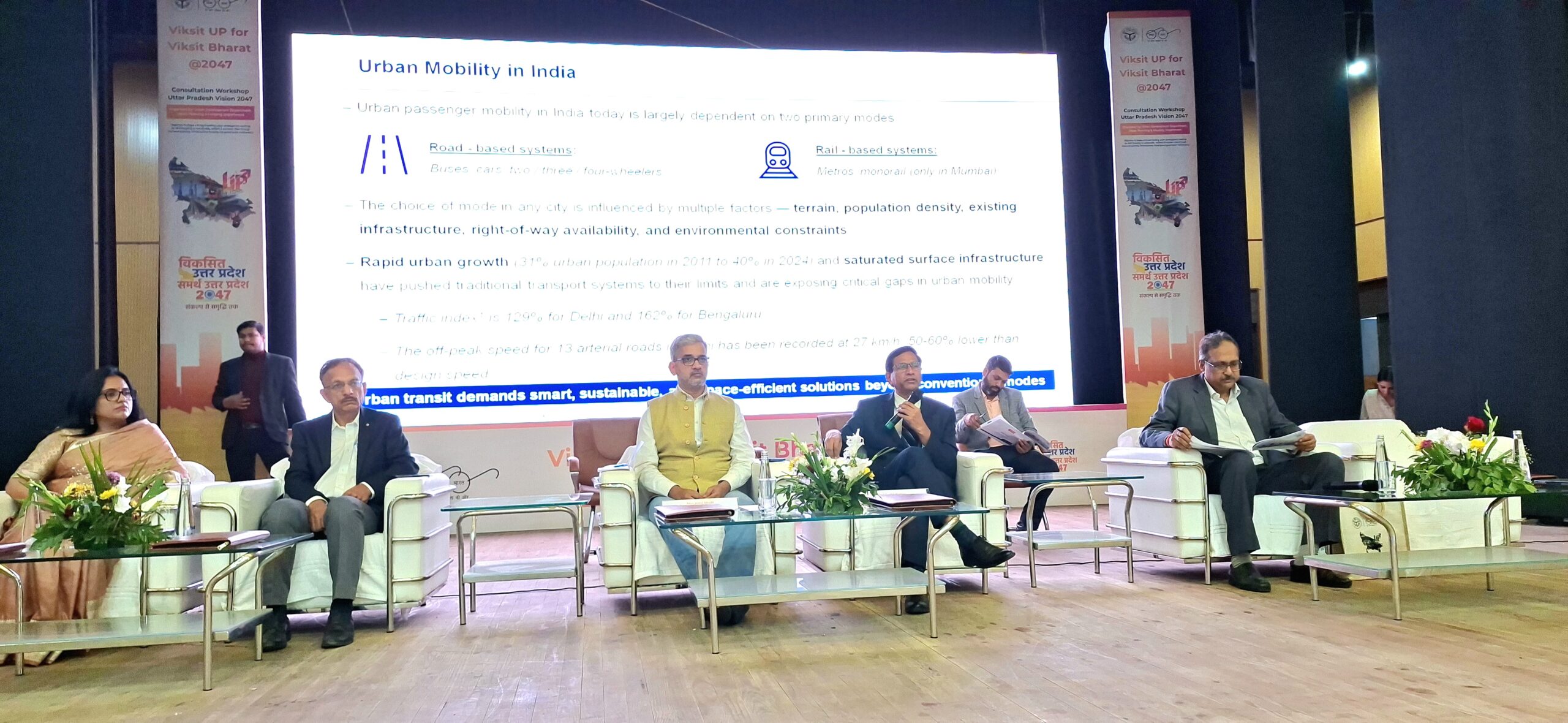
Lucknow: The Uttar Pradesh Metro Rail Corporation participated in the “Viksit Uttar Pradesh for Viksit Bharat@2047” seminar, organized by the Urban Development Department and the Urban Planning & Housing Department, Government of Uttar Pradesh. The event was held at the Directorate of Urban Local Bodies, Gomti Nagar, Lucknow, with the objective of developing a forward-looking roadmap for the state’s urban growth with the target year 2047.
UPMRC Managing Director Sushil Kumar, addressing the workshop as a distinguished speaker, presented a comprehensive vision for modern, safe, sustainable and green urban transport across Uttar Pradesh. He highlighted that UPMRC currently operates metro systems in three cities—Lucknow, Kanpur and Agra. To achieve the goal of Viksit Uttar Pradesh by 2047, an extensive expansion plan has been proposed, including approximately 225 km of metro network in Lucknow, 200 km in Kanpur and 100 km in Agra which totals 525km corridor in 3 cities only.
Kumar explained that metro projects in India, normally fallow a funding pattern of 50% funding by loan from Foreign bank and remaining 50% is shared through equity contribution between Central Government and State Government. For the expansion of metro networks in Lucknow, Kanpur and Agra, the annual investment requirement for above 525 Km, from state government is estimated only at ₹1,040 crore/year till 2047, for funding different phases that will be completed in typically five years to complete.
He further outlined proposals for metro expansion in major cities such as Noida–Greater Noida, Varanasi and Prayagraj, each planned to receive 150 km of metro corridors. Additionally, key districts—including Gorakhpur, Bareilly, Moradabad, Meerut, Jhansi, Ayodhya, Mathura–Vrindavan, Aligarh and Saharanpur—have been proposed with 50 km metro networks each. In total, a 1,575 km metro network has been envisioned under the Viksit Bharat 2047 roadmap, of which approximately 790 km is targeted for completion by 2035.
Kumar informed that all 3 UPMRC metro projects are running in Operational profit. With the highest revenue per kilometre and the lowest expenditure per kilometre among Tier-2 city metro systems in the country, UPMRC has set a national benchmark for operational efficiency.

He emphasized that Uttar Pradesh has already emerged as a leading state in India with metro services in six cities, contributing to India becoming the third-largest metro network in the world, after China and the United States, and poised to soon surpass the U.S. to take second place.
Highlighting initiatives beyond metro operations, Kumar stated that Uttar Pradesh is the first state in India to implement Transit-Oriented Development (TOD) at scale, contributing to a sustained increase in non-fare revenue. To enhance last-mile connectivity, UPMRC has signed MoUs with Uber and Rapido.
In conclusion, Kumar affirmed that this ambitious metro expansion will significantly enhance transportation capacity, improve quality of life and firmly position Uttar Pradesh as a national leader in safe, sustainable, environmentally friendly and future-ready urban mobility.