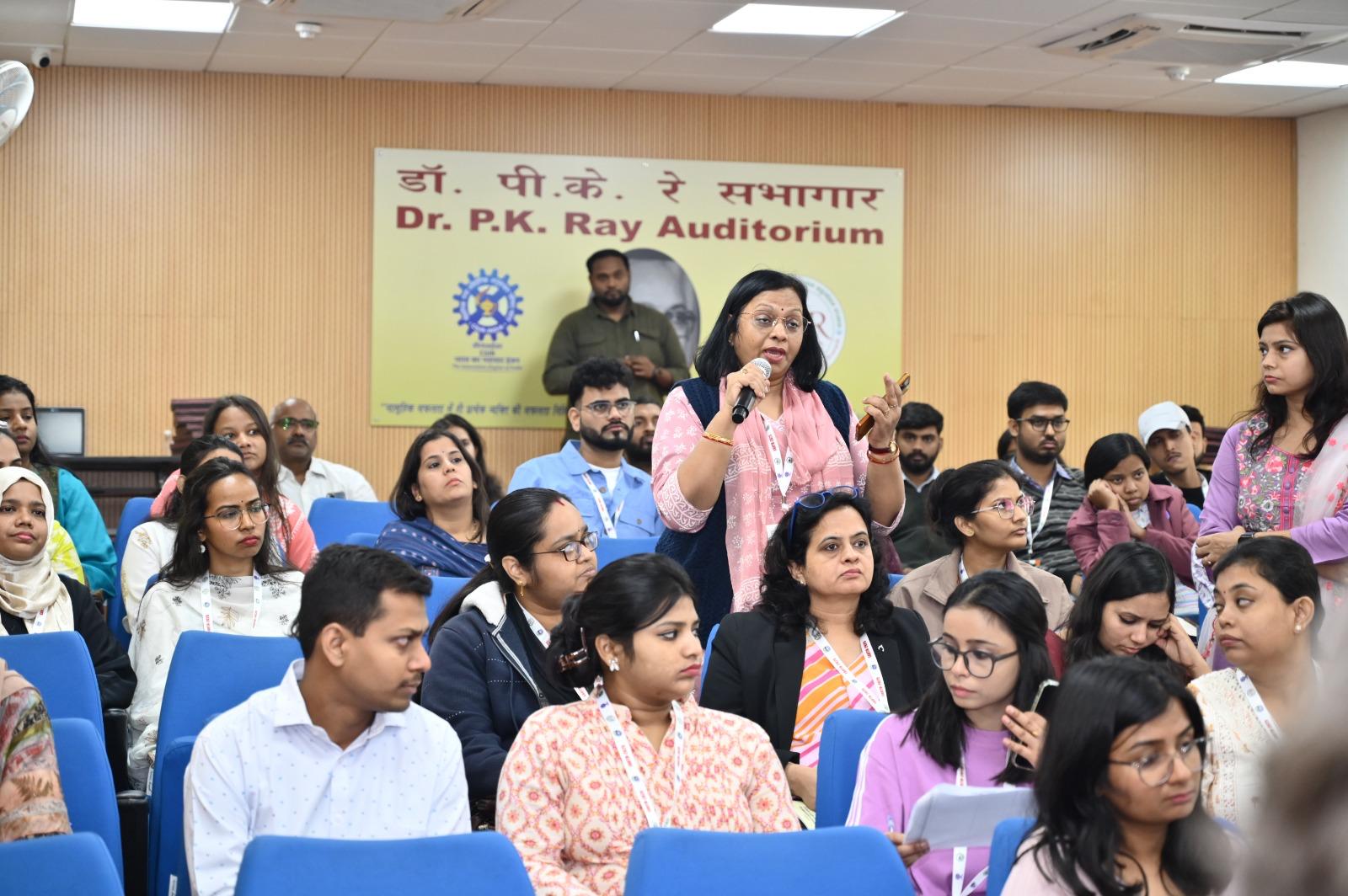
Lucknow: Day 3 of EARTH 2025, hosted by CSIR-Indian Institute of Toxicology Research (IITR), brought together leading scientific minds from India and abroad for a comprehensive exploration of cancer biology, environmental pollution, food safety, and emerging health technologies. The sessions highlighted how multidisciplinary science is redefining healthcare, environmental monitoring, and regulatory systems.
New Breakthroughs in Understanding Cancer
Dr. Bushra Ateeq of IIT Kanpur presented pioneering work on colorectal cancer, focusing on a regulatory molecule that pushes the disease into a more aggressive subtype. Patients with elevated levels of this molecule often show weaker recovery.

Her team found that lowering this molecule increases tumour sensitivity to standard chemotherapy drugs like FOLFOX, leading to significantly reduced tumour growth. She further explained how this molecule forms a harmful feedback loop with a key cancer-promoting pathway, accelerating tumour progression.
Another major finding showed that aggressive cancer cells disrupt the balance of protective fats in the body—particularly one that naturally slows tumour growth. When this fat declines, cancer signals intensify. These insights could support new treatment strategies combining fat-balance restoration with pathway inhibition, and may help identify early diagnostic markers.
Fruit Flies, Zebrafish & Generational Impact of Pollution
Sessions on model organisms revealed alarming long-term impacts of pollution:
- Studies on fruit flies showed that environmental toxins severely affect male fertility, reducing sperm quality and altering reproduction-related proteins that influence female health and lifespan.
- Prof. Som Niyogi’s zebrafish research demonstrated that arsenic exposure disrupts brain development and behaviour across multiple generations due to heritable gene-activity changes.
- Dr. H.P. Gurushankara reported that microplastics cause DNA damage, immune imbalance, and oxidative stress in fruit flies for up to four generations.
- Research on triclosan, a widely used household antimicrobial, revealed inherited immune weaknesses even when only the parental generation was exposed.
- Prof. Y.H. Siddique showcased fruit fly larvae as an ethical alternative for toxicity testing, demonstrating their effectiveness in evaluating substances like calcium carbide, used illegally for fruit ripening.
Next-Generation Tools for Detecting Contaminants
Experts from Waters India and leading academic institutions demonstrated advanced tools including HPLC, UPLC-MS/MS, exposomics platforms, and AI-enabled contaminant databases capable of identifying hundreds of pollutants. Discussions centred on PFAS (“forever chemicals”), endocrine disruptors, nanoparticles, and international regulatory systems.
The message was clear: India needs improved monitoring infrastructure to safeguard food, water, and public health.

Smart Technologies for Health & Environment
Researchers presented an array of futuristic technologies:
- Nanocarrier systems for diabetes and targeted cancer therapy
- Sustainable hydrogels for industrial wastewater treatment
- Robotics for automating complex laboratory workflows
- Safe food supplements backed by toxicological screening
- Organ-on-chip platforms to reduce animal testing
- Climate studies projecting rising disease burdens due to heat stress and environmental degradation
New Insight Into Colon Cancer Survival
Dr. Jalaj Gupta concluded the day with a session revealing how colon cancer cells withstand chemotherapy. Dying cells emit signals that activate survival pathways in neighbouring tumour cells, reducing the treatment’s effectiveness. Blocking these pathways could significantly enhance therapy outcomes.
A Vision for a Safer, Healthier Future
Day 3 of EARTH 2025 underscored the critical role of science in protecting humanity and the planet. From decoding cancer mechanisms and understanding generational impacts of pollution to deploying nanotechnology, robotics, and advanced analytical tools, experts delivered a unified message: innovation, sustainability, and evidence-based policy are essential for future health and environmental security.
The event reaffirmed CSIR-IITR’s commitment to driving research that shapes safer technologies, stronger regulatory frameworks, and a healthier future for generations to come.




 ---------------------------------------------------------------------------------------------------