Lucknow: Emerging from some of the most remote tribal villages across India, 597 students from Eklavya Model Residential Schools (EMRS) have achieved what once seemed impossible — clearing India’s most competitive exams, including JEE Main, JEE Advanced, and NEET, in the 2024–25 academic year. This marks an extraordinary leap from just two successful candidates in 2022–23.
Of the 230 EMRS schools offering Class 12, students from 101 schools cleared these examinations, reflecting how access to quality education is rewriting the future of India’s tribal youth.
Stories of Determination and Triumph
Among the shining stars is Jatin Negi, a student from Sangla village in Himachal Pradesh’s Baspa Valley. Despite growing up in harsh conditions with frequent power cuts and long winters, Jatin cleared JEE Advanced with an impressive All-India Rank of 421. He is now pursuing B.Tech at IIT Jodhpur.
Another inspiring story comes from Gujarat, where Padvi Urjasviben Amrutbhai, a student from EMRS Bartad in Khapatia, cleared NEET and is now pursuing MBBS at GMERS Medical College, Junagadh. Her journey from a small tribal village to medical school highlights how education can break barriers of gender bias and social exclusion.
Performance Snapshot (2024–25)
The results show the spread of EMRS success across India:
-
219 students cleared JEE Mains
-
34 cleared JEE Advanced
-
344 qualified in NEET
States like Madhya Pradesh, Gujarat, Telangana, and Chhattisgarh recorded the highest success rates. In contrast, only two EMRS students cleared these exams in 2022–23, proving the remarkable impact of focused educational initiatives.
What Makes JEE and NEET So Challenging
The Joint Entrance Examination (JEE) and National Eligibility cum Entrance Test (NEET) are India’s most prestigious national-level entrance exams for engineering and medical aspirants, respectively. Clearing these exams opens doors to premier institutions such as the Indian Institutes of Technology (IITs) and top medical colleges.
Success in these tests demands years of disciplined preparation, strong conceptual understanding, and access to mentorship — something EMRS is now providing to tribal students through innovative support systems.
The Vision Behind Eklavya Model Residential Schools
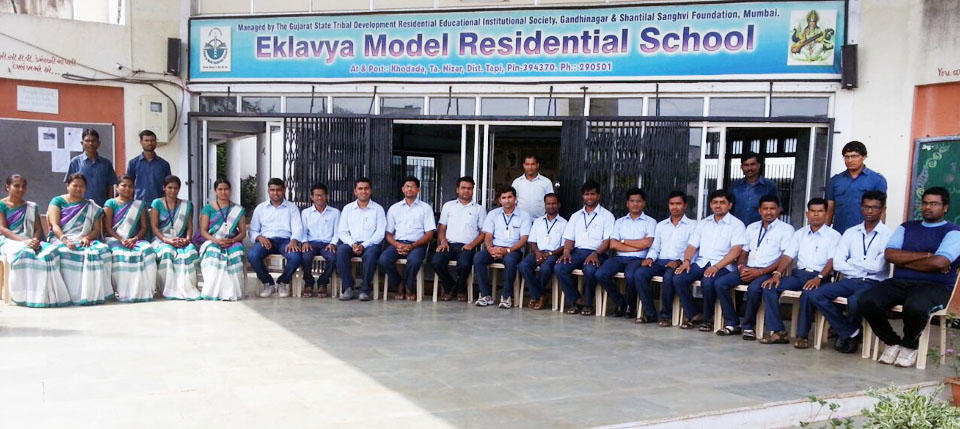
Set up by the Ministry of Tribal Affairs, EMRS aims to provide high-quality, CBSE-affiliated education to Scheduled Tribe (ST) students in their own environments. Currently, 485 EMRS schools are functional with 1,38,336 students enrolled.
Each school provides free education, boarding, healthcare, and skill-based training, ensuring holistic development. With Rs. 68,418 lakh released for infrastructure and operations, the network continues to expand — 722 schools have been sanctioned so far, with the goal of reaching every tribal block with a significant ST population.
Building the Foundation: Government’s Commitment to Equality
India’s Constitution guarantees equal opportunity in education through affirmative action.
-
Article 46 directs the State to promote the educational and economic interests of the weaker sections, especially Scheduled Tribes.
-
Articles 15(4) and 15(5) allow the State to make special provisions for the advancement of socially and educationally backward classes, STs, and SCs.

This framework is reinforced by the Central Educational Institutions (Reservation in Admission) Act, 2006, which reserves seats in premier institutions — 15% for SCs, 7.5% for STs, and 27% for OBCs.
Targeted Support Through National Education Society for Tribal Students (NESTS)
To strengthen EMRS outcomes, the National Education Society for Tribal Students (NESTS) coordinates specialized academic and digital programs designed to help students prepare for competitive exams like JEE and NEET.
Key initiatives include:
-
Centres of Excellence for IIT-JEE and NEET coaching in Bhopal, Maharashtra, and Andhra Pradesh.
-
Digital tutoring partnerships with Ex-Navodayan Foundation and PACE IIT & Medical.
-
iHUB DivyaSampark Labs (in collaboration with IIT Roorkee) introducing hands-on STEM learning.
-
Dedicated DTH TV channel delivering digital content to EMRS classrooms.
-
Skill Development and Atal Tinkering Labs promoting vocational training and innovation.
-
Amazon Future Engineers Program for teacher training in computer science education.
-
TALASH Project, developed with UNICEF, offering psychometric career guidance and life-skills training.
Empowerment Through Education
The success of 597 EMRS students is not just a numerical milestone — it’s a testament to India’s evolving educational ecosystem that embraces inclusivity, technology, and resilience.
From mountain villages in Himachal to tribal hamlets in Gujarat and Chhattisgarh, these young achievers are redefining what’s possible when equal opportunity meets determination.
As Jatin Negi says, “When one person emerges successfully from such a community, others notice, learn from their example, and feel motivated to work hard too.”
The EMRS success story is, therefore, not only about academic excellence — it is about empowerment, equity, and the promise of a brighter, more inclusive India.